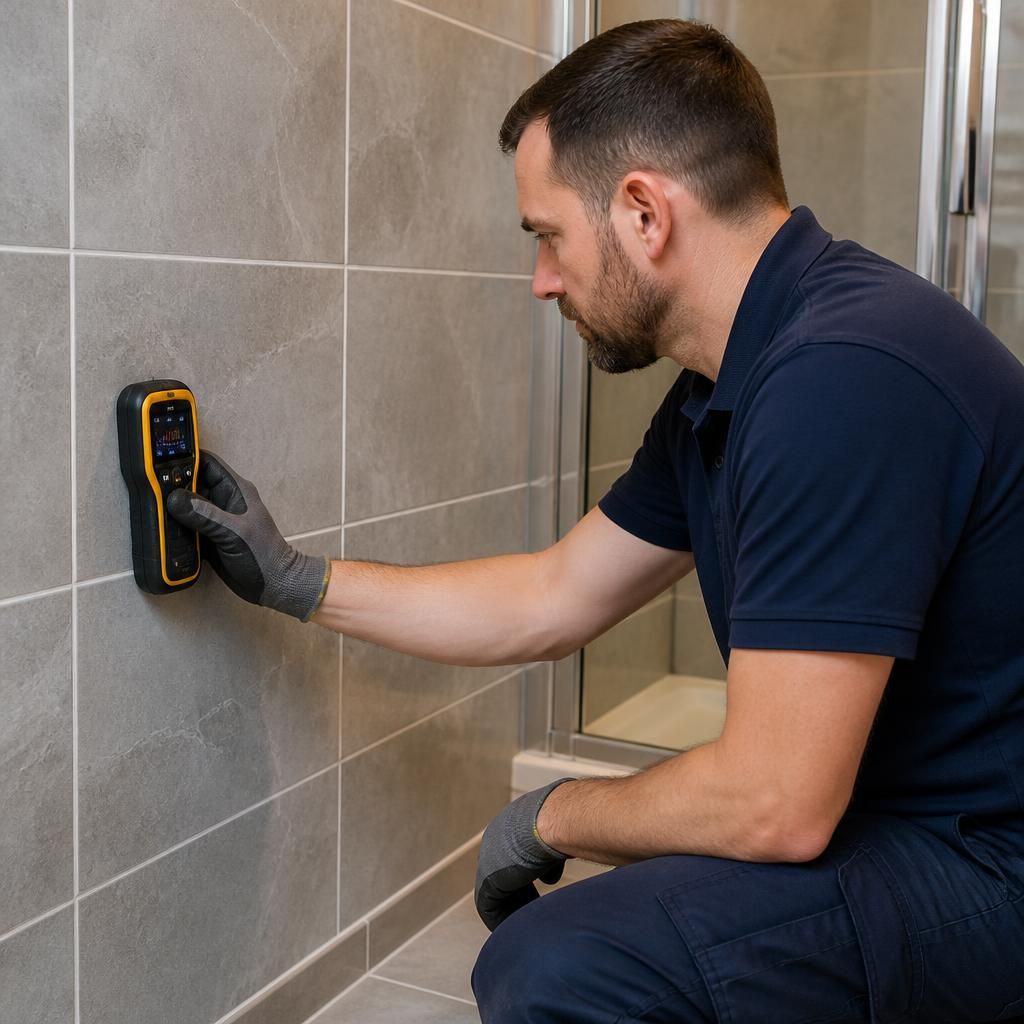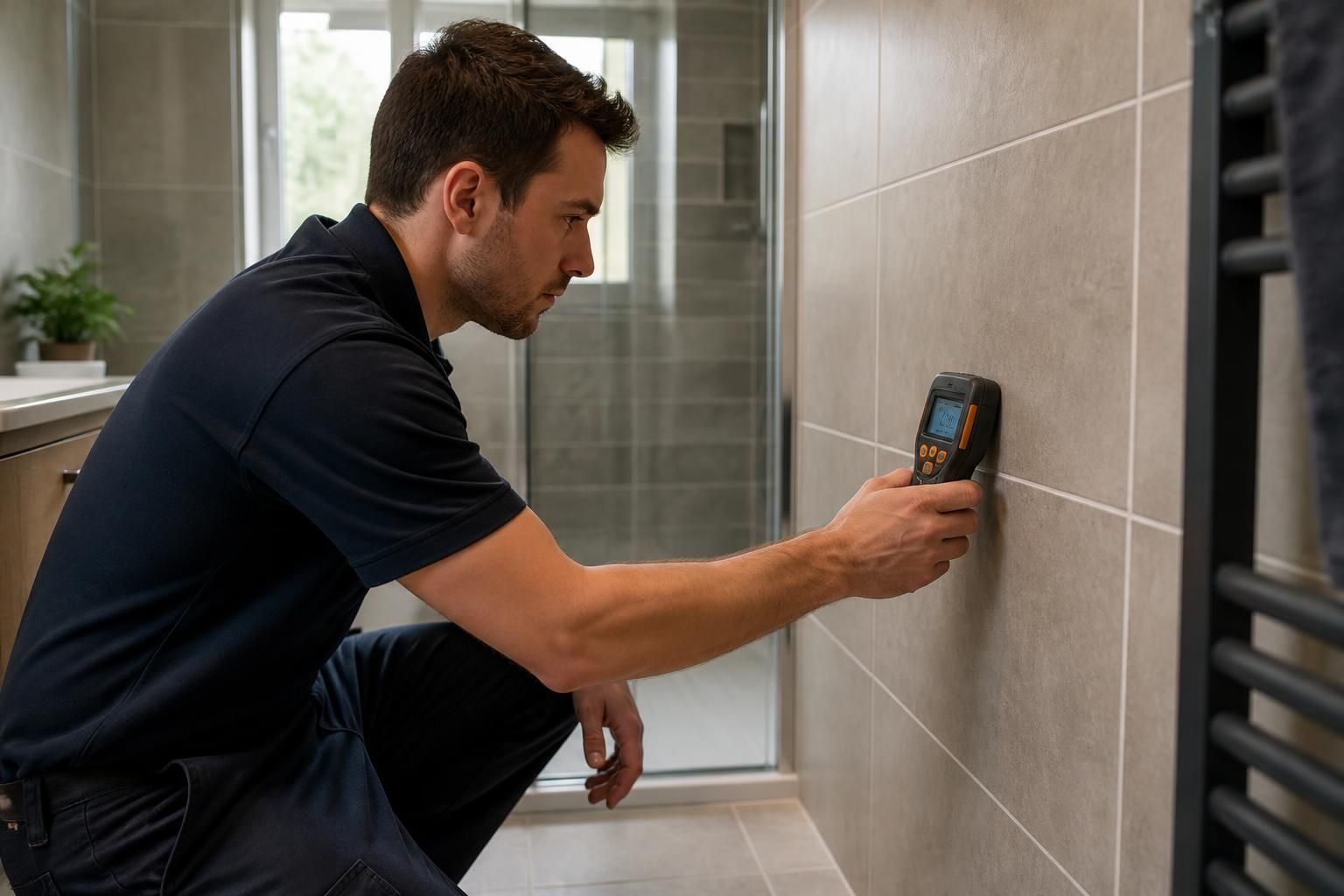
Yes, a leak behind tiled walls or floors can often be investigated without removing the entire tiled surface. The main challenge is distinguishing the point where moisture is visible from the point where water originally escaped. Water can travel through grout, adhesive, plasterboard, screed and timber before appearing somewhere else.
A thorough inspection normally begins by establishing when the dampness occurs and what affects it. Moisture that appears only while the shower is running may indicate failed grout, silicone, a shower tray seal or a problem with the waterproofing around the enclosure. Dampness that continues when the bathroom is not being used may point towards a concealed supply pipe, waste pipe or heating pipe. The pattern, position and persistence of the moisture help narrow the investigation.
Detection equipment can show where moisture has accumulated, but a reading is not automatically proof of a leaking pipe. High readings may also result from condensation, repeated splashing, poor ventilation or water trapped beneath flooring. For that reason, findings are usually compared with visual checks and controlled tests, such as running individual appliances, checking the shower waste and observing whether a water supply loses pressure.
- Shower area: Failed silicone, damaged grout, movement around the tray or inadequate waterproofing can allow water behind tiles.
- Pipework: A concealed hot or cold-water pipe may leak inside a wall, particularly around joints or fittings.
- Waste connections: A loose trap, cracked waste pipe or defective seal may leak only when the basin, bath or shower discharges.
- Toilet and basin areas: Connections, valves and seals can release water that travels beneath flooring or behind wall coverings.
- Heating components: Radiator valves and concealed heating pipework can create dampness that is mistaken for a shower leak.
Where the evidence points to a specific location, the repair may require a small, targeted access point rather than wholesale tile removal. However, no detection method can guarantee that every leak will be located without opening the structure. A leak may be intermittent, concealed beneath a thick floor, connected to a shared void or masked by previously retained moisture. Tiles may also be difficult to remove intact if they were fixed firmly or if the substrate has deteriorated.
It is useful to keep the affected bathroom as dry as possible before an inspection and to note whether the dampness changes after using the shower, bath, toilet or basin. Avoid simply applying new silicone or grout over the affected area before the source has been assessed, as this may conceal evidence while leaving the underlying leak unresolved.
If water is close to an electrical fitting, such as a shower switch or light, do not touch wet equipment. Keep clear of the area and arrange an assessment by a suitably qualified professional. Once the source has been confirmed, the appropriate repair can be selected, followed by drying and checks for damage to plasterboard, flooring, cabinetry or adjacent rooms.