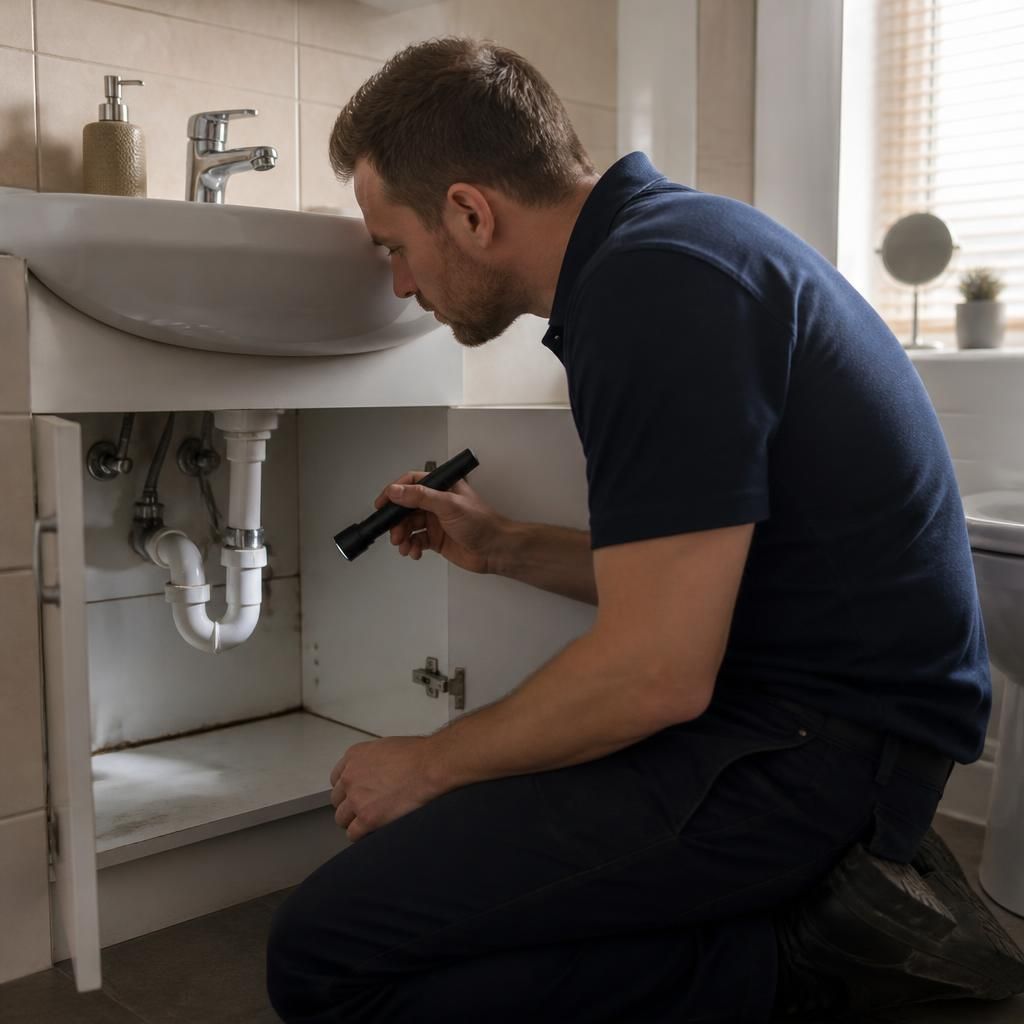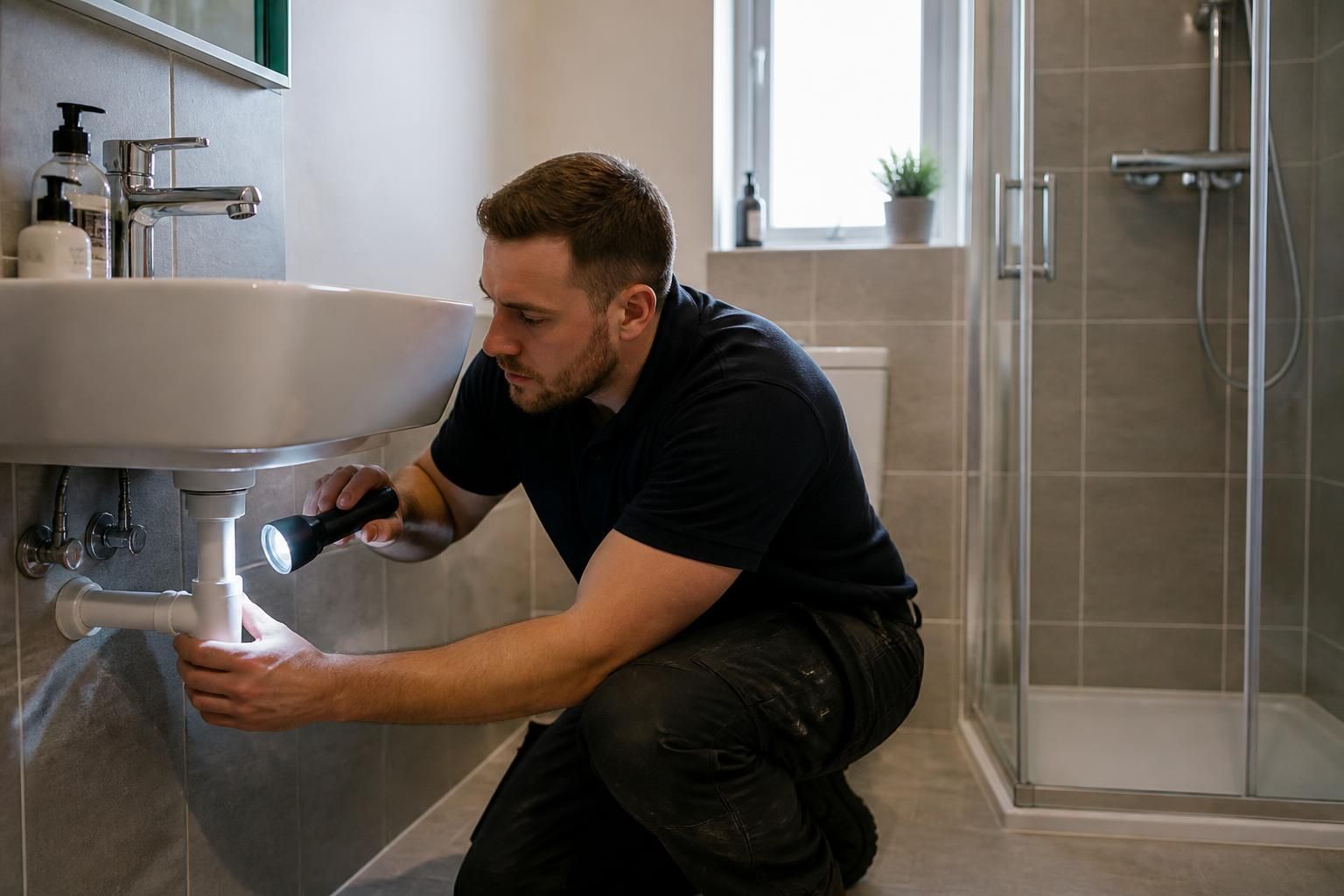
Bathroom and shower leak detection is suitable for rented properties. It provides landlords and tenants with a structured way to investigate dampness, staining, mould, loose tiles, swollen flooring or unexplained water use without immediately removing large areas of the bathroom. Identifying the source helps establish what needs repairing and supports a clearer handover between the tenant, landlord, managing agent and contractor.
Leaks in rented bathrooms can come from several points, including shower seals, bath edges, wastes, traps, supply pipes, toilet connections and pipework concealed behind walls or beneath floors. Water can travel away from the original fault, so the visible stain or damp patch is not always directly below the leak. Detection focuses on tracing the moisture back to its likely source rather than treating only the most obvious symptom.
The tenant should report signs of a leak promptly. Useful information includes when the dampness was first noticed, whether it appears after showering or using the bath, whether the area dries between uses, and whether the problem is getting worse. Photographs can record changes over time, while details about any dripping, musty smells, bubbling paint or changes to flooring may help the investigation. Tenants should avoid carrying out permanent repairs or removing tiles without the landlord’s agreement.
Landlords remain responsible for arranging appropriate repairs where the problem relates to the property’s plumbing or structure, subject to the tenancy agreement and applicable duties. A tenant may be responsible for damage caused by misuse, but that should not be assumed simply because the leak is in a bathroom. A professional assessment can help separate a failed seal or fitting from a problem with concealed pipework, installation or building fabric.
A typical investigation may include:
- a visual inspection of sanitaryware, joints, seals, exposed pipework and surrounding surfaces;
- moisture readings to identify areas affected by water and compare them with nearby dry surfaces;
- checks carried out while individual bathroom fittings are used, helping to establish when moisture appears;
- inspection of accessible voids, flooring or adjacent rooms where water may have travelled; and
- further tracing methods where the source is concealed and cannot be confirmed through visual checks alone.
For rented accommodation, keeping a written record of the findings can be particularly useful. It may help the landlord decide whether a seal, waste, fitting or section of pipework requires attention, and can give the tenant evidence that the issue was reported. Where insurance or a managing agent is involved, the report and photographs may also help explain the nature and location of the suspected fault, although the insurer or agent will determine what evidence they require.
Detection is also appropriate when the signs are minor but persistent. A small patch of discolouration, repeated condensation around one fitting or a soft section of flooring can indicate moisture that has been present for longer than it appears. Delaying an investigation can allow water to affect plasterboard, flooring, joinery or neighbouring rooms. Conversely, not every damp mark is caused by a plumbing leak, so testing can prevent unnecessary replacement of sound fittings.
If water is close to an electrical shower, light, socket or other electrical equipment, do not touch wet electrical components. Keep clear of the affected area and report the situation to the landlord or managing agent so that suitable plumbing and electrical checks can be arranged. Any repair should address both the source of the water and the resulting damage; applying fresh sealant over an unresolved leak is unlikely to provide a reliable long-term solution.
For landlords, arranging bathroom and shower leak detection can form part of sensible property maintenance, particularly after a tenant reports recurring dampness or where a bathroom has had previous repair work. For tenants, the main step is to document the symptoms and notify the responsible party clearly. Ideal Plumbing Services provides leak detection and plumbing repairs for residential properties, helping landlords and tenants make decisions based on the condition and likely source of the problem rather than guesswork.