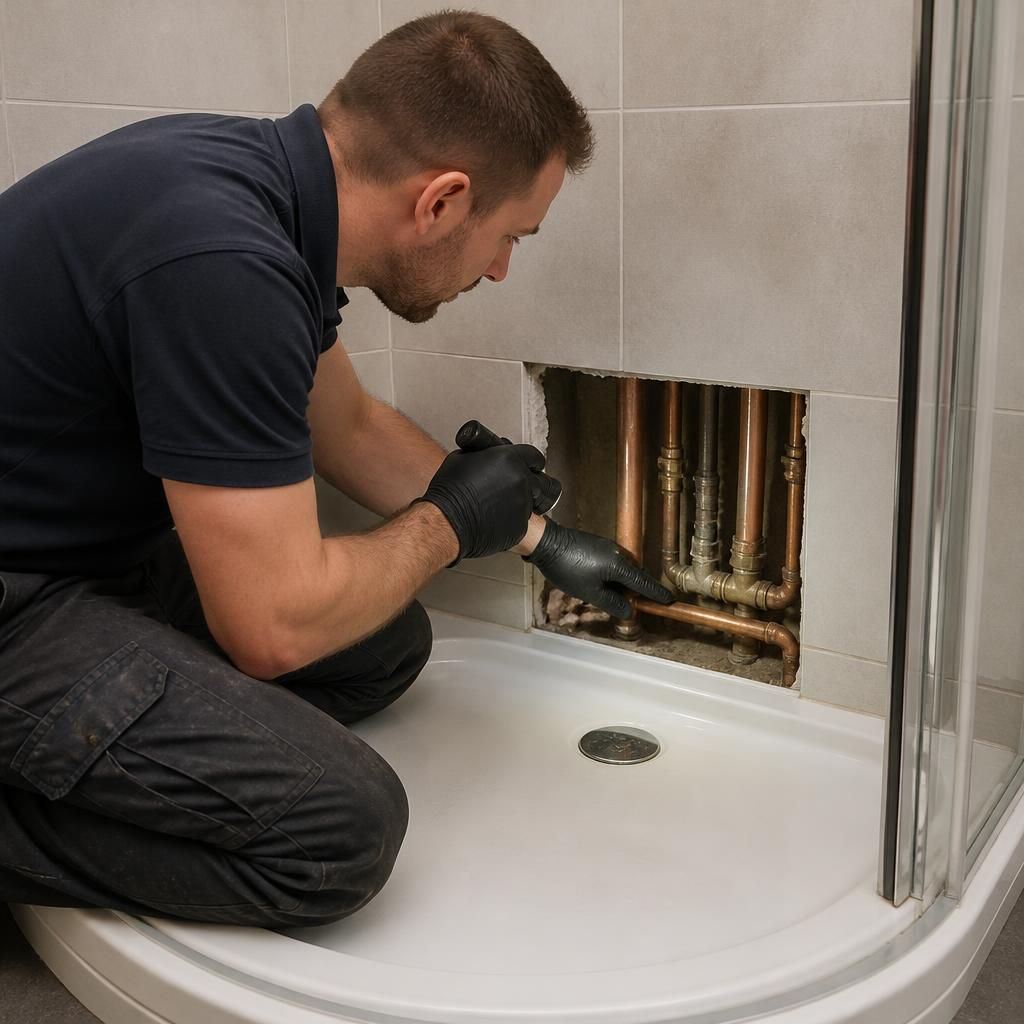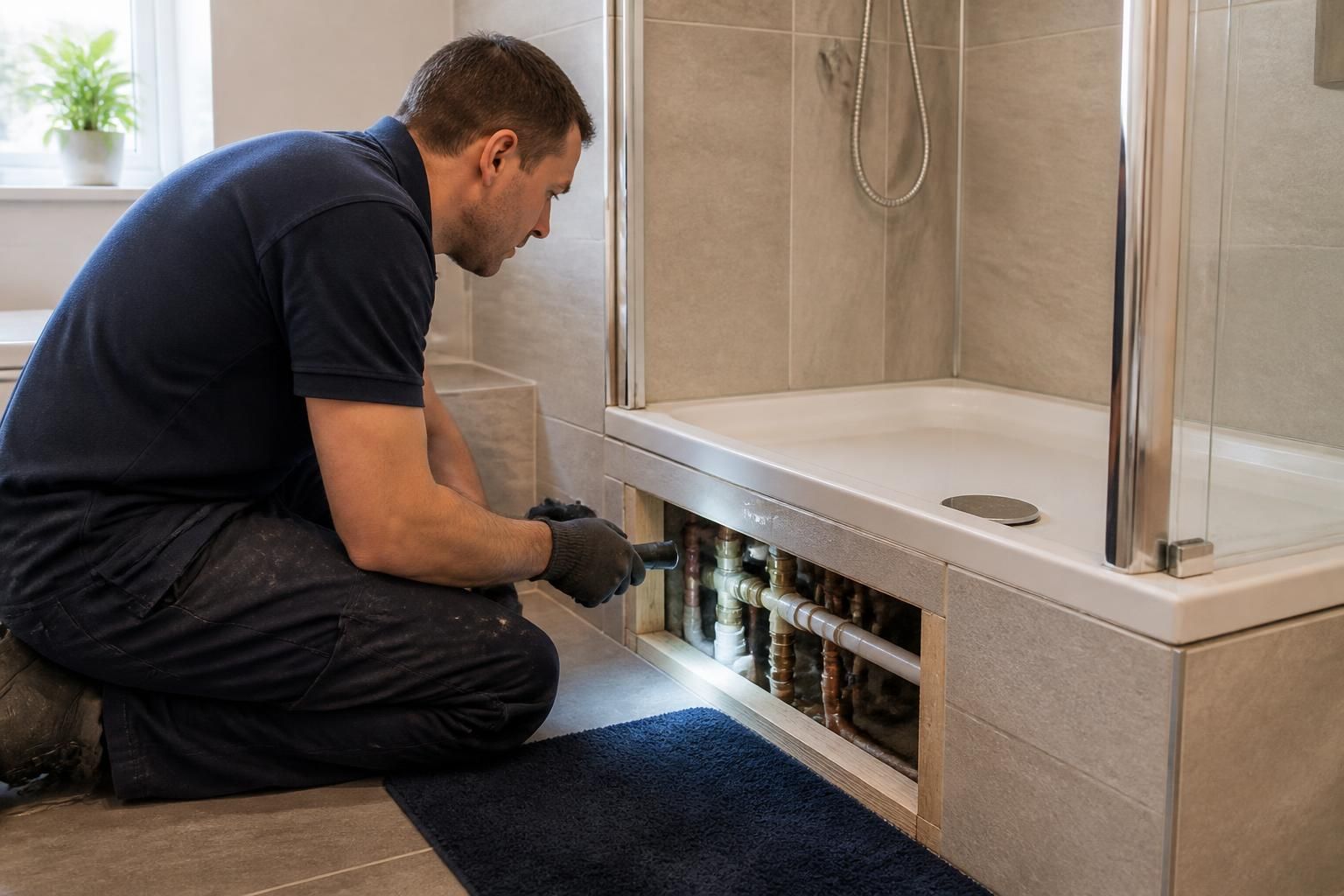
The leak detection itself generally causes less disruption than the repair that may follow. A professional assessment is focused on identifying the source and route of escaping water while keeping disturbance to the bathroom, shower area and surrounding rooms proportionate to the evidence available.
What the visit usually involves:
- Discussing when the signs appeared and whether they relate to shower use, bathing, taps, toilets or other plumbing.
- Inspecting visible joints, fittings, grout, sealant, pipe connections and nearby surfaces.
- Checking for signs of moisture in adjoining walls, floors, ceilings or cupboards.
- Using suitable diagnostic methods to compare damp areas and help distinguish an active leak from older moisture or condensation.
- Tracing the likely source before recommending any opening-up or repair.
Preparation can help keep the inspection straightforward. Clear toiletries, bath mats and stored items from around the bath or shower, and make any accessible stop tap easy to reach. If water is close to electrical equipment, avoid touching the equipment while standing on a wet surface and explain the risk when arranging the inspection.
The amount of access required depends on the type and location of the leak. A fault at an exposed connection may be assessed without disturbing the bathroom. A concealed pipe, leaking shower tray or failed connection beneath a bath may require access through an existing panel or another carefully chosen point. Where there is no practical alternative, removing a small section of finishing material may be considered, but this is separate from the diagnostic assessment itself.
Detection and repair are also different stages. Finding the source may involve little physical disruption, while putting the fault right could involve removing and replacing sealant, lifting flooring, accessing pipework or renewing a fitting. The condition of surrounding materials matters too: saturated plasterboard, swollen flooring or damaged cabinetry may need attention even after the plumbing fault has been corrected.
Before any intrusive work, ask what access is proposed, why it is needed and whether the work is intended to identify the leak or repair it. A clear explanation helps you decide whether to proceed and is particularly important in rented accommodation, where the landlord or managing agent may need to approve alterations. Photographs of existing finishes can also provide a useful record before access is created.
After detection, the area should be left as dry and safe as practicable, but leak detection does not by itself remove all moisture or repair cosmetic damage. Continue monitoring the affected area and report any return of staining, dampness, dripping or unusual movement in the shower or bathroom finishes. Prompt investigation can help prevent a small plumbing fault from causing more extensive damage to adjacent rooms.