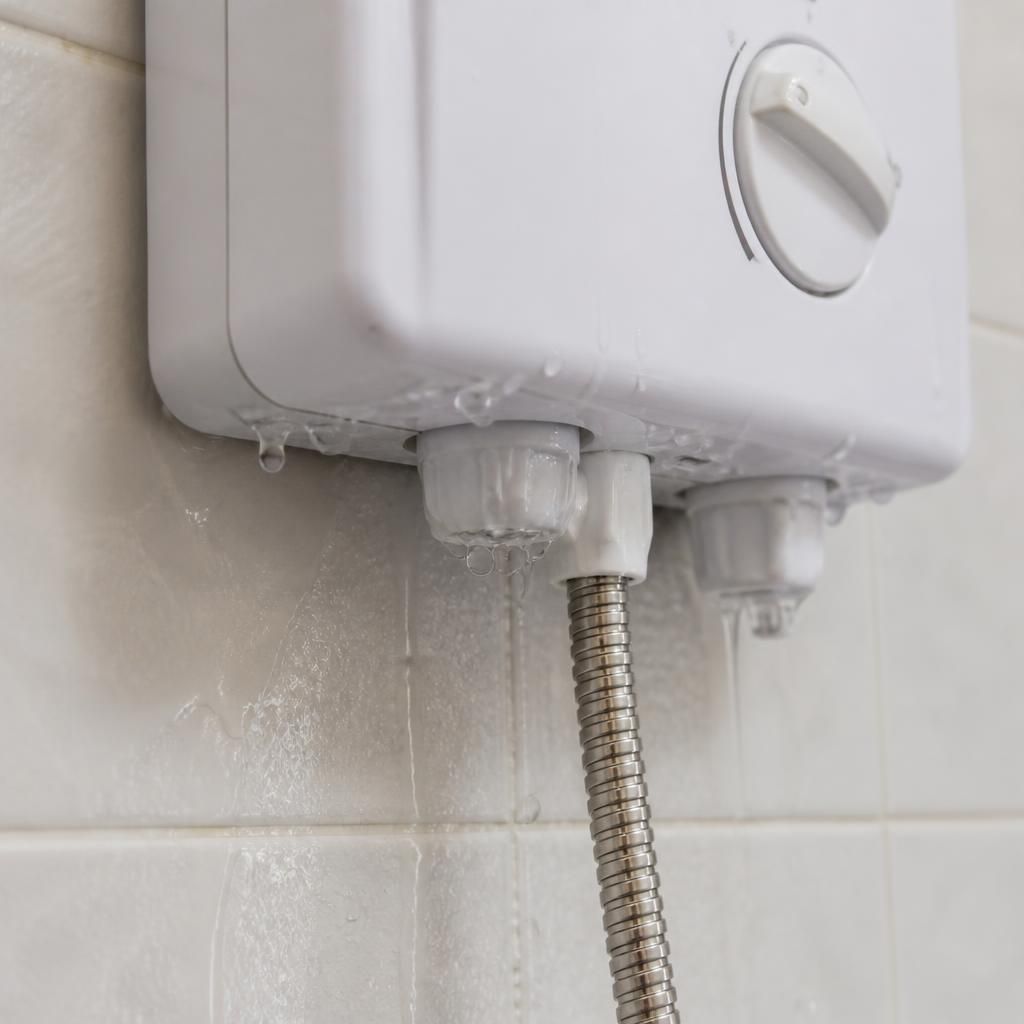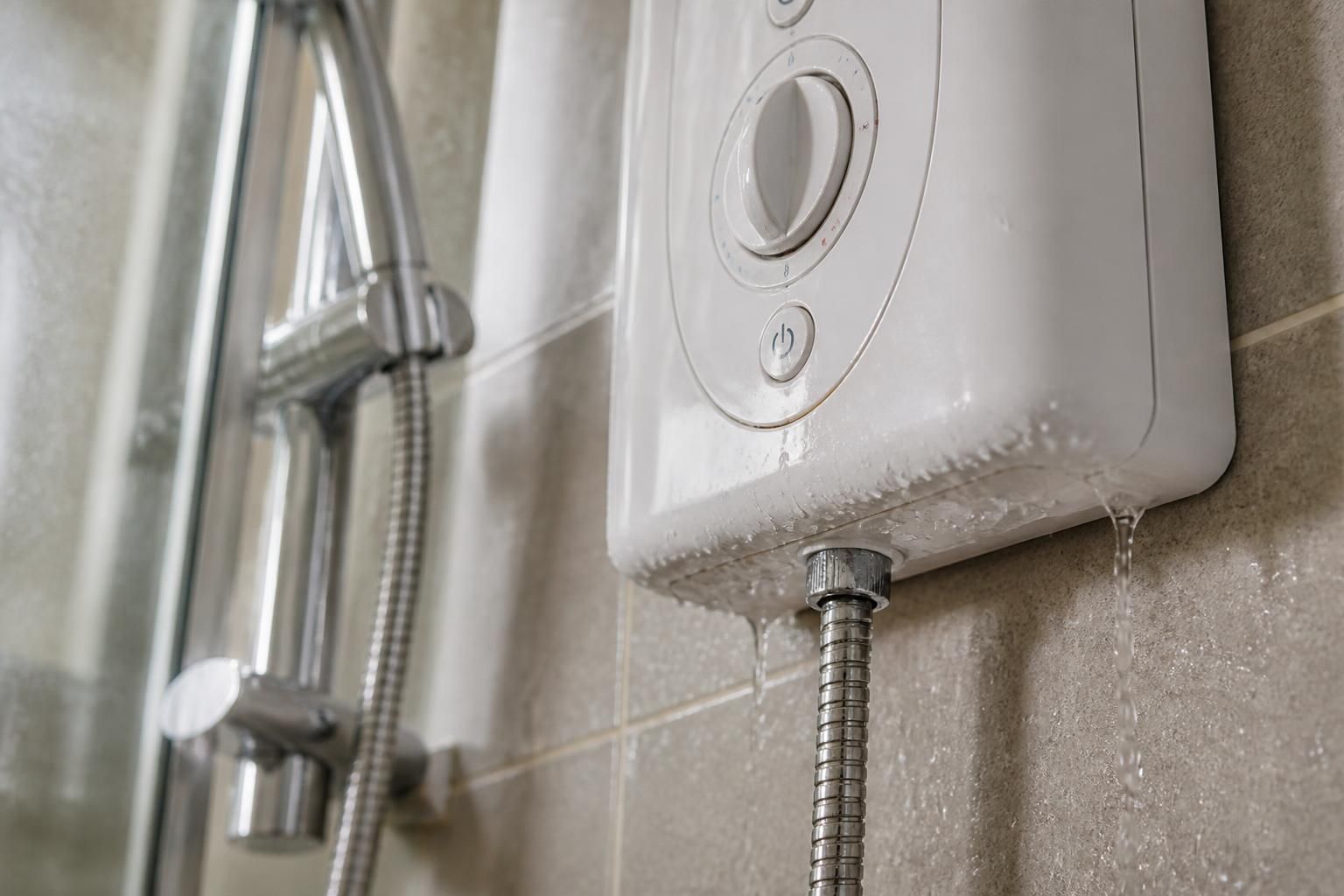
An electric shower leak means water is escaping from the shower unit, its connections, the hose or the pipework supplying it. Because the appliance combines water with an electrical supply, it should be treated as both a plumbing fault and a potential electrical safety issue, rather than as an ordinary dripping tap.
Once the shower is no longer being used, avoid touching the unit, switch or nearby fittings if they are wet. Do not remove the cover, apply sealant over the casing or try to tighten internal components. Water may be travelling from one part of the shower and appearing somewhere else, so a visible drip does not always identify the failed component.
Common causes of an electric shower leak include:
- A loose or deteriorated inlet connection where the water supply enters the shower.
- A worn washer, O-ring or compression fitting on the supply pipe.
- A split shower hose, damaged handset connection or leaking outlet fitting.
- A failed internal seal, diaphragm, valve or other component inside the shower.
- Excessive water pressure or a fault with the shower’s pressure-control components.
- Cracked pipework or a connection behind the wall, particularly where water continues to appear after the shower has not been used.
A leak from the hose or connection may be relatively straightforward to identify, but water from inside the casing is more concerning. Internal leaks can reach electrical parts, damage the wall behind the unit and cause moisture to spread into flooring or adjoining rooms. Discolouration, softened plasterboard, mould, swollen skirting boards or staining on the ceiling below can indicate that the problem has been present for longer than the visible drip suggests.
Look for these clues without dismantling anything:
- Water appearing only while the shower is running may point towards the hose, outlet, inlet connection or an internal operating fault.
- Water continuing to drip after use may indicate residual water, a valve problem or a supply-side leak.
- A leak near the top or side of the unit can be caused by an internal seal or connection rather than the shower head.
- A smell of burning, buzzing, scorch marks, electrical tripping or signs of water around the switch should be treated as an urgent safety concern.
If the shower has caused an electrical trip, do not repeatedly reset the circuit to test it. Keep people away from wet electrical equipment and arrange assessment by a suitably qualified professional. Where the source is unclear, a plumber can trace the water leak, while an electrician may need to check the electrical circuit and the appliance for water-related damage. Both aspects matter before the shower is put back into use.
A professional inspection normally involves tracing the water’s path, checking accessible supply connections, examining the shower hose and outlet, and assessing whether water has entered the casing or surrounding structure. The shower can then be tested safely to establish whether the fault is caused by a replaceable seal, washer, hose, valve or connection. If the internal assembly or casing is damaged, replacement may be more suitable than repairing one component, but that depends on the condition and design of the appliance.
Do not rely on tape, external sealant or a container placed beneath the drip as a permanent repair. These measures can hide the source while water continues to damage fittings or building materials. They can also make later inspection more difficult. Photographing the leak and noting whether it occurs during use or afterwards can help a professional understand the fault, particularly if the leak stops before they arrive.
Tenants should report the issue to their landlord or managing agent after taking the appropriate safety precautions, and should keep a record of visible damage. Landlords should arrange a suitably qualified inspection rather than asking an occupant to open or repair the shower. In either case, the shower should remain out of use until the water and electrical risks have been assessed.
Ideal Plumbing Services can investigate electric shower leaks, identify whether the source is a connection, pipe, hose or internal component, and advise whether a repair or replacement is appropriate. A proper diagnosis helps prevent repeated leaks and avoids replacing the whole shower when the fault is limited to an accessible part.