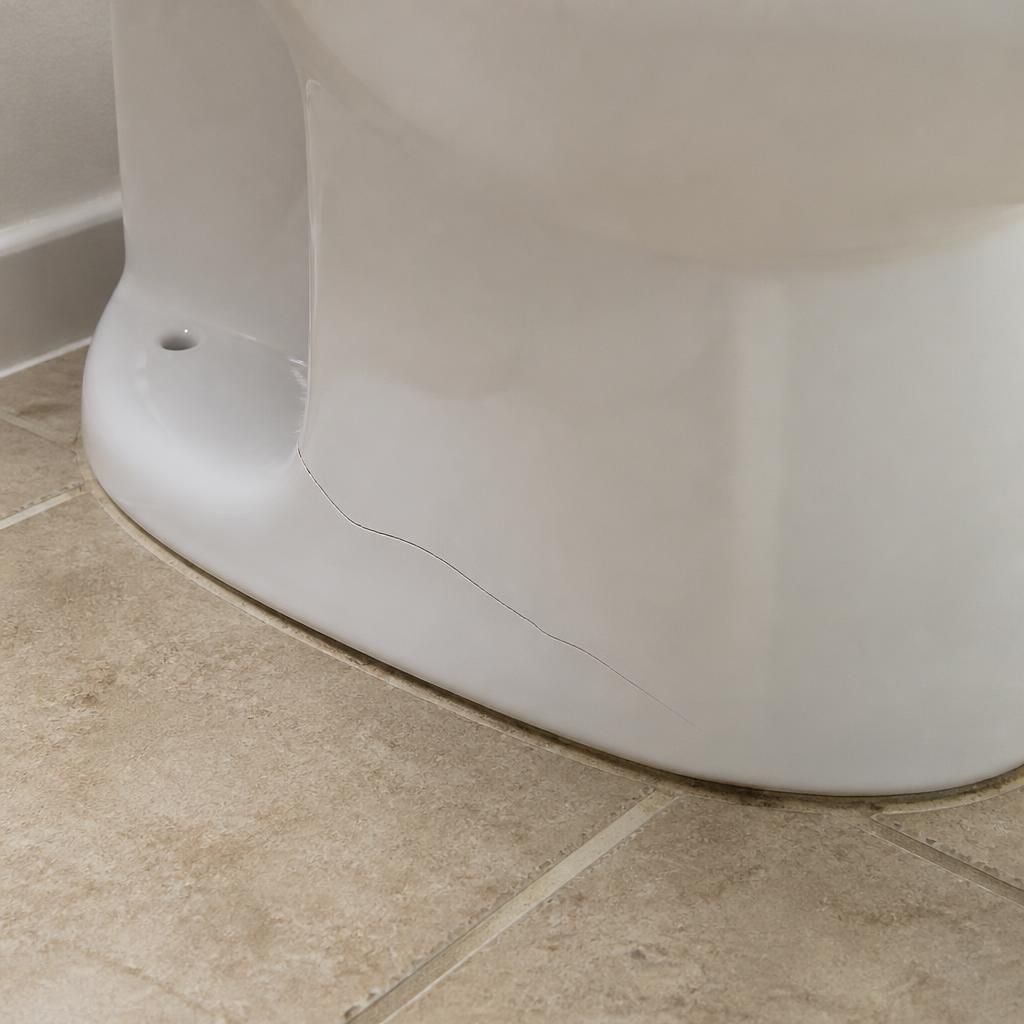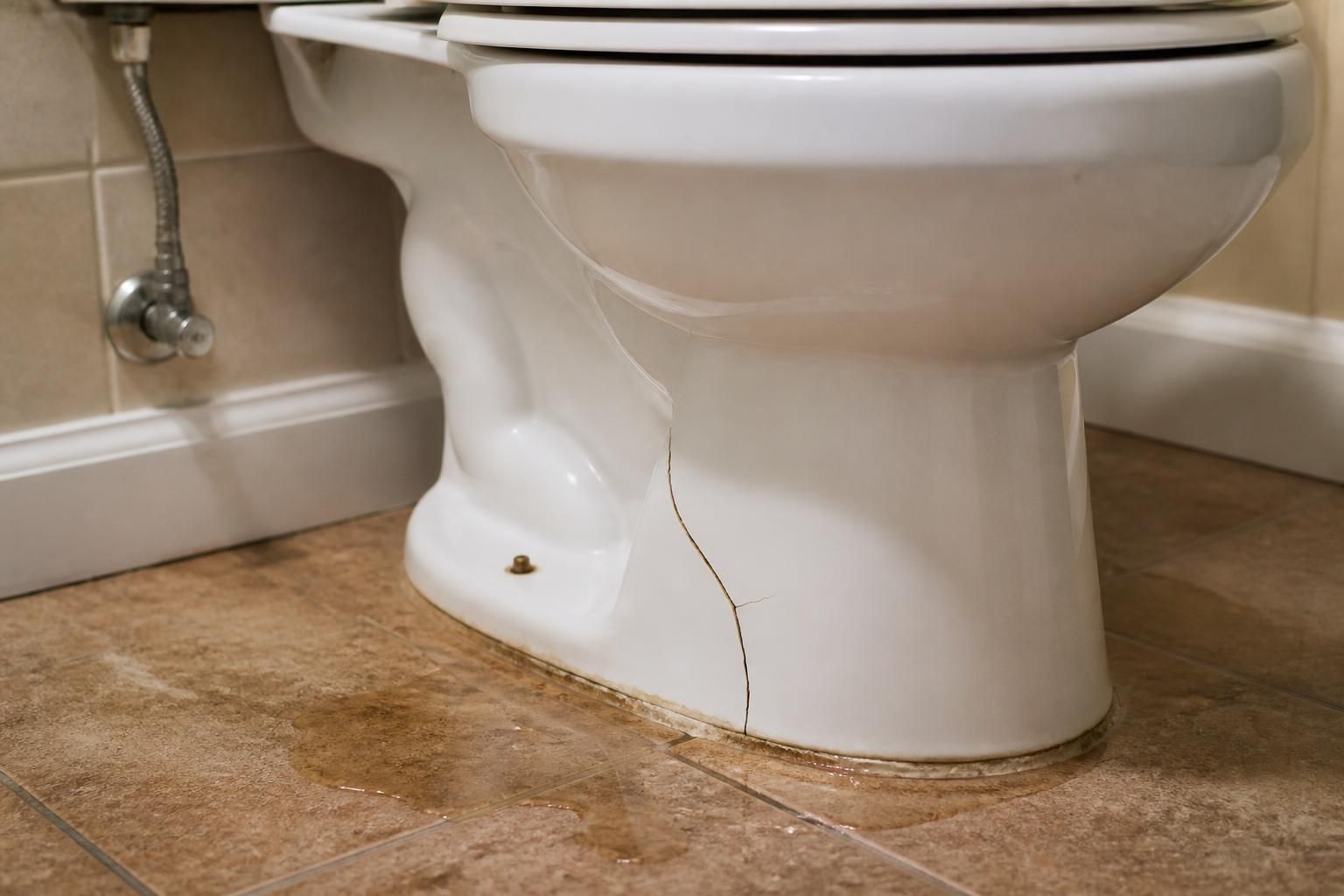
Yes, a crack in the ceramic toilet pan can let flush water or waste escape onto the floor, but the exact position of the moisture is important. A crack low down or around the outlet is more likely to produce a leak at the base, while a crack higher up may only leak when the bowl is filled or flushed.
Not every base leak comes from the ceramic. Water can appear around the foot of the toilet when the actual fault is one of the following:
- A perished pan connector or outlet seal
- A loose or damaged fixing between the toilet and the floor
- A failed seal where the cistern joins the pan
- A leaking flush pipe or supply connection running down behind the pan
- Condensation forming on the cistern or cold pipe
- Water escaping from the waste pipe within the floor or wall
Because water follows the contours of the pan and flooring, it may collect at the base even when the source is higher up. Identifying the source before replacing the toilet helps avoid unnecessary work.
Signs that the toilet pan itself may be cracked include:
- Moisture returning from the same point on the ceramic after the outside has been dried
- A visible hairline or open crack in the pan, particularly near the bottom, outlet or fixing points
- Water appearing only after flushing, rather than when the toilet is unused
- A damp patch that is not explained by the supply pipe, cistern or pan connector
- Movement, instability or a change in the way the toilet sits on the floor
A crack may be difficult to see if it is underneath the bowl or partly concealed by sealant. A clean, dry surface and good lighting can help with an initial inspection, but sealant should not be scraped away aggressively if doing so could damage the ceramic or disturb the toilet.
A simple way to narrow down the source is to dry the pan, floor and nearby pipework thoroughly, then place dry tissue around the outlet, supply connection and base. Check the tissue after filling the cistern and again after flushing. If it becomes wet at the outlet or base only during a flush, the pan, outlet seal or pan connector is more likely to be involved. If it becomes wet while the toilet is standing unused, the supply, cistern connection or a concealed pipe should also be considered.
Do not rely on this check where wastewater is escaping significantly, where the floor is already saturated or where the toilet is unstable. Avoid using the toilet until the source has been assessed, and close its local isolation valve if clean water is continuing to enter the cistern. Keep people away from contaminated water and take care around nearby electrical fittings.
A cracked ceramic pan is usually replaced rather than repaired. Adhesive, filler or sanitary sealant may cover a hairline temporarily, but these materials do not restore the pan's structural strength or provide a dependable long-term waste seal. Continued use can widen the crack, loosen the toilet or allow water to reach the flooring below.
If the ceramic is intact, the appropriate repair may be less extensive. A plumber may replace the pan connector, renew a seal, tighten or replace suitable fixings, or repair a leaking supply or flush connection. The toilet should then be tested for leaks and stability before it is put back into regular use. Any surrounding flooring, skirting or ceiling below should also be checked for dampness, swelling or staining.
Where the property is rented, the tenant should report the leak to the landlord or managing agent and avoid attempting to remove the toilet. Homeowners can arrange an inspection to establish whether replacement of the pan is necessary or whether the fault is limited to a seal, connector or pipe connection.
Professional toilet base leak detection is particularly useful when the crack cannot be seen, the leak is intermittent, or water is coming from beneath the flooring. The inspection should distinguish a damaged pan from a failed connection so that the repair addresses the actual source rather than simply resealing around the toilet.