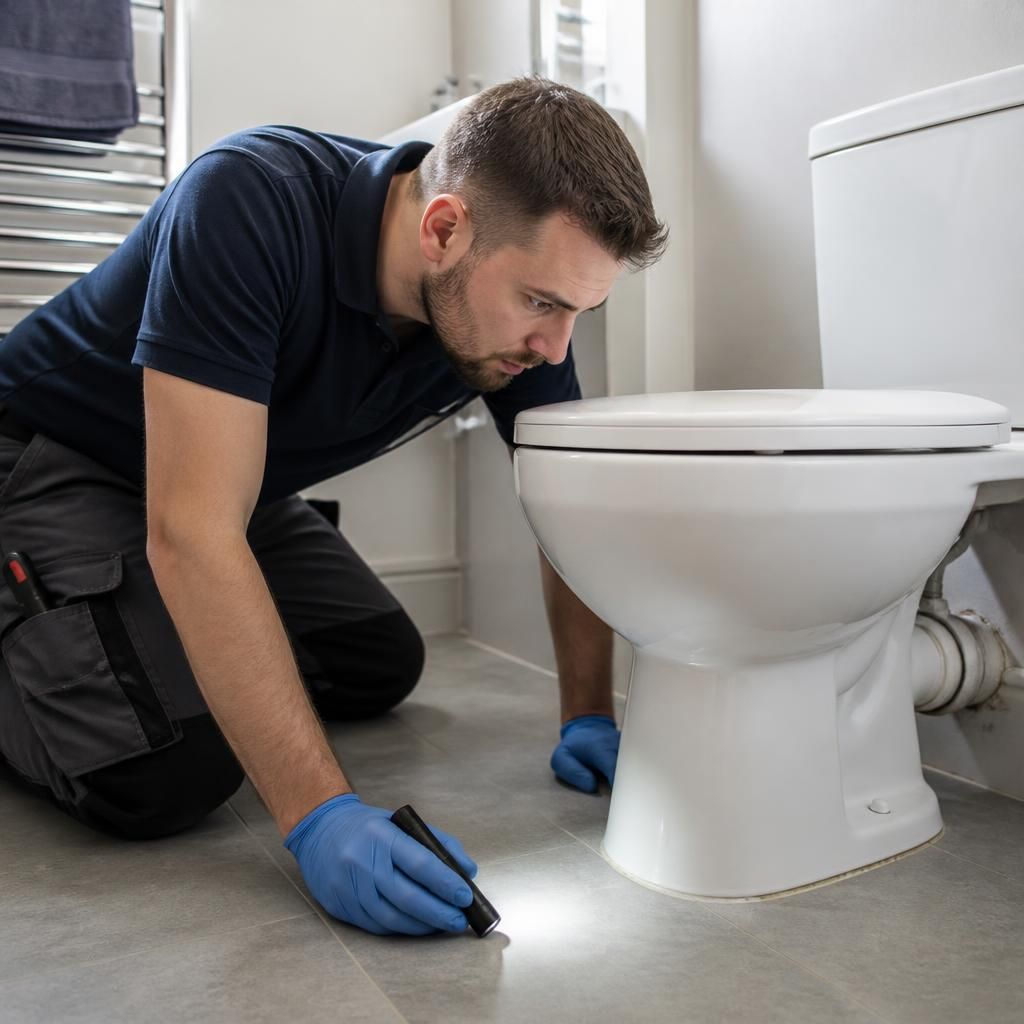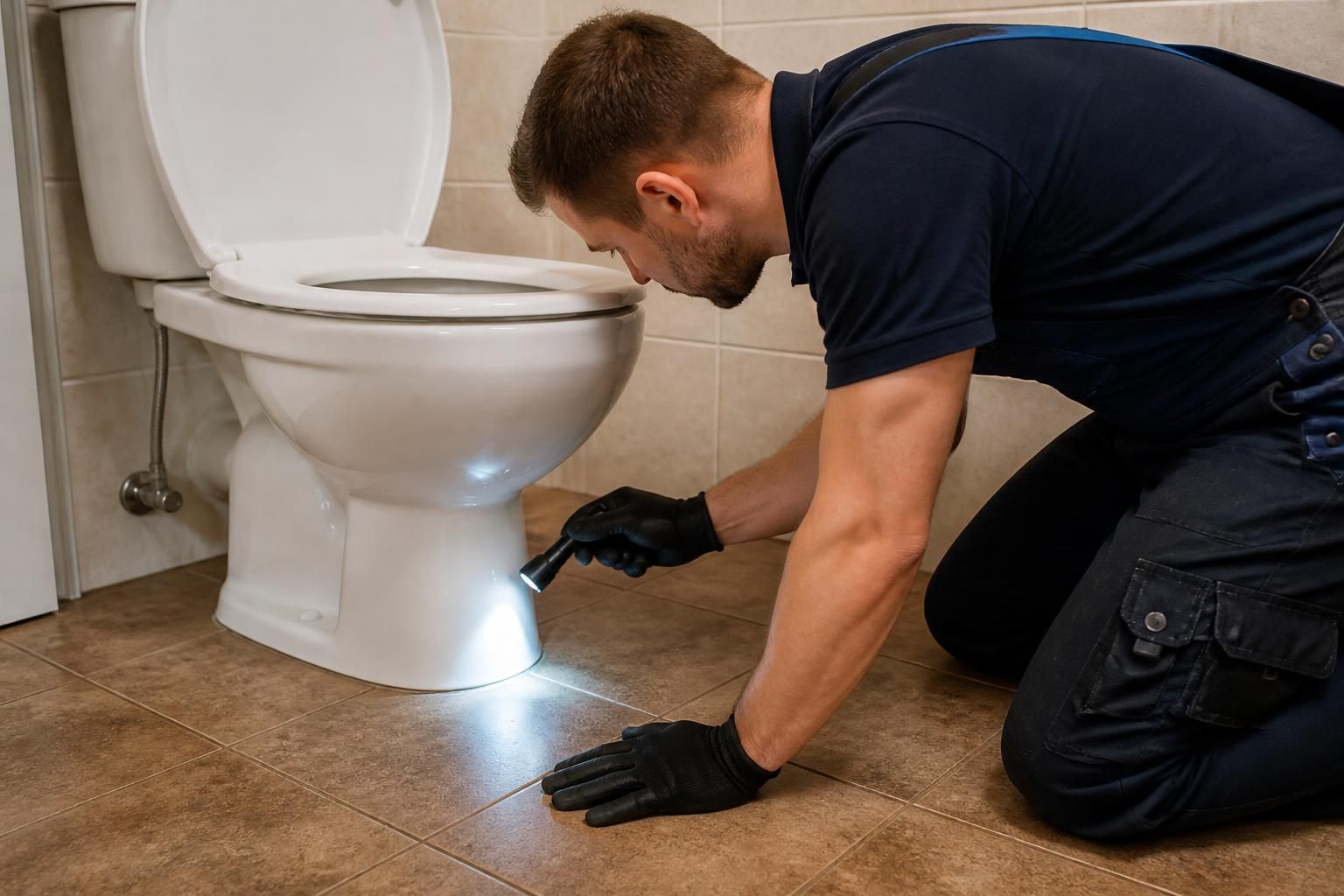
Before a toilet base leak detection visit, prepare useful information, preserve the affected area and make the toilet and nearby pipework accessible for inspection. Good preparation helps the plumber distinguish between a leak from the pan, the flush connection, the supply pipe, the waste connection or the surrounding flooring.
Gather information about the installation
- Make a note of when the toilet was installed, if known, and whether it has recently been repaired, resealed or moved.
- Have details of any earlier leaks, blockages, overflowing, unusual smells or repairs available. Even an apparently unrelated repair may help identify a changed connection or damaged seal.
- Record whether the problem appears after flushing, during cistern filling, when the toilet is occupied or without any obvious use. This timing can help separate a pressurised supply leak from a waste or pan seal problem.
- If the property is rented, keep the landlord or managing agent's contact details available and check whether permission is needed for any follow-up repair.
Preserve useful evidence
Photographs can help show staining, damaged flooring, swelling to skirting boards or changes in the affected area. Take them from a safe, dry position and do not deliberately recreate the leak simply to obtain a clearer image. Avoid applying silicone, putty or other temporary sealants around the base, as these can conceal the route of escaping water and make later inspection more difficult.
Do not scrub away staining or discard damaged flooring before the inspection where it is safe to leave it in place. A damp mark may show how far water has travelled, although the visible edge is not always the actual source. Water can move beneath flooring or along joints before appearing at a different point.
Make the property ready for inspection
- Ensure the plumber can enter the property and reach the toilet, the cistern, the visible supply connection and any nearby access panels.
- Keep information about concealed pipework, boxed-in services or previous alterations available, particularly if the toilet is in an ensuite or within fitted furniture.
- Identify the location of relevant isolation valves and the property's main stopcock for reference, without forcing a stiff or seized valve.
- Tell the plumber about any vulnerable flooring, recently decorated surfaces or areas that must be protected while testing is carried out.
Leak detection may involve visual checks, controlled flushing or filling, examination of joints and seals, and inspection of adjacent surfaces. The plumber may also need to establish whether moisture is coming from the toilet itself or from another nearby source, such as a basin connection, radiator pipe or concealed supply pipe. Keeping the surrounding area accessible allows these possibilities to be assessed rather than assuming that water at the toilet base originated from the pan.
Consider health and safety
If the water may contain sewage, treat it as contaminated: keep children and pets away, wear suitable gloves if contact is unavoidable, and wash hands thoroughly afterwards. Do not use electrical appliances on wet flooring. If water is approaching sockets, wiring or other electrical equipment, avoid contact and obtain appropriate electrical assistance before entering the affected area.
Once the source has been identified, ask whether the recommended repair addresses the failed component and whether hidden moisture or flooring damage also needs attention. A toilet base leak can result from a worn seal, a cracked pan, a loose connection or a leak that is travelling from elsewhere, so the correct repair depends on the findings rather than on the position where water first becomes visible.