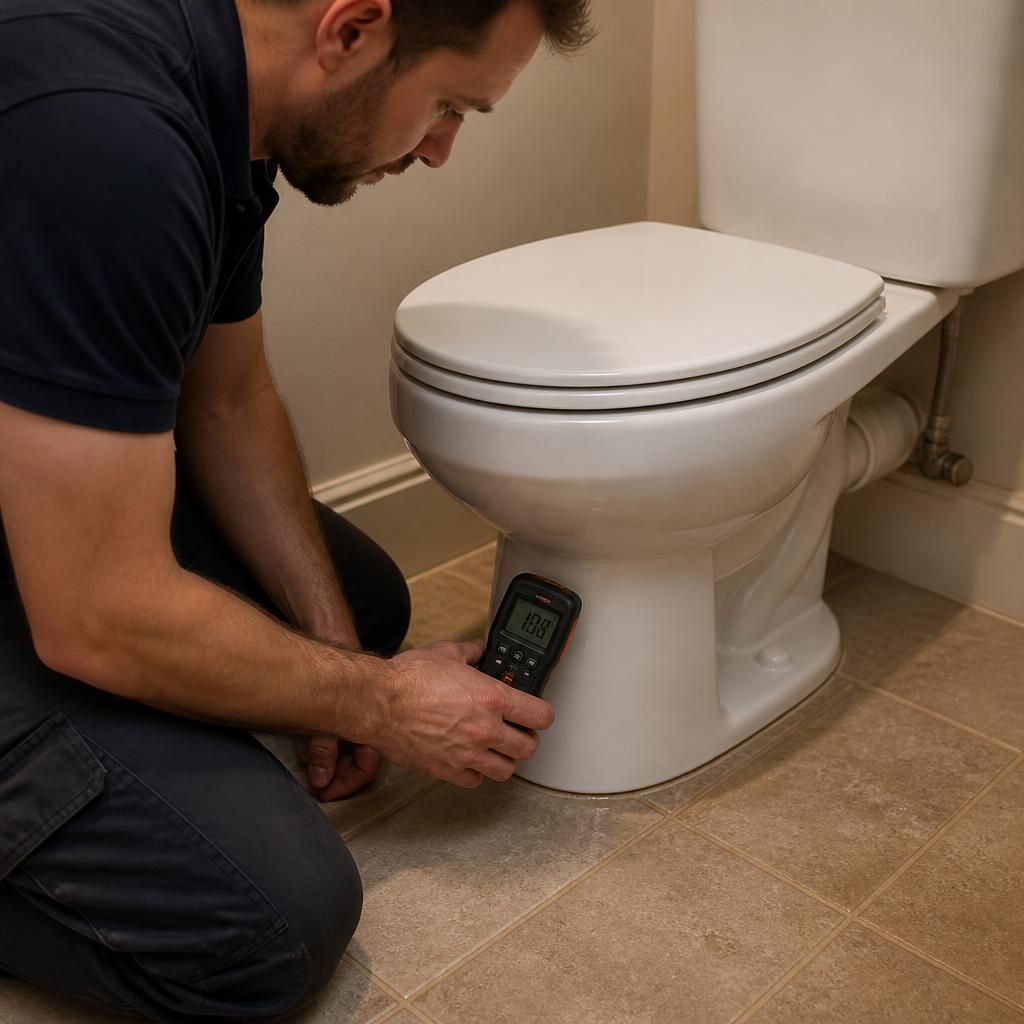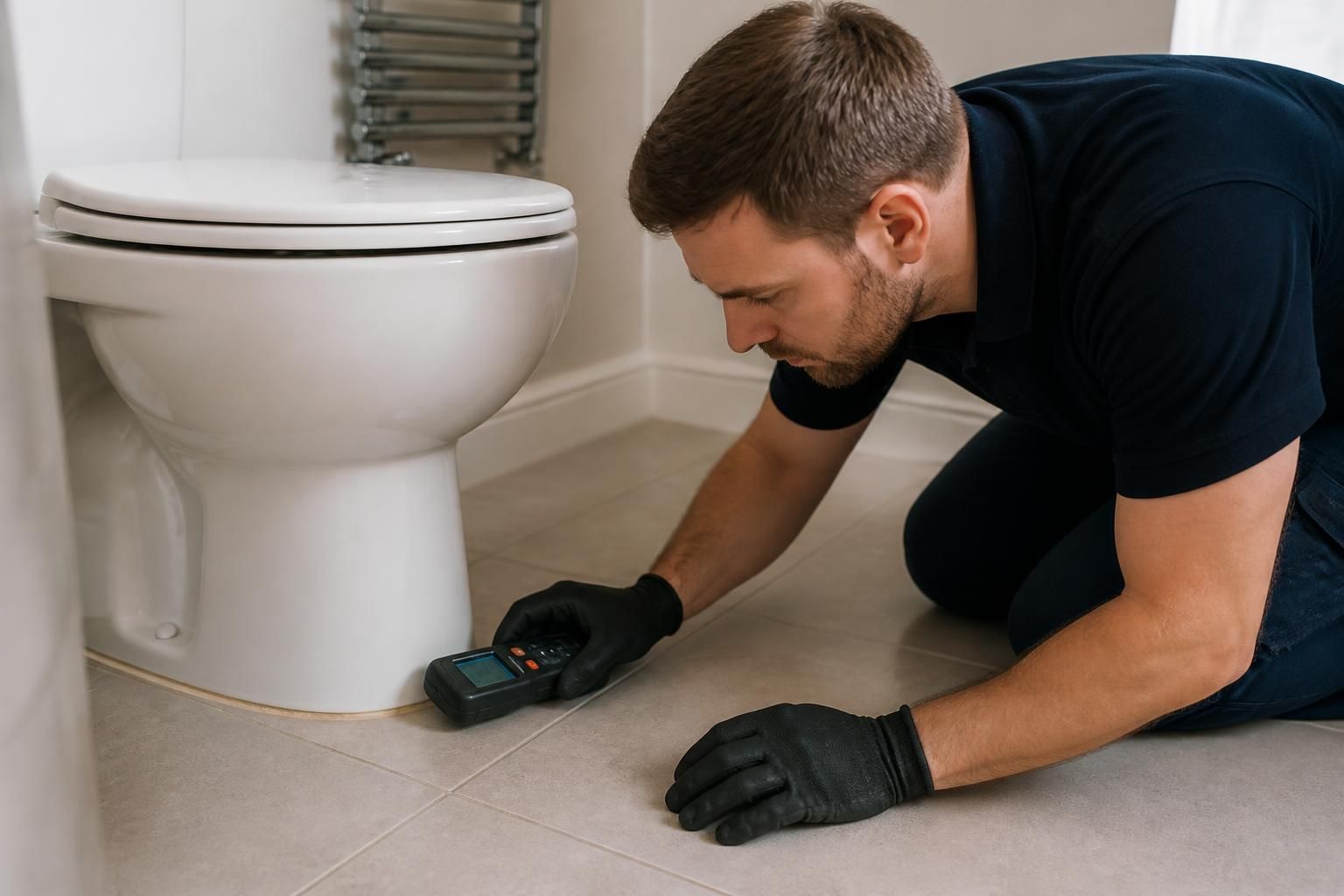
Toilet base leak detection is normally a contained plumbing inspection rather than a major bathroom disruption. The main inconvenience is restricted access around the toilet, with greater disruption only if the evidence indicates that the pan needs to be removed to inspect the seal, flooring or hidden connection.
What the inspection usually involves
The plumber will need clear access to the toilet and the surrounding floor. They may examine staining, swelling, damaged sealant, movement around the pan and signs of water tracking beneath the flooring. Moisture checks can help establish whether the floor is currently wet and whether water has travelled beyond the visible edge of the toilet.
This work is generally localised to the toilet area. It should not require widespread opening-up of walls or floors unless there is a separate reason to suspect concealed pipework or significant water damage. The inspection may also involve checking the inlet, cistern, flush pipe and waste connection, because water appearing at the base does not always originate from the pan-to-floor seal.
When disruption is greater
A toilet may need to be disconnected and lifted when external checks cannot identify the source, when the pan is moving, or when the flooring and seal beneath it need direct examination. In that situation, the toilet cannot be used while it is disconnected. The floor may also need to be dried and cleaned before the toilet is refitted, particularly where contaminated water has escaped.
The condition of the existing installation affects how straightforward this is. Corroded fixings, brittle connectors, damaged flooring, hardened sealant or a pan that has been poorly secured can make removal more involved. If the flooring has swollen or deteriorated, detecting the leak may identify a second issue that needs attention before the toilet can be properly reinstated.
Does detection create mess?
Most of the work is intended to be controlled and limited to the immediate area. Some minor moisture, sealant residue or debris may be present when old fittings are removed. A careful inspection and suitable protection for nearby surfaces can reduce this, but the amount of cleaning required depends on how long the leak has been present and whether water has been trapped beneath the toilet.
If the leak involves foul water, hygiene precautions are particularly important. The affected area should be cleaned appropriately, and porous materials that have absorbed contaminated water may not be suitable for simple drying alone. Do not cover a damp or contaminated floor with new sealant, as this can conceal continuing damage rather than resolve it.
How long will the toilet be unavailable?
The period of inconvenience depends on whether the inspection remains external or the toilet has to be lifted, along with the condition of the seal, fixings, pipework and floor. A detection visit does not automatically mean that the toilet must be removed. If removal is necessary, the toilet should be tested for stability, leaks and correct flushing after the seal and connections have been renewed.
Where the property has more than one toilet, the practical impact may be limited to temporary loss of one facility. In a property with only one toilet, it is sensible to discuss the likely sequence of inspection, repair and testing before work begins, particularly if the installation appears unstable or water is reaching the floor repeatedly.
How to reduce inconvenience before the visit
- Remove toiletries, mats, storage items and other belongings from around the toilet.
- Keep the floor area accessible so the pan, nearby pipework and surrounding flooring can be examined.
- Keep note of when water appears, whether it follows flushing, and whether the toilet moves when used.
- Avoid applying additional sealant around the base before the source has been established.
- If water is actively escaping, limit use of the toilet and protect nearby items from further contact with moisture.
For landlords and tenants, photographs of staining or dampness can help record how the problem developed, while the inspection can distinguish a failed seal from a damaged pan, loose connection or floor problem. Once the source is confirmed, the repair can be planned around the actual fault rather than removing more of the bathroom than necessary.