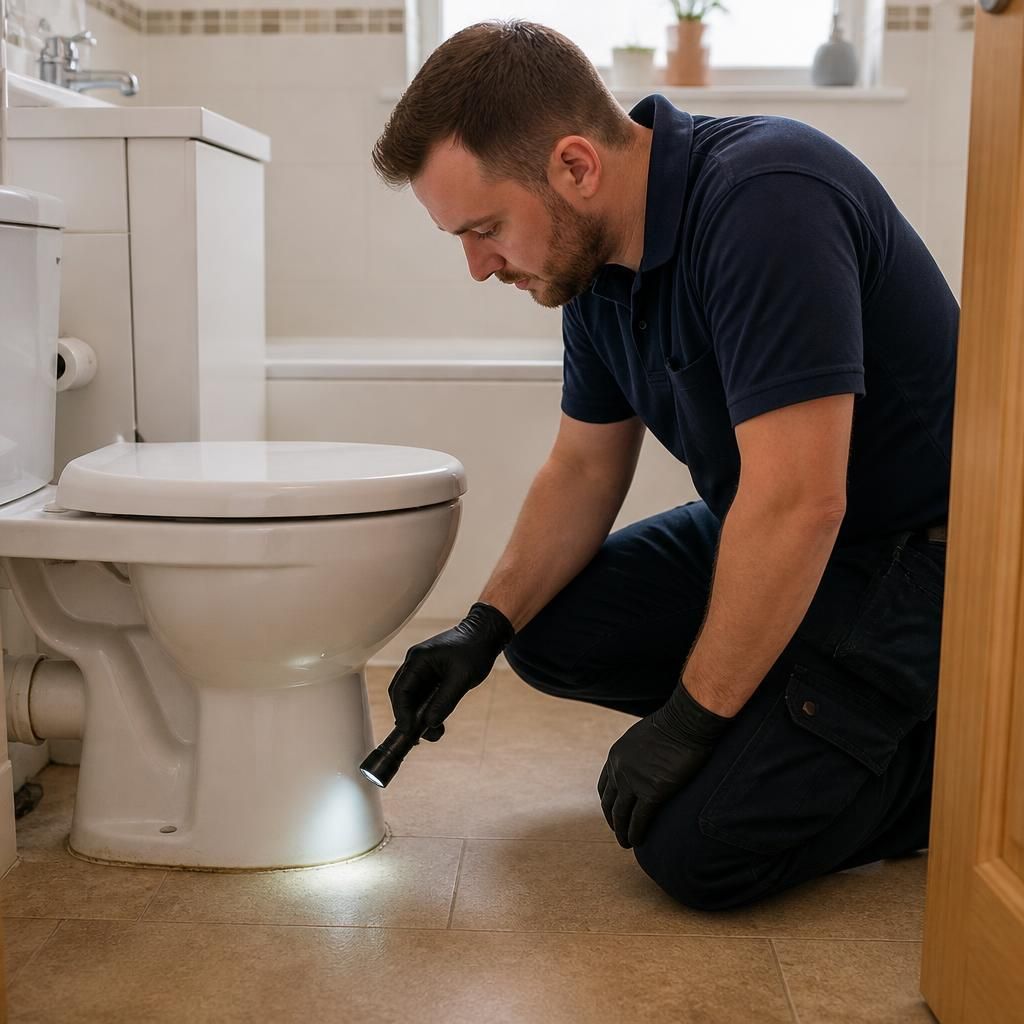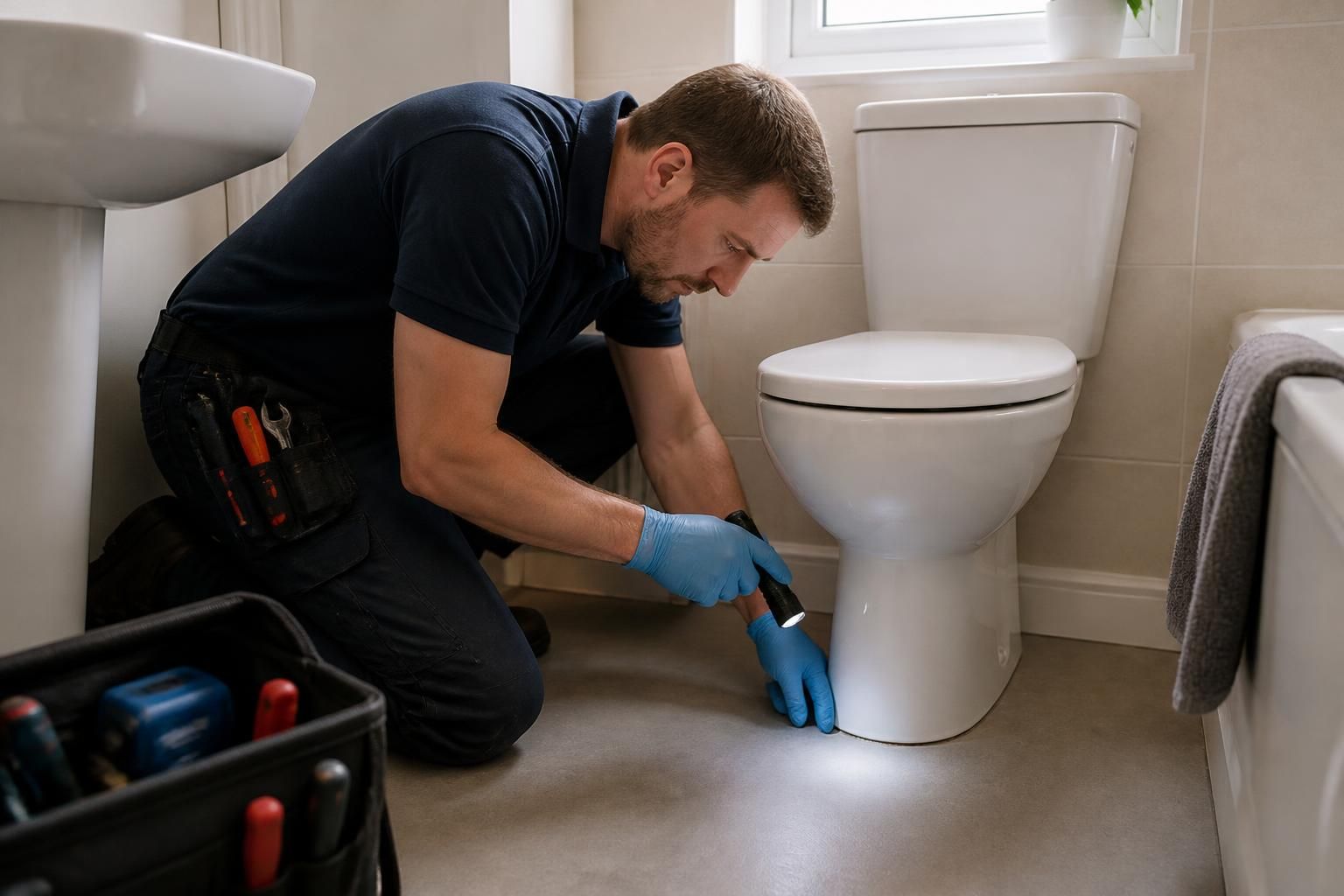
In a rented property, toilet base leak detection is normally arranged as part of the landlord’s or letting agent’s maintenance process. The inspection identifies whether water is escaping from the pan-to-floor seal, pan connector, cistern, supply pipe, flush mechanism, or nearby flooring and waste connections.
Who should arrange the inspection?
- Tenants: Report the suspected leak to the landlord or letting agent as soon as it is noticed. Include photographs, the location of any dampness, and whether the leak appears after flushing, filling the cistern, or using nearby fittings.
- Landlords: Usually arrange investigation and repairs where the problem relates to the toilet, plumbing installation, sanitation fittings, or normal deterioration.
- Letting agents: May coordinate access, instruct a plumber, and pass reports between the tenant and property owner.
Under the usual repairing obligations for rented homes in England, landlords are generally responsible for keeping water and sanitation installations in repair. This does not automatically make the landlord responsible for every leak: responsibility may change if the damage resulted from misuse, accidental damage, an unauthorised alteration, or a blocked fitting caused by the tenant. The tenancy agreement and the evidence from the inspection are therefore important.
Permission and access
A tenant should normally obtain approval before arranging non-emergency plumbing work or agreeing to charges on the landlord’s behalf. The plumber may need access to the bathroom, the room below, an adjacent cupboard, or floor and ceiling areas where moisture has travelled. Landlords and agents should give appropriate notice for access and agree a suitable appointment with the tenant, subject to the terms of the tenancy and the circumstances of the leak.
If water is actively escaping and is causing damage, the tenant should take reasonable steps to limit it, such as turning off the toilet’s isolation valve if it can be reached safely, while reporting the problem immediately through the landlord’s or agent’s stated repair procedure. Do not remove the toilet, lift flooring, or attempt a seal repair without approval, as this can obscure the original cause and affect responsibility for subsequent damage.
What the detection process may involve
- Checking the toilet pan, floor junction, cistern, flush pipe, supply connection and visible waste pipework.
- Testing whether moisture appears only during flushing, during cistern refilling, or when the toilet is not being used.
- Inspecting the seal beneath the toilet and the pan connector for movement, deterioration or poor alignment.
- Using suitable moisture-detection methods around the toilet and, where relevant, the ceiling or wall below.
- Determining whether the visible water originates at the toilet base or has travelled from another fitting.
A damp mark around the base does not always mean that the floor seal has failed. Condensation on the cistern, a loose supply connection, an overflowing cistern, or water running down from the flush pipe can produce similar symptoms. Accurate identification helps prevent an unnecessary toilet removal and ensures that damage to flooring, subflooring or the ceiling below is considered.
Records that can help
Keep copies of messages to the landlord or agent, photographs taken before cleaning or moving the toilet, appointment details, plumber’s findings and repair invoices. Ask for the inspection report to state the suspected source, any damage found, and whether further work is recommended. These records can help distinguish a maintenance issue from tenant-caused damage and support discussions about responsibility or reimbursement.
Where a landlord or agent has authorised an inspection, the plumber should normally report the findings to the instructing party before additional work is approved. A tenant should not assume that arranging a contractor independently means the cost will be recoverable from the landlord.
Ideal Plumbing Services provides toilet base leak detection and plumbing repairs for residential properties in Birmingham and across the wider West Midlands. The inspection findings can be explained to the tenant, landlord or letting agent so that the appropriate repair decision can be made.