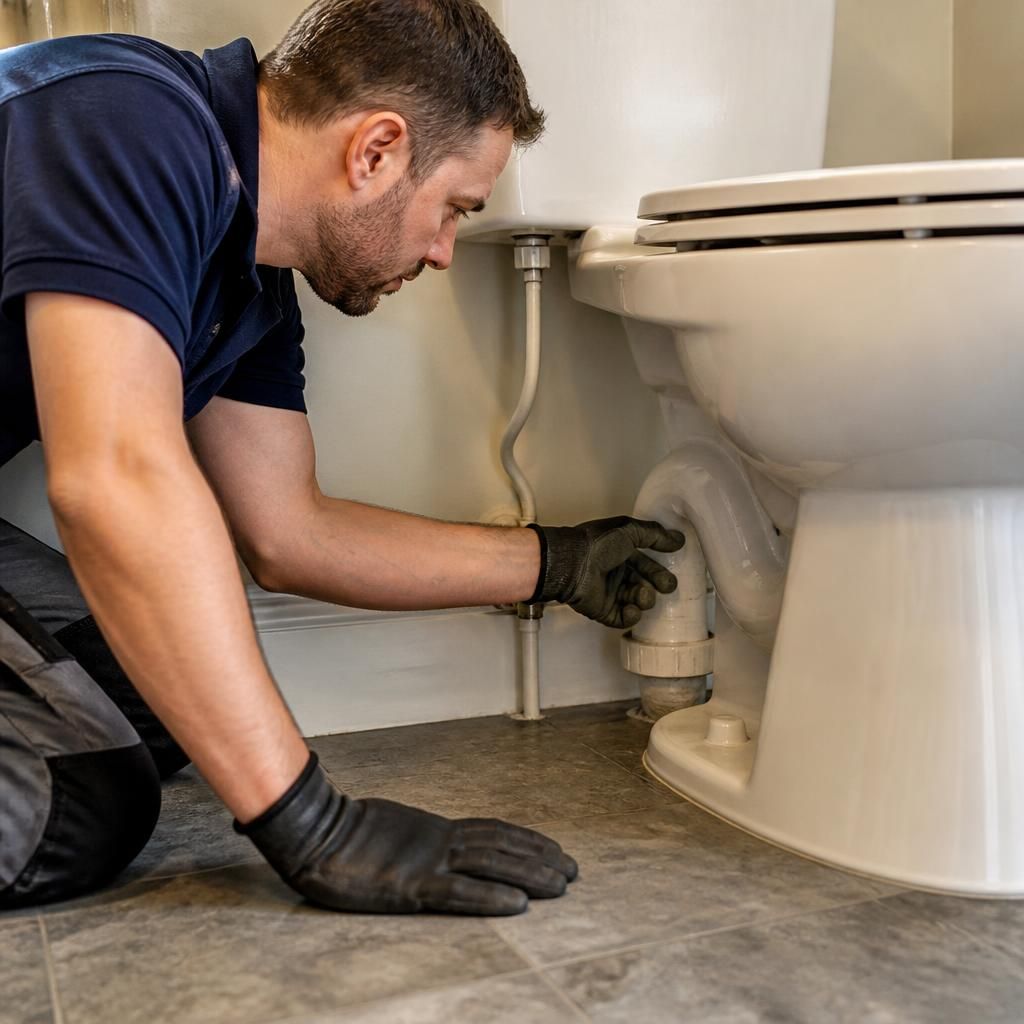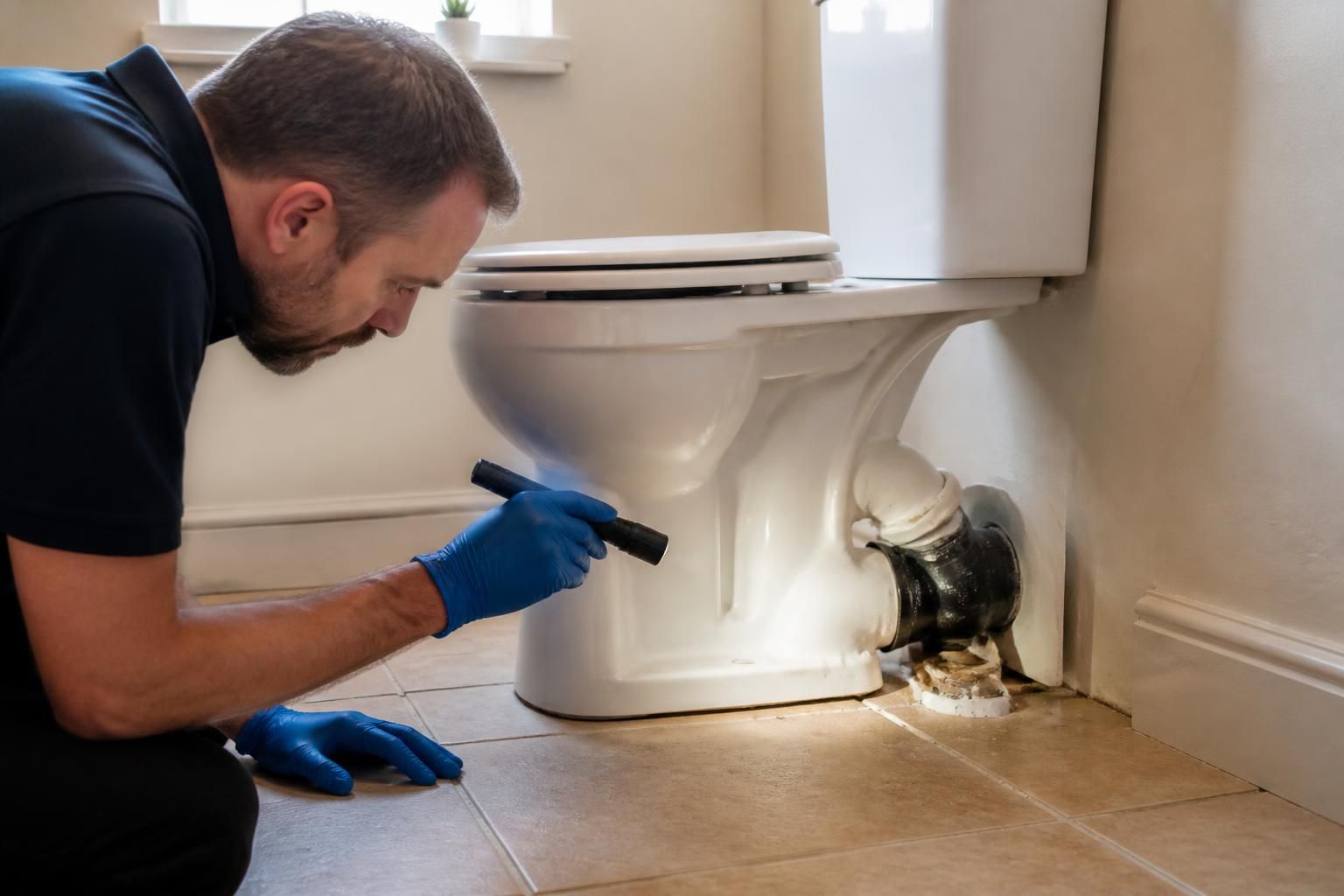
Yes. A toilet waste pipe leak in a rented property can usually be investigated without removing extensive flooring or sanitaryware. The inspection focuses on when water appears, how it travels, and whether moisture is present around the toilet pan, connector, waste pipe, adjoining wall or floor.
Detection is important because waste water can cause damage that is not immediately visible. A small leak may appear as a damp patch, staining, softened flooring, swelling around skirting boards or an unpleasant odour. In some cases, the only obvious sign is moisture on the floor after the toilet is flushed. Water can also travel beneath flooring or through a ceiling, making the visible damage appear some distance from the faulty joint.
A plumber will normally begin by asking the tenant or landlord:
- When the dampness or odour was first noticed
- Whether it occurs only after flushing or also when the toilet is not in use
- Whether the toilet rocks, moves or makes unusual sounds
- Whether nearby fixtures, such as a basin or bath, cause the same symptoms
- Whether there has been recent work to the toilet, flooring or drainage system
Visual inspection can identify cracked or displaced fittings, failed seals, loose connections and staining around the base of the toilet. The surrounding floor, skirting, ceiling below and accessible pipework may also be checked for signs of ongoing or previous moisture.
Where the source is not obvious, moisture-measuring equipment can help identify damp materials beneath or beside the toilet. A targeted inspection may then be used to distinguish a waste-water leak from a clean-water supply leak, condensation or water entering from another appliance. In suitable cases, the toilet can be tested in a controlled way while the pipework and surrounding surfaces are observed.
Tenants should report suspected leaks to the landlord or managing agent as soon as they are noticed, preferably with photographs and a written description of when the problem occurs. Avoid repeatedly flushing a toilet that is actively leaking, and do not lift flooring, dismantle pipework or apply permanent sealant unless authorised. These actions can conceal evidence, increase damage or affect responsibility for the repair.
The landlord is generally responsible for arranging repairs to fixed plumbing and drainage installations, although the exact responsibility can depend on the tenancy agreement and the cause of the damage. A tenant may be responsible where damage resulted from misuse or an unauthorised alteration. A professional inspection can help establish whether the problem is a failed fitting, defective installation, accidental damage or another issue, but it does not replace the tenancy agreement or legal advice.
Landlords should keep records of the report, inspection findings, photographs and repair work. If the leak has affected another flat, a ceiling or shared drainage, early documentation can help clarify the extent and likely source of the damage. Where access is needed, tenants and landlords should agree arrangements so the inspection can be completed safely and with minimal disturbance to the property.
Ideal Plumbing Services can assess suspected toilet waste pipe leaks for homeowners, landlords and tenants in Birmingham and the wider West Midlands. The findings can indicate whether a repair is needed at the toilet connection, waste pipe, surrounding flooring or another part of the drainage system.