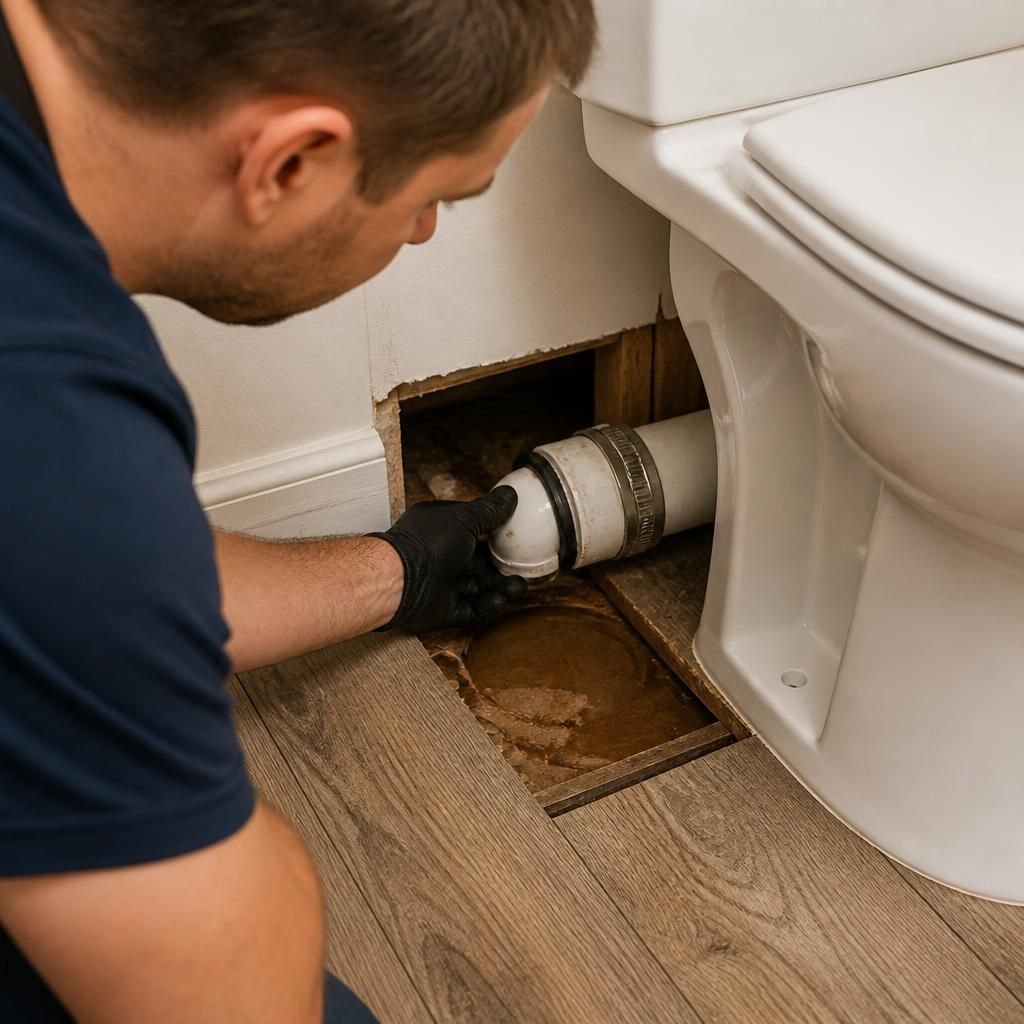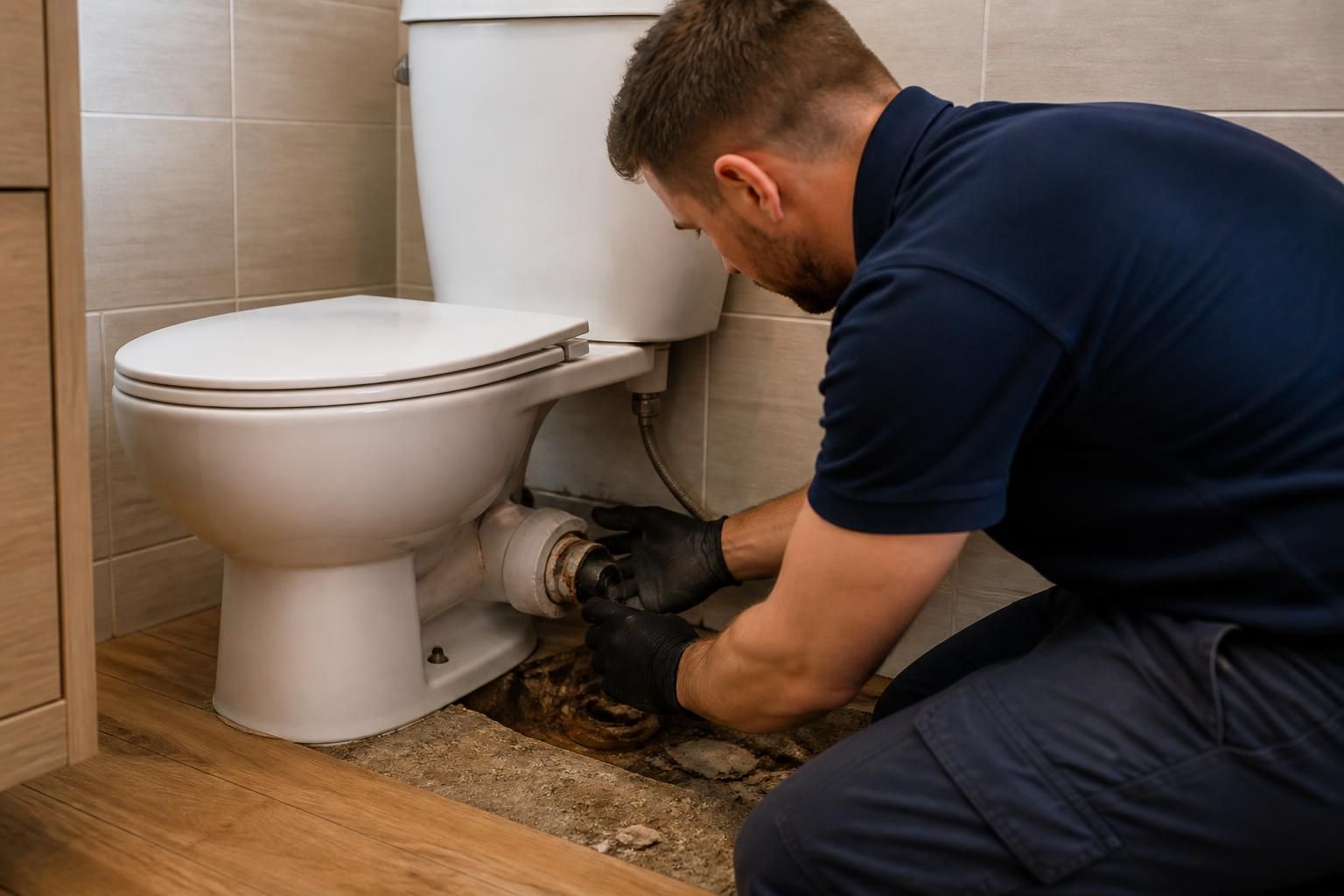
Toilet waste pipe leak detection is generally a controlled, low-disruption process. The main interruption is usually limited to inspecting the toilet connection, checking nearby surfaces and carrying out tests to establish whether water is escaping from the waste pipe, its joints or the surrounding seal.
The level of disruption depends on how clearly the leak can be traced and whether the pipework is exposed. A visible connection beneath or behind the toilet can usually be assessed directly. Where the pipe runs through a boxed-in section, wall or floor void, the plumber may need to inspect adjacent access points or use specialist detection equipment to follow signs of moisture without unnecessary disturbance.
A typical inspection may involve:
- Checking the toilet outlet, pan connector and accessible waste pipe joints for movement, staining or moisture.
- Testing the toilet and observing how water behaves as it passes through the waste connection.
- Using moisture readings or other detection methods to distinguish an active leak from old dampness.
- Assessing nearby flooring, skirting boards, walls or ceilings for secondary signs of water escape.
- Identifying whether the problem is at the toilet connection, along the waste pipe or further into the drainage system.
There may be some practical inconvenience while the inspection is in progress. The surrounding area needs to remain clear, and the toilet may need to be tested more than once. If the leak is suspected to be beneath flooring or behind a finished surface, the plumber should explain why further access is necessary before any investigative opening is made. This helps keep any disturbance proportionate to the evidence available.
Noise and mess are normally associated with gaining access rather than with the detection test itself. Cutting through boxing, lifting a small removable panel or exposing a joint can create dust and require the area to be protected. More extensive disruption is more likely when the pipe is concealed, the leak has affected building materials, or an earlier repair has made the original pipe route difficult to identify.
After detection, the findings should establish whether a straightforward repair is suitable or whether additional investigation is needed. Evidence of dampness around a toilet does not always identify the waste pipe as the source; water can travel from a supply connection, cistern, bath or shower before appearing at floor level. Accurate tracing avoids disturbing sound areas or replacing the wrong component.
If the toilet is in a rented property, it is sensible to record visible staining or damp before the inspection and inform the landlord or managing agent about any proposed access work. For any property, moving toiletries and removable items away from the toilet gives the plumber clearer working space and helps reduce avoidable disruption.