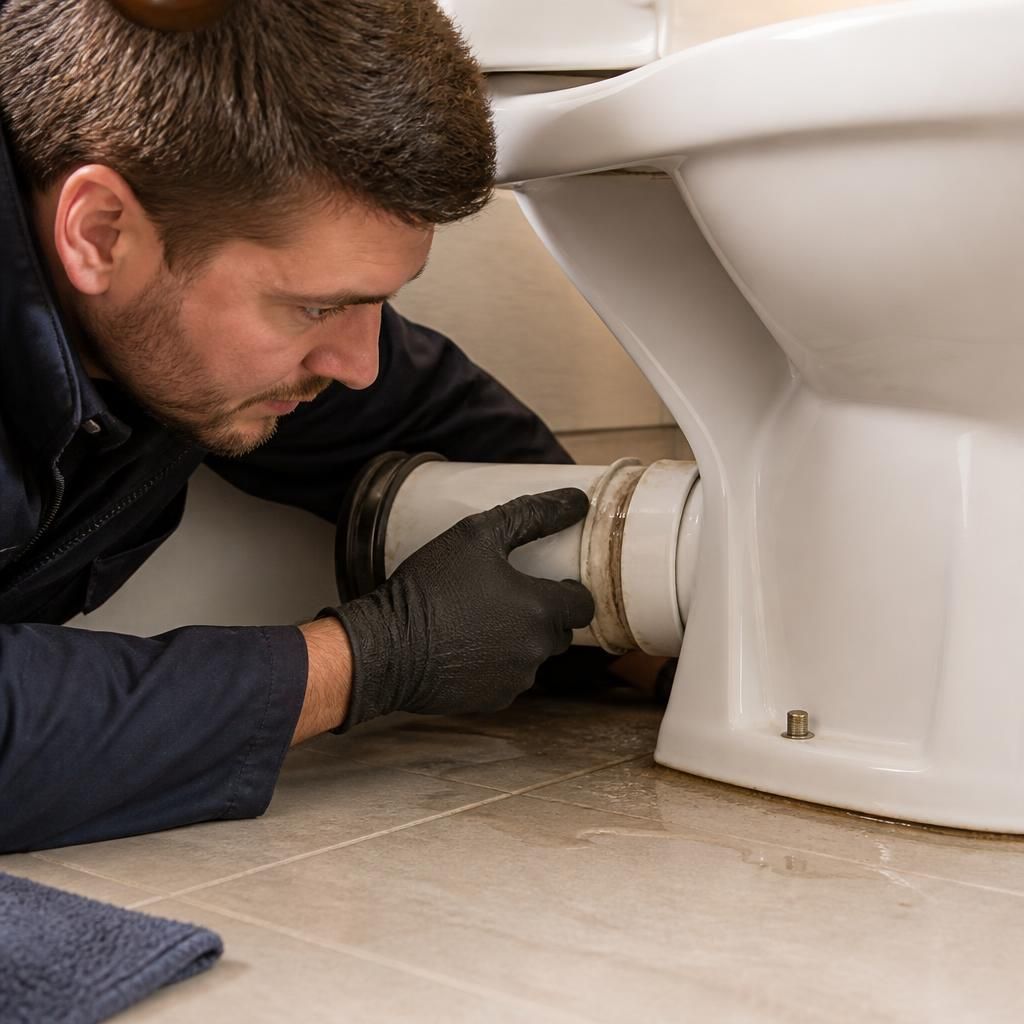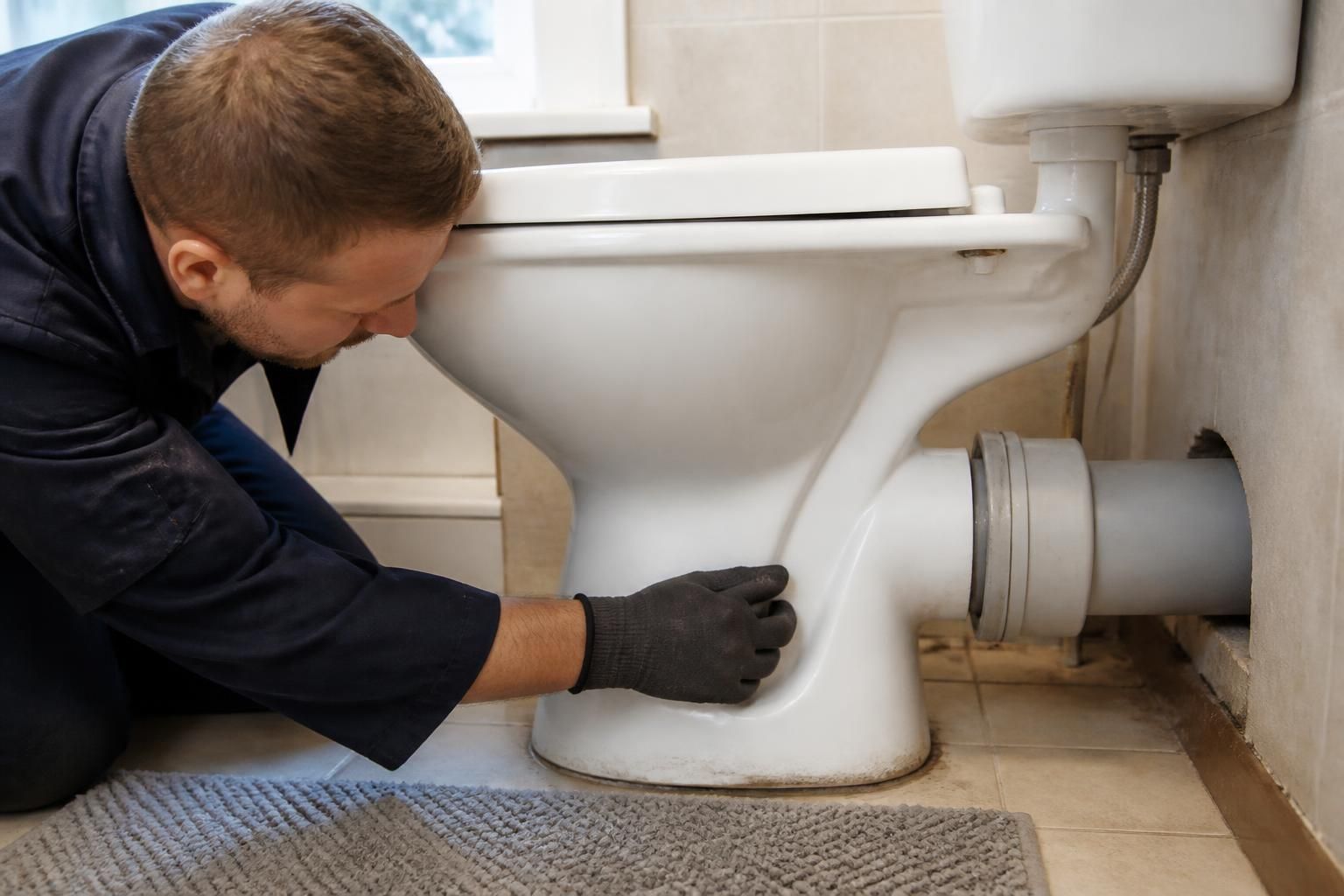
A leak from a toilet waste pipe happens when foul water escapes somewhere between the toilet outlet and the property’s soil pipe or drain. The visible damp patch does not always identify the source: wastewater can run along the outside of the pipe, beneath flooring or inside boxing before appearing several centimetres away.
One possible cause is deterioration within the pipe material itself. Older metal wastework can corrode from the inside, particularly where water remains in a low section, while plastic pipework can become brittle after prolonged exposure to heat, harsh cleaning chemicals or repeated stress. Damage may start as a small pinhole and become noticeable only when the toilet is flushed.
A defective connection at a branch or access point can also allow water to escape. Soil pipes often include bends, junctions and inspection sections, and a fault at one of these locations may be mistaken for a problem directly beneath the pan. Water may only appear during a full flush because the flow rate is then greater than during normal use.
In some cases, the apparent waste-pipe leak is coming from another part of the toilet. A leaking inlet valve, cistern, flush valve or supply connection can drip down the back of the pan and collect around the waste outlet. Condensation on a cold cistern or pipe can produce similar dampness without any foul-water leak. Checking whether the moisture is clean or contaminated is important, but avoid prolonged contact with suspected wastewater.
Signs that point towards a waste connection or drain problem include:
- a foul smell that returns after cleaning;
- dirty or discoloured water around the base of the toilet or pipework;
- damp flooring, staining on a ceiling below, or soft flooring near the bathroom;
- water appearing only while the toilet is flushed; and
- staining inside a boxed-in section or around an inspection cover.
To identify the source, stop using the toilet until the area has been inspected if wastewater is escaping. Dry the accessible pipework, place absorbent material beneath it, and carry out one carefully observed flush only if there is no risk of spreading contamination. Look for the first point at which water appears rather than the largest wet patch. Do not dismantle a concealed connection, as this can release stored wastewater and make the damage worse.
The appropriate repair depends on the location and condition of the fault. An accessible section may be repaired by replacing the damaged component and checking that the surrounding pipework is properly supported. If the pipe runs behind a wall, beneath a floor or within a boxed-in soil stack, inspection may require access through a panel or carefully removed flooring. Where wastewater has reached timber, plasterboard or insulation, those materials may need drying and assessment after the plumbing repair.
A plumber should investigate persistent dampness, sewage odours, staining below a bathroom or any leak that returns after a visible connection has been tightened. Professional leak detection can help distinguish the waste pipe from nearby supply, heating and drainage pipework, limiting unnecessary removal of flooring or finishes. For rented homes, report the problem to the landlord or managing agent as soon as it is found and keep photographs of any damage.
Until the cause is confirmed, avoid chemical drain cleaners, sealants applied over a wet connection and repeated flushing. These measures do not correct a damaged waste system and can make a later repair more difficult. Cleaning contaminated surfaces with suitable disinfectant and keeping children and pets away from the affected area helps reduce the hygiene risk while the fault is being dealt with.