Preparing for toilet waste pipe leak detection means preserving evidence of the leak, making the area safe and providing the plumber with useful information about the property and the symptoms. Good preparation helps distinguish a leaking waste connection from a supply pipe, cistern, pan or drainage problem without disturbing the conditions that need to be assessed.
Record when and how the leak occurs. Make a note of whether water appears only after flushing, when the toilet is used, during periods of heavy drainage elsewhere in the property, or without any obvious trigger. Record the location where moisture is first noticed, rather than only where it has collected. A short video or photographs can also be useful if the leak stops before the inspection, particularly where staining, damp patches or water marks are visible.
Limit use of the toilet if necessary. If every flush produces more water, avoid repeated testing and use another toilet where possible. If there is a significant active leak, turn off the toilet’s isolation valve or the property’s main stopcock only if you can identify it safely and operate it without forcing the fitting. Do not attempt to remove seized valves or alter connections, as this may create a separate leak and make the original fault harder to assess.
Protect people and belongings from contaminated water. Water from a waste pipe may contain bacteria, especially if it has escaped from a pan connector or a joint carrying flushed waste. Keep children and pets away from affected areas, wear suitable gloves when dealing with wet surfaces, and avoid direct contact with the water. Do not mix cleaning chemicals or pour drain products into the toilet before the inspection, since they can create hazardous fumes and may affect later testing. Ventilate the room where practical, without allowing water to spread to other parts of the property.
Gather relevant property information. Tell the plumber about any recent toilet replacement, flooring work, bathroom alteration, blocked drain, overflowing toilet or previous repair. The age and position of the bathroom, the floor construction, and whether the property is a flat or a house can all affect how a waste pipe is routed and where moisture may travel. If you are a tenant, check whether the landlord or managing agent needs to authorise inspection or access before the visit.
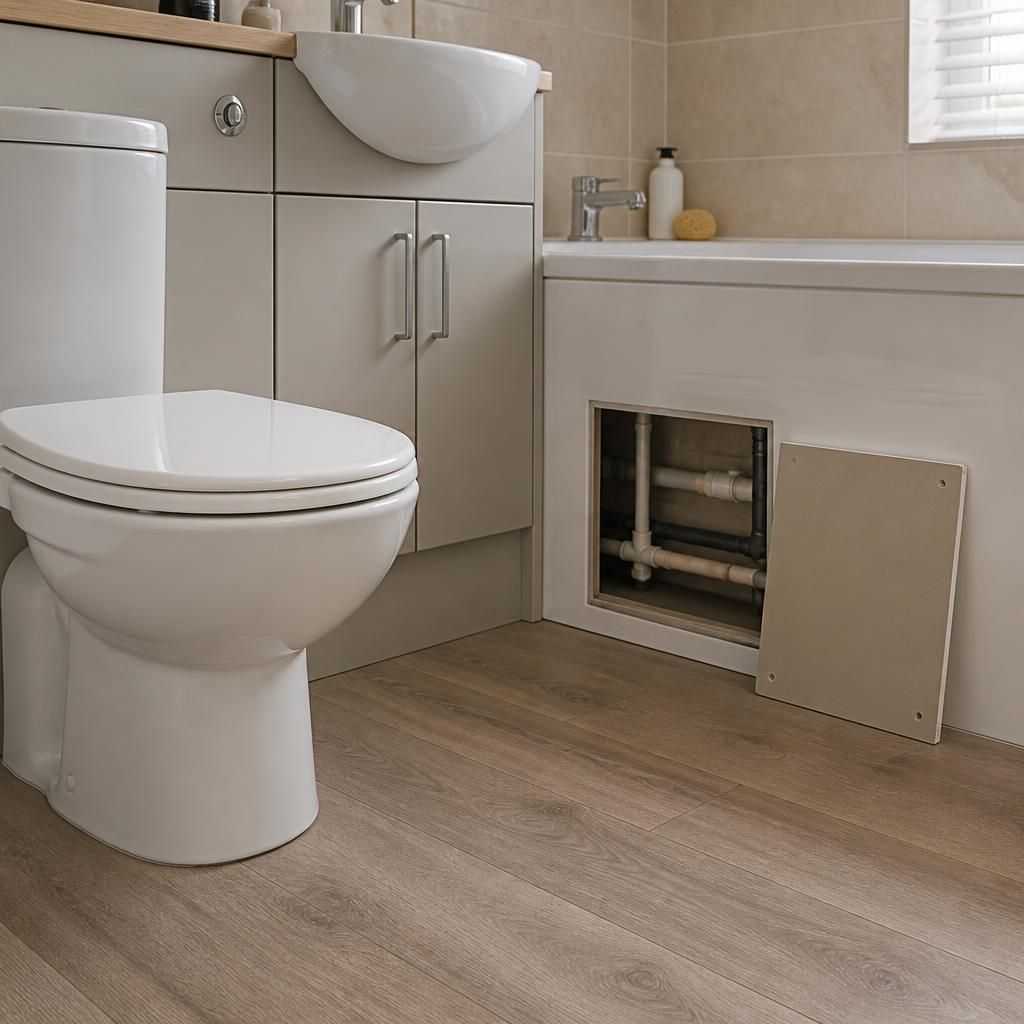
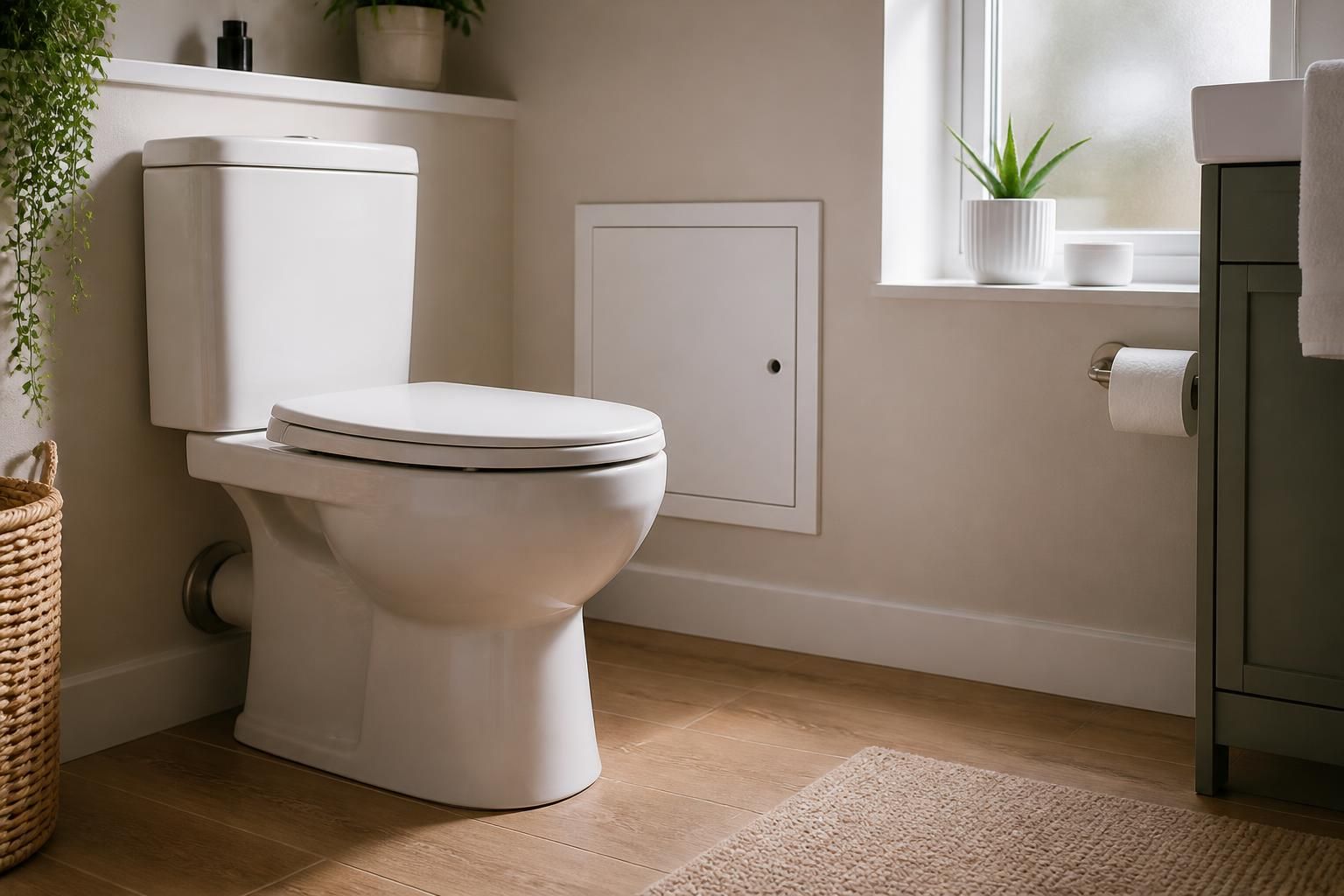
It is also helpful to identify any areas that may need to be inspected beyond the bathroom, such as a ceiling below, a boxed-in pipe run, an adjoining cupboard or an outside inspection chamber. Do not open sealed panels or lift fixed flooring yourself. Instead, point out where access panels, removable boxing or inspection covers are located so the plumber can decide whether they are relevant.
During detection, the plumber may compare the condition of the toilet and visible joints with moisture readings, controlled water tests or other suitable diagnostic methods. The exact approach depends on whether the suspected fault is at the pan connection, a concealed waste pipe, a branch connection or the drainage system. The aim is to identify the source rather than assume that the first damp patch marks the point of failure, because water can travel through flooring and behind finishes.
Once the source has been located, ask what evidence supports the diagnosis, whether any further access is needed, and which repairs are recommended. Ideal Plumbing Services provides leak detection and plumbing repairs for residential customers in Birmingham and across the West Midlands, helping homeowners, landlords and tenants understand the fault before deciding on remedial work.