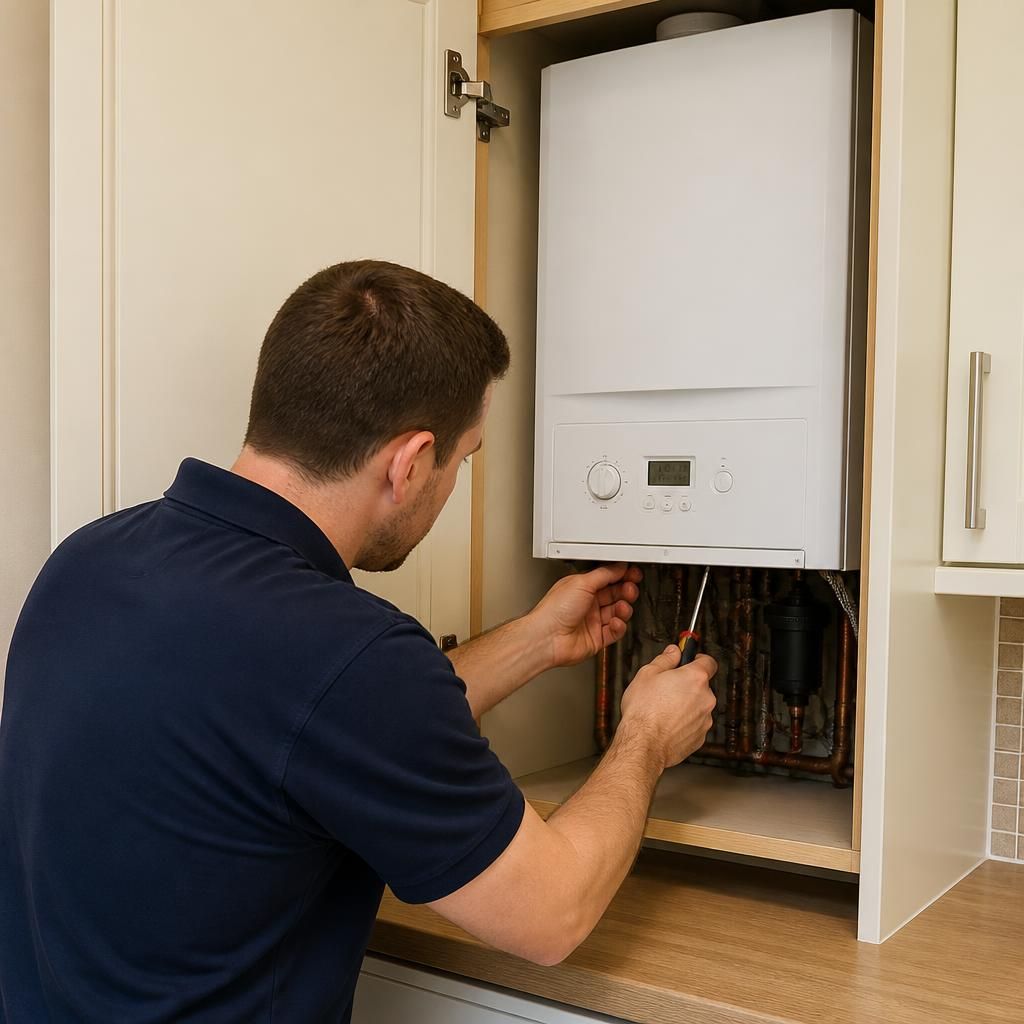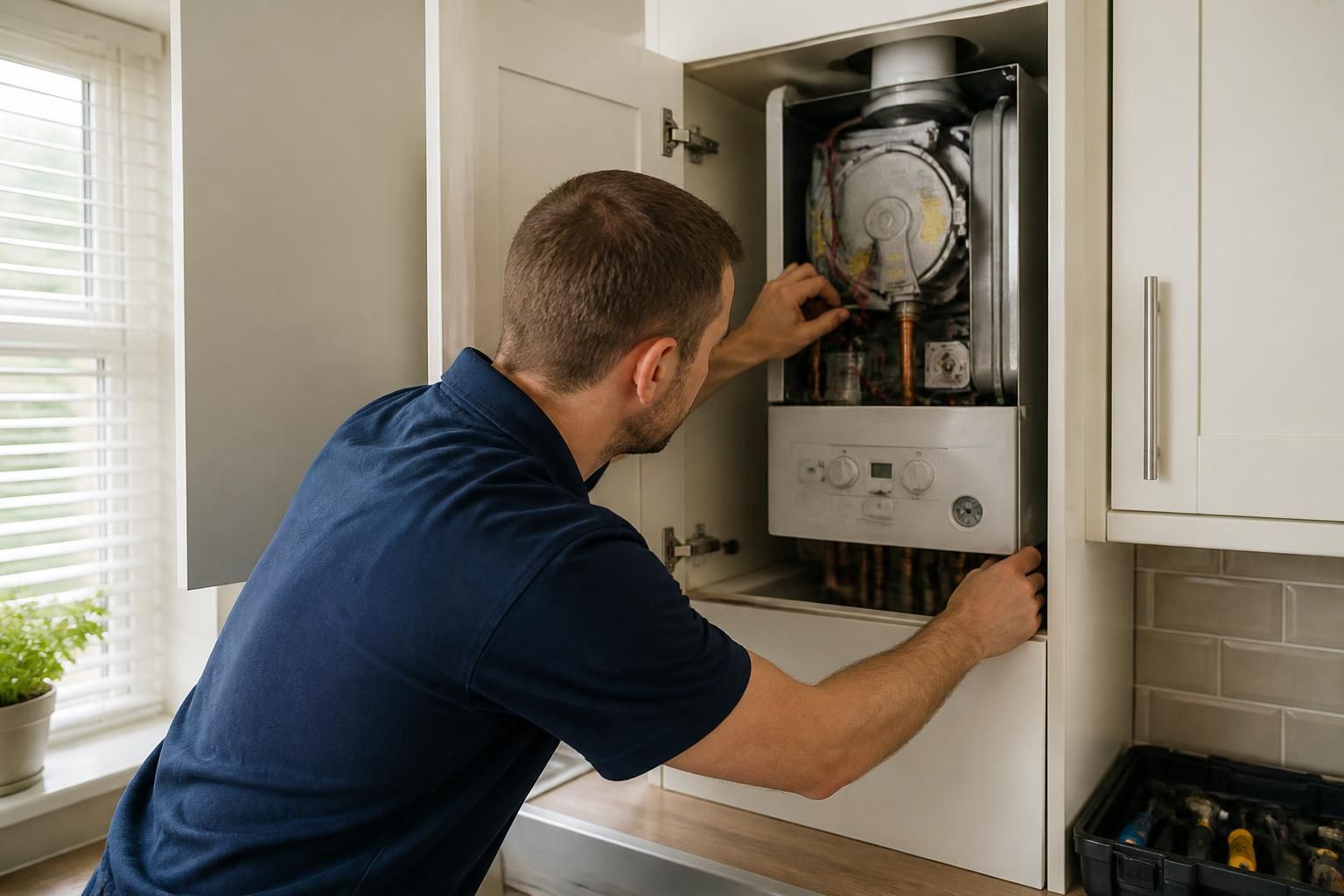
Access for boiler part replacement usually means a safe working area around the appliance, a clear route to it and access to the relevant service connections. The exact requirement depends on the faulty component and the boiler’s position, because replacing a pump, fan, sensor, diverter valve or control component can involve different parts of the appliance.
Before the engineer attends, make sure they can reach:
- The boiler and its surrounding area: move furniture, boxes, cleaning products and other belongings that restrict movement or create a trip hazard.
- The room entrance and route: keep the path from the entrance to the boiler unobstructed, particularly where the appliance is in a utility room, kitchen, bathroom or a confined storage area.
- The electrical supply: the engineer may need to inspect or isolate the boiler’s electrical connection, so access to the nearby fused connection unit or switch is useful.
- Heating and water controls: make thermostats, programmers and other controls accessible where they are relevant to diagnosing the fault or checking the replacement part.
- Service connections: the engineer may need to reach the appropriate gas, water or heating connections in order to isolate the appliance safely and test it afterwards.
Some components are reached from the front, while others may require additional room to one side or underneath the boiler. A cramped installation can make it harder to remove fixings, disconnect wiring or extract a component without damaging adjacent parts. Do not assume that opening the front of a cupboard provides sufficient working space; the engineer must be able to position tools safely and maintain visibility of the area being worked on.
If the boiler is installed in a loft, under stairs or in another restricted location, the access route matters as much as the appliance itself. A sound, adequately lit approach and a stable standing surface are needed. Items stored around the boiler should be removed rather than left balanced nearby. Where the appliance is above a worktop or fitted unit, the engineer may also need enough room to protect the surrounding surface and handle removed components safely.
Replacement parts can involve electrical connections, sealed heating components or gas-related components. For that reason, householders should not remove the boiler casing, disconnect wiring or attempt to isolate components themselves. The engineer will determine which supplies need to be isolated and whether the working area is safe before starting. If the installation cannot be accessed safely, the work may need to be rearranged or additional preparation may be required.
Tell the engineer in advance if the boiler is behind a locked door, within a tenant-controlled property, positioned in a loft, or surrounded by fixed furniture that cannot be moved. It is also helpful to explain whether any access panel, removable shelving or other obstruction requires a key or permission before it can be opened. This allows the required access arrangements to be considered before the visit.
After the replacement, the engineer will normally need space to restore the relevant supplies, inspect connections and test the boiler’s operation. Keep the area clear until these checks are complete, and do not replace stored items or close a door around the appliance if doing so would restrict ventilation or future servicing access.