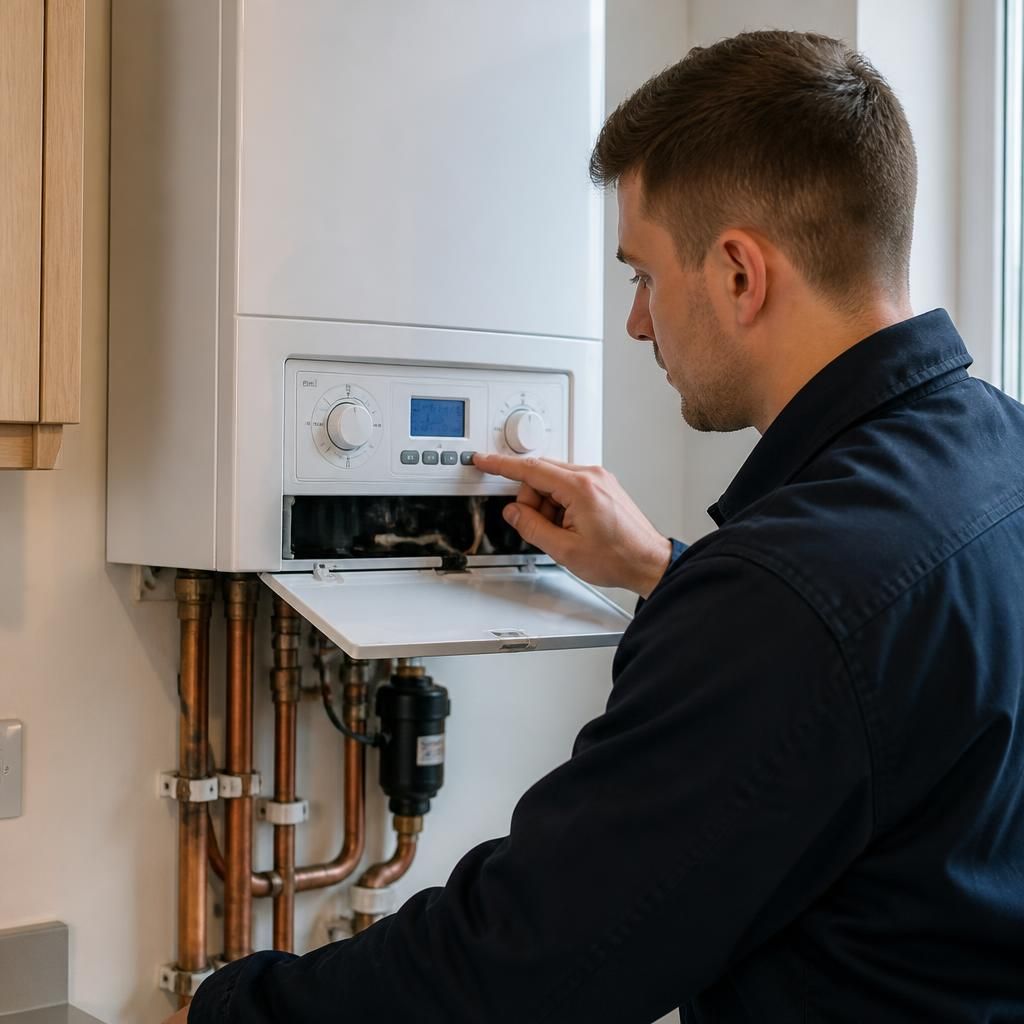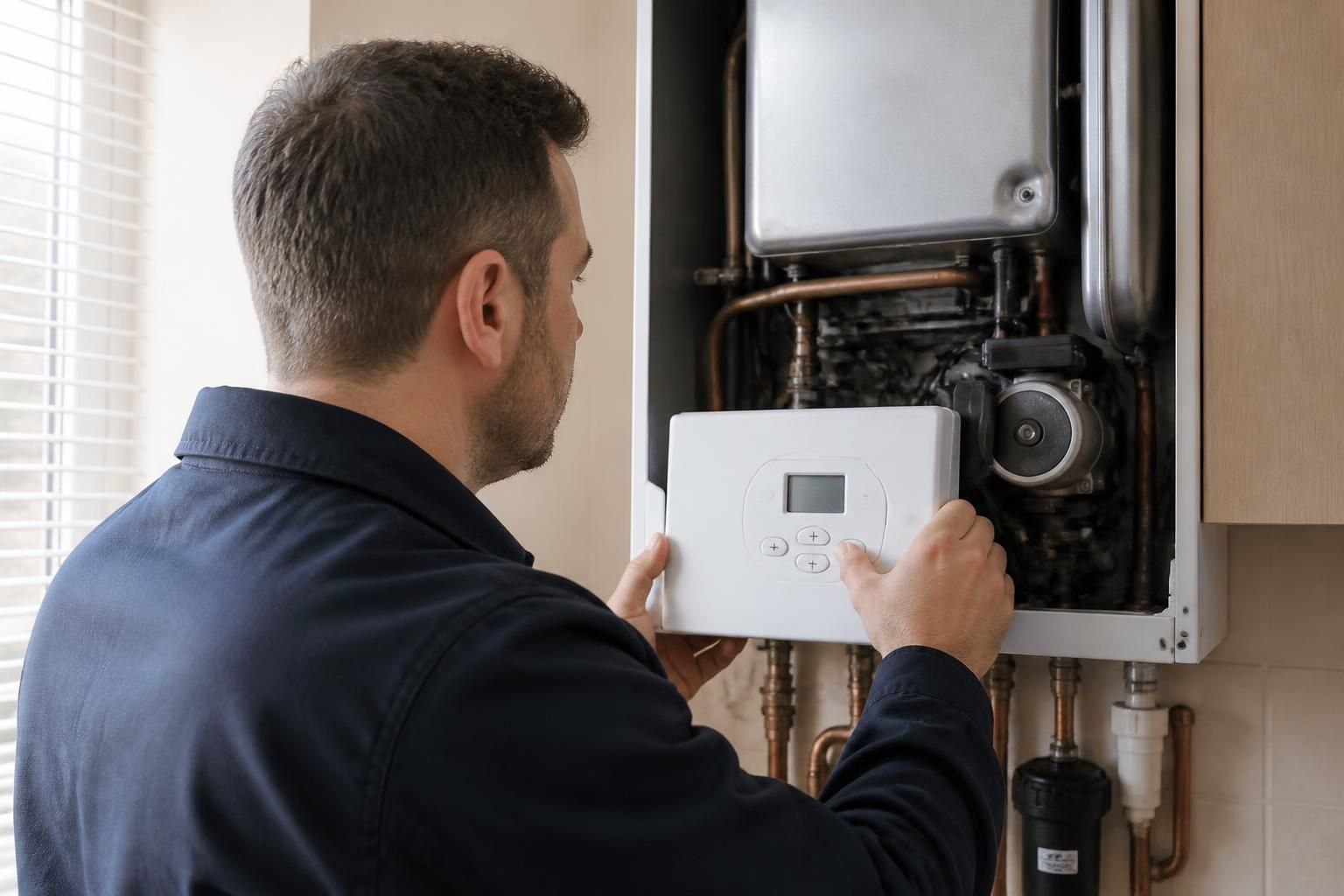
Before a boiler part replacement goes ahead, check the boiler’s documentation, ownership arrangements, warranty position, part compatibility, diagnosis and quotation. These checks help establish whether replacing one component is appropriate and clarify what the job includes.
Check the boiler records
- Locate the installation instructions, service records and any previous repair invoices.
- Record the boiler type and any information shown on its data plate, including the appliance identification details.
- Check whether the boiler or a previously fitted component is still covered by a manufacturer or installer warranty.
- Tell the engineer about recurring repairs, recent servicing and any changes to the heating or hot water system.
Service history can reveal whether a component has failed independently or whether an underlying issue is placing extra strain on the system. It may also show whether related parts have already been tested or replaced.
Confirm permission and responsibility
Homeowners can arrange work directly, but tenants should check their tenancy agreement and contact the landlord or managing agent before authorising a replacement. The responsible party may need to approve the work, arrange access or deal with any warranty or maintenance agreement. Keep written confirmation where permission is required.
Ask how compatibility will be checked
A replacement component must be suitable for the specific boiler and system, not simply similar in appearance. Ask the heating engineer to confirm the part reference, compatibility and whether an approved alternative is being considered. Older or discontinued appliances may have fewer suitable components, so this should be established before the appointment is committed to.
Understand the diagnosis
Ask what tests have been carried out and what evidence links the suspected component to the problem. A fault may originate elsewhere in the boiler, controls, wiring, pump, pipework or heating system. Replacing a part without checking related causes can result in another failure or leave the original problem unresolved.
The engineer should explain:
- which component is believed to have failed;
- what checks support that conclusion;
- whether associated parts or system conditions need attention;
- whether repair, replacement of a related component or wider boiler work is the more suitable option.
Review the quotation carefully
Before agreeing to the work, check that the written quotation identifies the part, labour and any applicable additional charges. It should also make clear whether testing after installation, removal of the old component and any necessary follow-up are included. If the final price may change after further investigation, ask when approval will be requested and what could cause the change.
Do not rely on a description such as “boiler repair” alone. A clear quotation makes it easier to compare like-for-like work and prevents uncertainty about what has been authorised. No hidden charges should be assumed; they should be explained before the work proceeds.
Check safety and compliance arrangements
Gas-related boiler work must be carried out by an appropriately qualified engineer, with the appliance checked and tested after the component is fitted. Where electrical controls or wiring are involved, the engineer should follow the relevant electrical safety procedures as well. Ask what safety checks will be completed and what records or paperwork you will receive.
It is also sensible to check whether the replacement could affect the boiler warranty, service requirements or future maintenance schedule. Keep the invoice and any test documentation with the appliance records.
Ideal Plumbing Services provides boiler part replacement and heating support for homeowners, landlords and tenants in Birmingham and the wider West Midlands. A proper assessment can establish whether a component replacement is suitable before work is authorised.