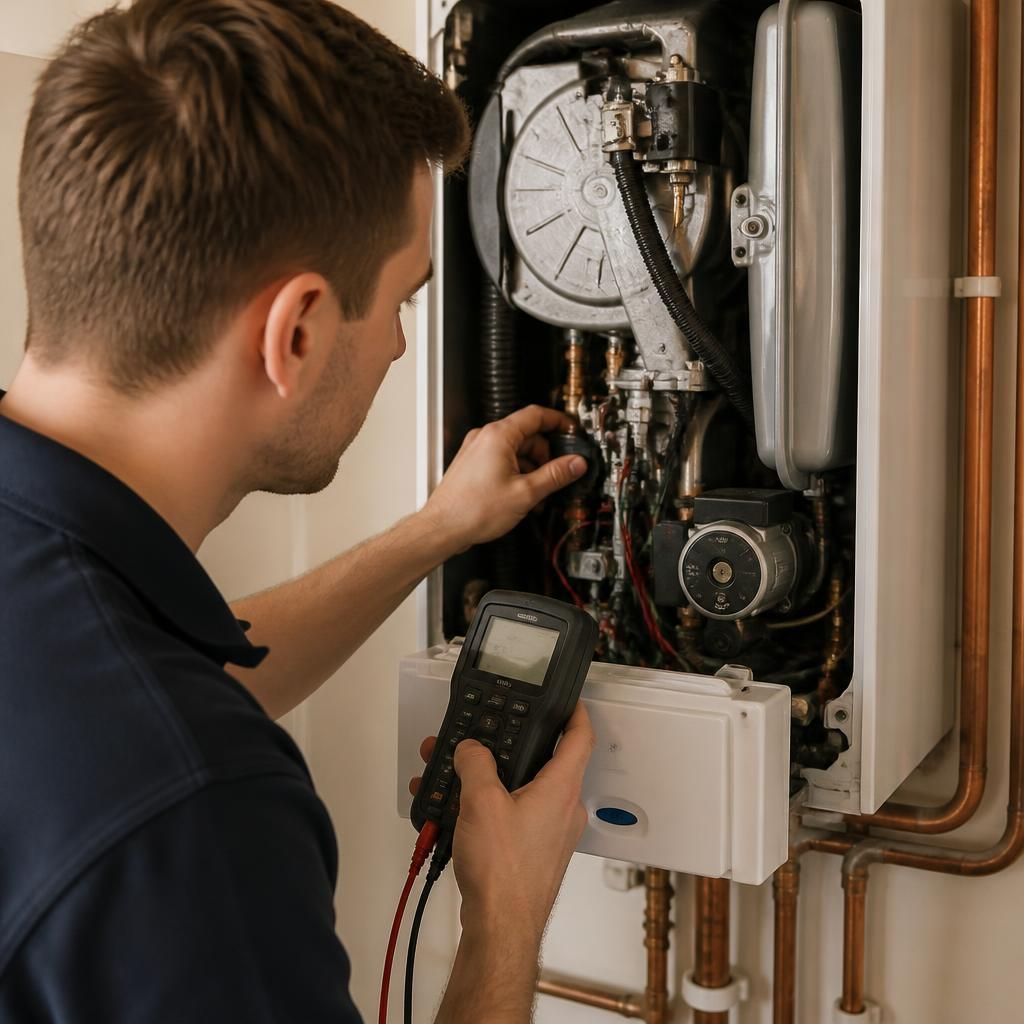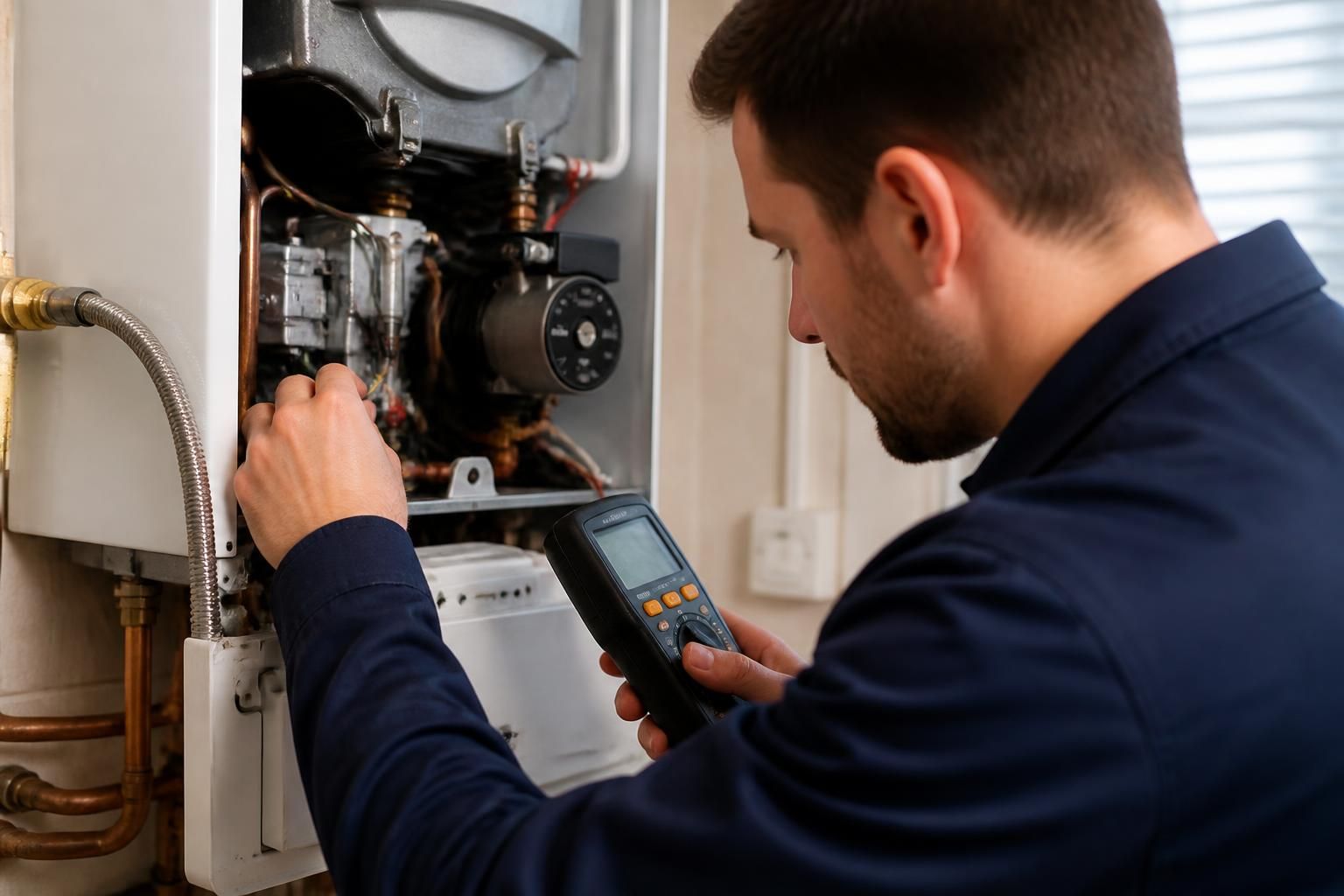
The price of replacing a boiler part is usually made up of the replacement component, the engineer’s labour, any diagnostic or site-visit charge, and additional materials needed to complete and test the repair. A reliable estimate should show these elements separately so you can see what is included and whether further work is optional or necessary.
The replacement part
Parts vary considerably in price. A simple sensor, seal or valve may cost less than a larger assembly containing several working components. The specification also matters: the part must be suitable for the exact boiler and installation, rather than being selected by appearance alone. In some cases, a compatible alternative may be available; in others, the required component may need to be sourced as a specific assembly.
Labour and testing
Labour covers safe isolation of the appliance, removal of the defective component, installation of the replacement and checks that the boiler operates correctly afterwards. Testing can include checking for leaks, confirming electrical connections where relevant, and verifying that the boiler’s operating sequence is functioning properly. A job that appears straightforward may therefore include more work than simply removing and fitting a part.
Some plumbing companies charge a fixed labour price, while others use an hourly rate or price the work as a complete repair. Ask which pricing method applies and whether diagnosis is included in the quoted amount. If the fault has not yet been confirmed, the initial charge may cover inspection and testing rather than the replacement itself.
Extra materials and associated work
Small items such as seals, gaskets, clips, connectors or replacement fasteners may be needed during the repair. These are often inexpensive individually but can affect the total if they are not included in the original estimate. A part may also have caused damage to nearby components, or the engineer may find that the underlying problem needs attention to prevent the new part from failing again.
Where corrosion, contamination or a leaking connection is found, cleaning, preparation or additional remedial work may be required. This should be explained before it is carried out, particularly if it changes the agreed price. Necessary safety work should not be omitted simply to keep an initial estimate low.
Repair, replacement or a wider solution
Replacing one component is not always the most economical option. If several parts are deteriorating or the repair involves a major assembly, it may be sensible to compare the cost of the proposed work with other available options. That does not mean replacing the boiler is automatically preferable; the decision should take account of the confirmed fault, the condition of the installation and the likely scope of work.
Warranty and quotation terms
Check whether the quoted price includes a warranty for the part, the workmanship, or both. These may be subject to different terms. The quotation should also clarify whether tax is included, whether any inspection charge is payable if you decline the repair, and whether further work requires your approval.
Before authorising a boiler part replacement, ask for:
- the name or description of the part being replaced;
- the reason the part is believed to be faulty;
- the total price, with labour and materials identified;
- details of any diagnostic or site-visit charge;
- confirmation of whether tax is included;
- the warranty terms for the part and the repair; and
- an explanation of any work that could increase the quoted price.
Comparing estimates on the total scope of work, rather than on the part price alone, gives a more accurate view of the cost. A lower quote may exclude testing, ancillary materials or the work needed to correct the cause of the fault, while a detailed quote can make clear exactly what you are paying for.