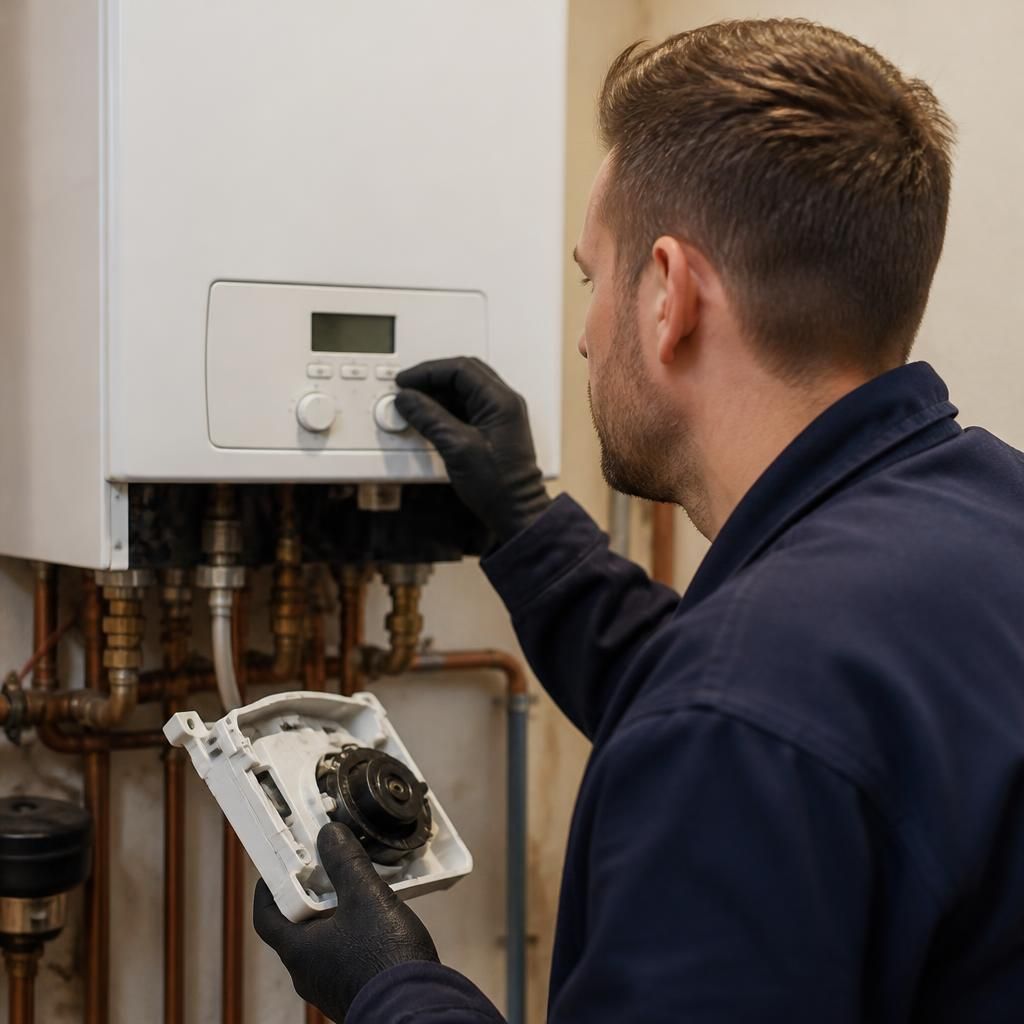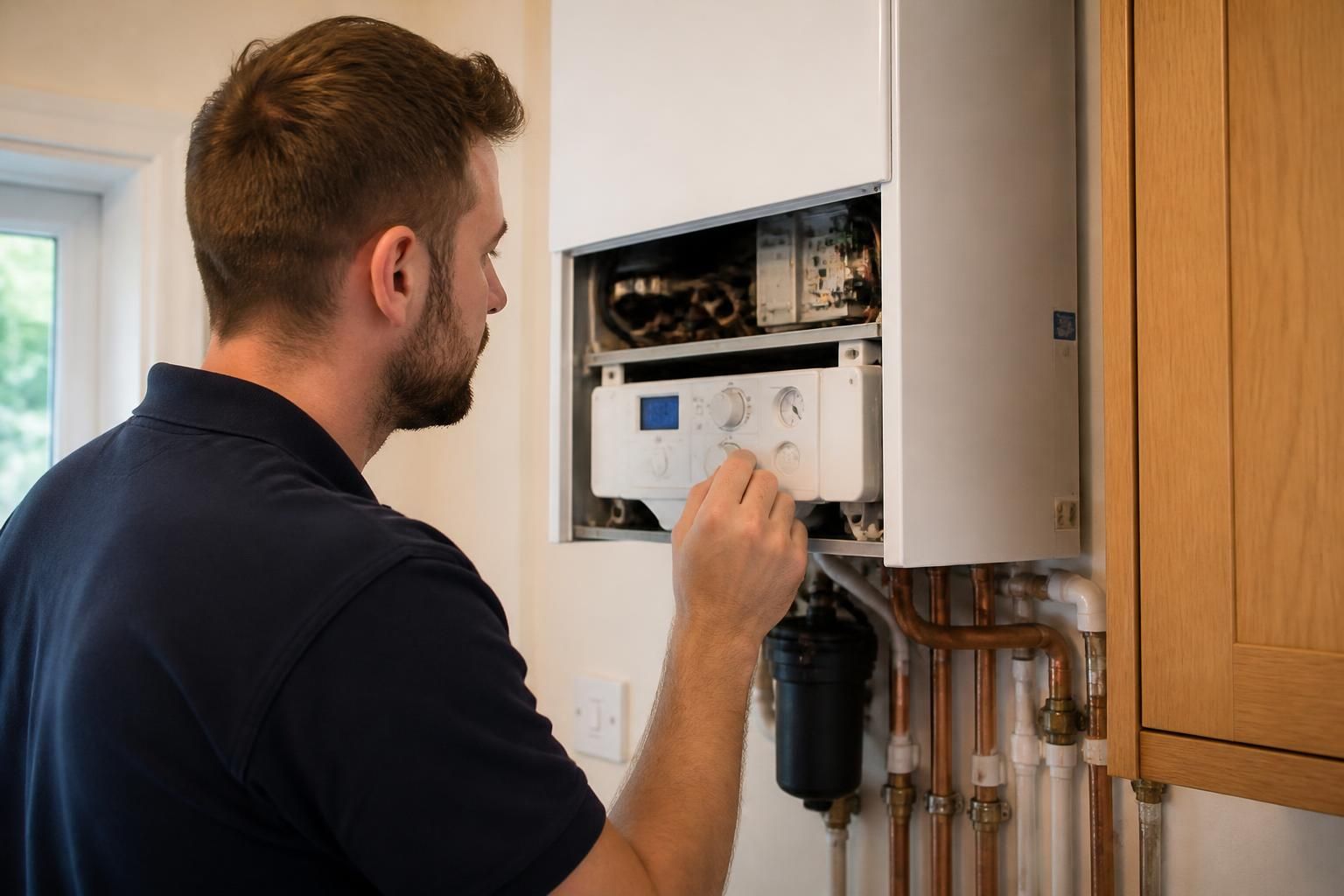
Boiler part replacement is usually a contained repair, with most of the work taking place at or near the boiler rather than throughout the property. The practical impact depends on the component being changed, whether water must be drained from part of the system, and how easily the engineer can reach the relevant connections.
Parts such as sensors, thermostats, ignition components and certain electrical controls can often be accessed without disturbing other areas of the home. Replacing a pump, valve, expansion vessel or another hydraulic component may involve draining some system water and checking the pressure again afterwards. This can create a small amount of additional work, but protective materials and suitable containers should be used to keep the surrounding area clean and dry.
The condition of the existing installation also affects the work. Older isolation valves may be stiff, connections can require careful handling, and corrosion may make removal more involved. If the replacement part reveals a separate fault or a damaged connection, the engineer should explain this before carrying out additional work. A suitable replacement must also be compatible with the boiler and its controls; fitting an incorrect component can cause further faults or create a safety risk.
You can help reduce avoidable disruption by:
- clearing items from in front of and around the boiler;
- keeping the route to the appliance accessible;
- removing valuables or delicate objects from nearby surfaces;
- telling the engineer about previous leaks, fault codes or unusual noises; and
- checking that an adult can provide access to any controls, cupboards or system components that may need inspection.
Once the part has been fitted, the engineer should inspect the connections, check for leaks and confirm that the boiler responds correctly to its controls. Depending on the repair, this may include checking system pressure, heating operation, hot-water production and relevant safety functions. Where the appliance casing or combustion components have been disturbed, appropriate safety checks are particularly important.
After the repair, you may need to reset the clock, programmer or thermostat, especially if the boiler has been electrically isolated. It is sensible to observe the appliance during its first few operating cycles and report any recurring fault code, unusual smell, leak or repeated loss of pressure. Do not remove the boiler casing or attempt to adjust gas components yourself.
Ideal Plumbing Services can explain the likely effect of a particular boiler repair before work begins and carry out the necessary checks once the replacement is complete. This helps homeowners, landlords and tenants understand which facilities may be unavailable during the work and what, if anything, needs attention afterwards.