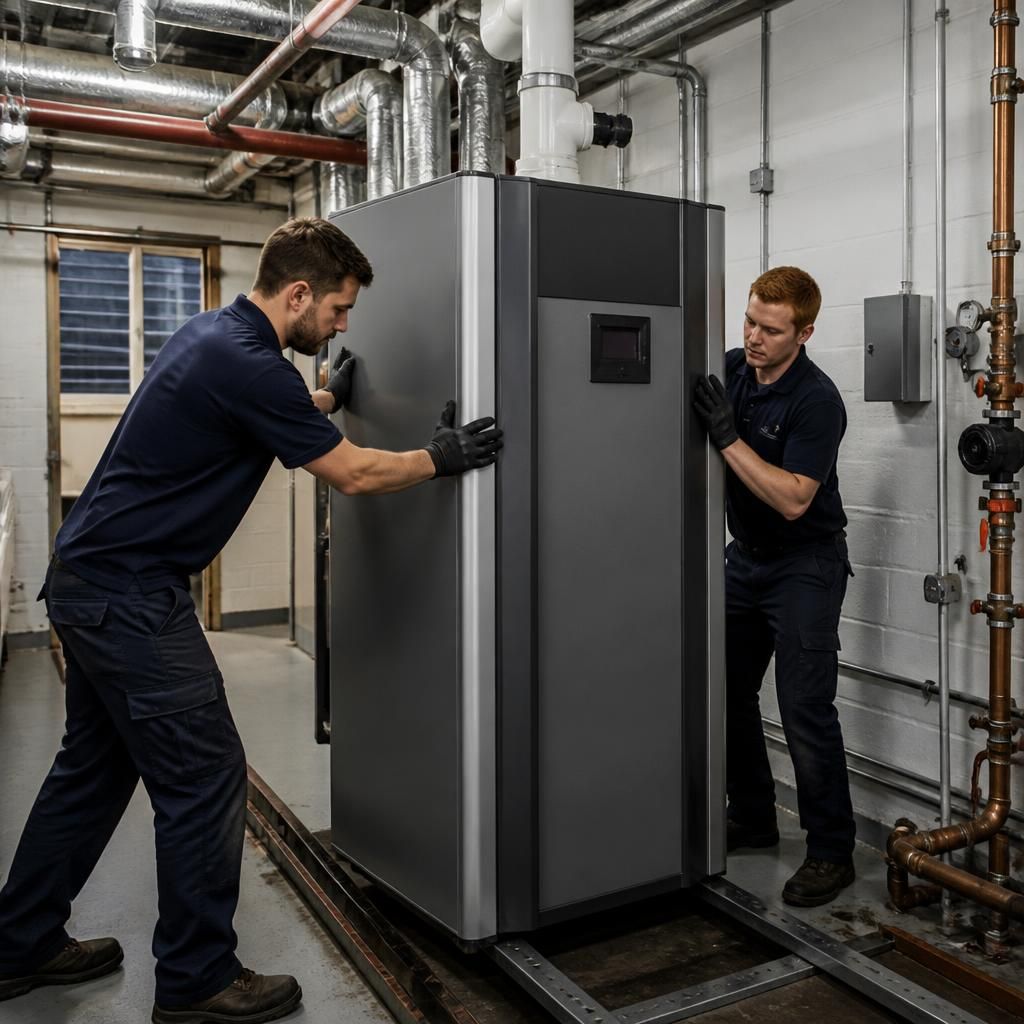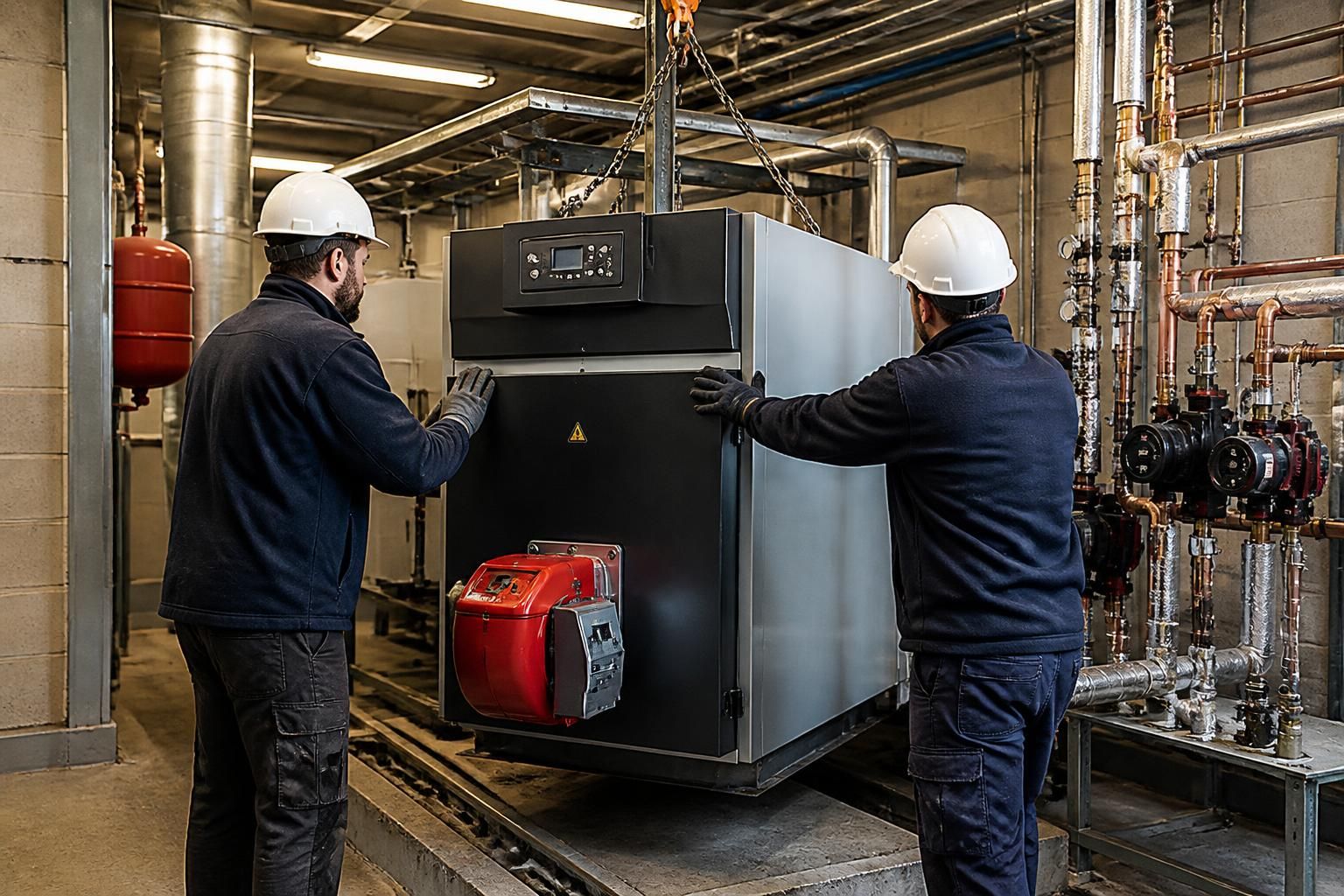
The main operational effect of a commercial boiler installation is usually a temporary interruption to heating and hot water, together with restricted access around the plant room and working areas. The disruption can be limited where the replacement is straightforward, but it may be more involved if the system serves several areas, requires new controls or involves alterations to flues, pumps, valves or distribution pipework.
A commercial installation normally involves several stages, each with a different effect on the premises:
- Preparation: The installer confirms the proposed equipment, isolation points, delivery route, plant-room access and location of temporary materials. This stage may cause little disruption to day-to-day operations, although access to service areas may be needed.
- Isolation and removal: The relevant heating or hot-water circuits are made safe before the existing boiler and associated components are disconnected. Areas supplied by that equipment may not have heating or hot water during this part of the work.
- Installation: The replacement boiler is positioned, connected and integrated with the existing system. Noise, movement of materials and controlled access around the plant room should be expected.
- Testing and commissioning: The system is checked for safe operation, correct controls, suitable water circulation and appropriate performance. Heating or hot-water services may be operated intermittently while settings are verified.
The extent of disruption is influenced by the layout and use of the building. A small premises with one readily accessible boiler may require a more contained work area. A larger building with several zones, multiple boilers or shared hot-water services may need a more carefully sequenced installation. Hospitals, care settings, schools, hospitality premises and buildings with temperature-sensitive areas require particular attention because a short interruption can affect occupants, equipment or business processes.
Access is another important consideration. Installers may need a clear route for removing the old equipment and bringing in the replacement. Doors, corridors, stairs, lifts and plant-room entrances should be checked in advance, especially where equipment is bulky or cannot be dismantled easily. Protecting floors and nearby surfaces, keeping escape routes clear and separating the work area from occupied spaces can reduce the effect on staff, visitors and other contractors.
Where the system allows it, work can sometimes be organised in phases. For example, separate boilers or heating zones may be dealt with individually rather than taking the whole installation out of service at once. This depends on the existing arrangement and should not be assumed before a competent assessment. A temporary heating or hot-water arrangement may also be considered where maintaining essential services is important, subject to suitable space, fuel, ventilation and safety controls.
Businesses can reduce avoidable disruption by preparing the site before the installation date. Useful measures include:
- identifying a responsible contact who can provide access and approve decisions;
- sharing plant-room drawings, boiler details and any known faults with the installer;
- clearing stored items from access routes and the work area;
- protecting stock, furnishings and sensitive equipment near the installation zone;
- informing employees, tenants, visitors or building users about restricted areas;
- co-ordinating the work with cleaning, electrical, building or fire-safety contractors;
- planning around activities that depend on heating or hot water; and
- confirming who will receive handover information once the system is commissioned.
Noise, dust and occasional vibration are more likely during removal, drilling, pipework alterations and making good. These effects can often be controlled with suitable screening, housekeeping and agreed working arrangements, but they should be considered when occupied offices, customer areas or sensitive operations are nearby. Deliveries and waste removal may also temporarily affect parking, loading areas or access to the building.
The installation is not complete when the boiler is physically connected. Commissioning should include checks of the appliance, controls, safety devices, flue arrangement and system operation. The installer should explain the controls, identify any outstanding finishing work and provide relevant operating or maintenance information. Keeping this information available helps facilities staff manage the system after handover and report any issue accurately.
A site assessment is therefore the best way to establish the likely disruption for a particular commercial property. It should consider the current system, required output, access, occupied areas, essential services and the preferred working sequence. With these points agreed beforehand, the business can plan staff and customer communication, protect critical activities and decide whether a phased or temporary-service approach is appropriate.