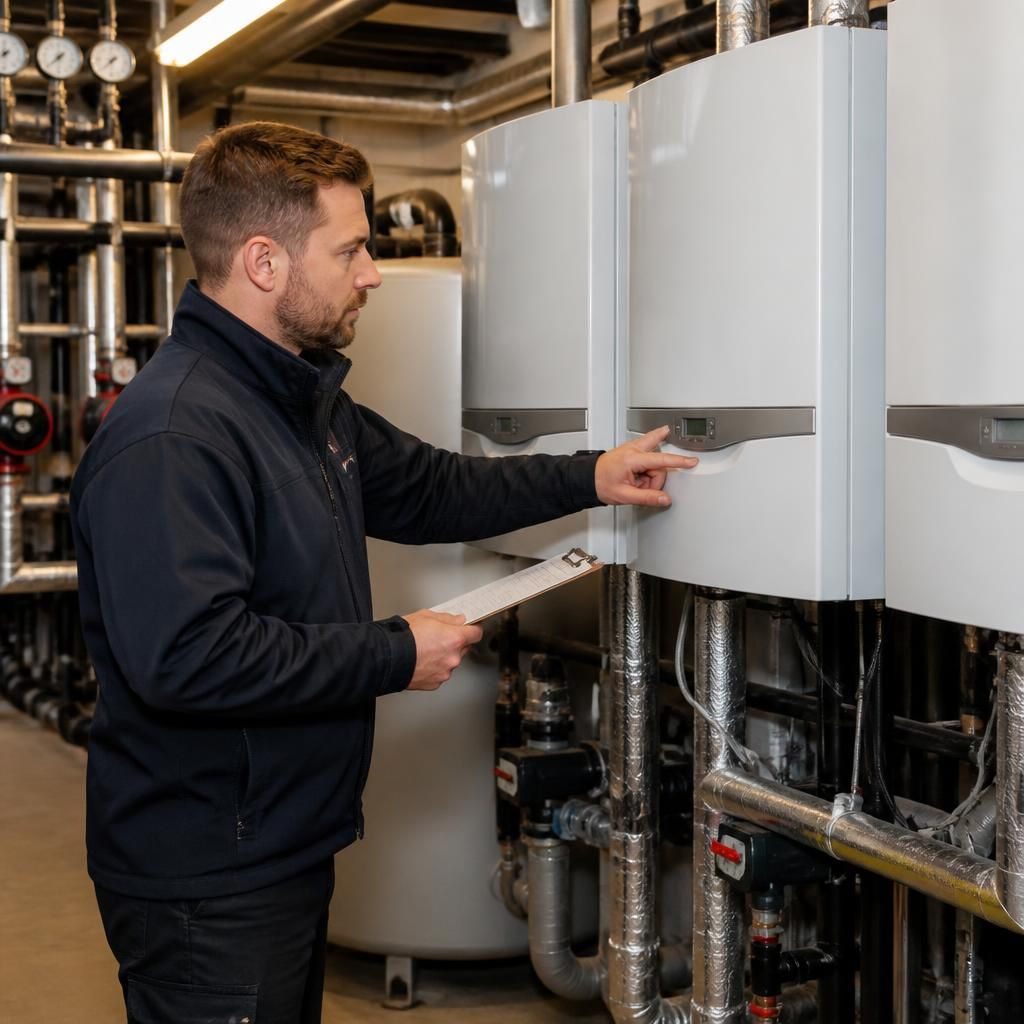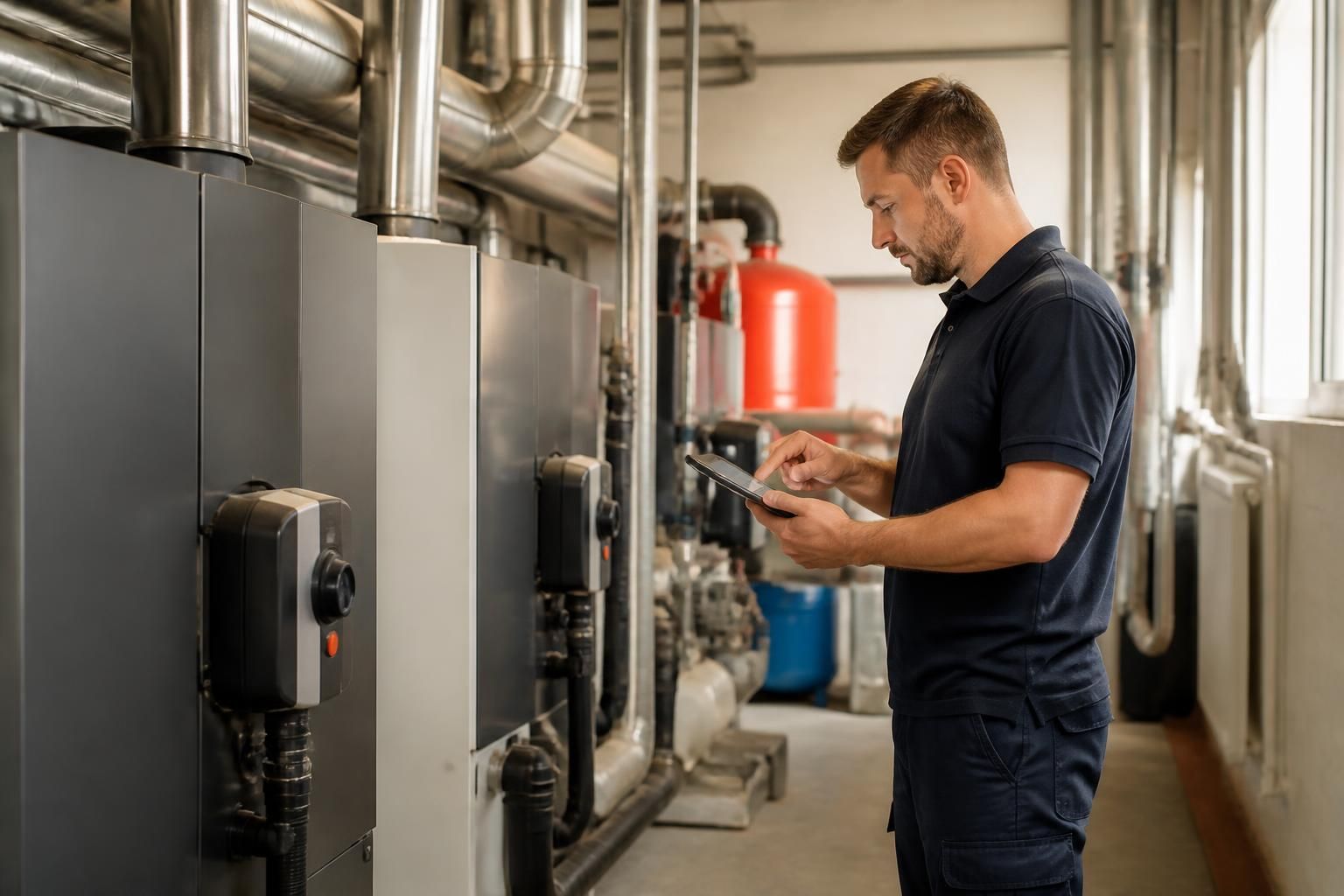
A commercial boiler installation is generally appropriate for a property whose heating or hot-water system has a higher or more complex demand than a typical domestic appliance can safely and efficiently provide. The decision is based on the building’s calculated heat load, number of occupants, hot-water usage, operating hours, heating zones and available plant-room space rather than simply on whether the premises are used for business.
Multi-occupancy and mixed-use buildings are common candidates. Apartment blocks, larger residential developments and buildings containing several self-contained units may need a central commercial system to serve shared areas, multiple heating circuits or substantial hot-water demand. Mixed-use premises may also require separate controls for residential accommodation and business areas, particularly where the two parts of the building have different schedules or heating requirements.
Buildings with several heating zones may benefit from commercial equipment even when their individual rooms do not appear especially large. A property with offices, corridors, reception areas, meeting rooms, staff facilities and storage spaces can require independent temperature control across several circuits. A suitable system can be designed around these zones instead of treating the entire building as one heating area.
Premises with significant hot-water demand may need a commercial boiler system even where space heating is moderate. This can apply where many users need hot water at similar times, or where taps, showers, kitchens and cleaning facilities operate throughout the day. The design may include dedicated hot-water storage, recovery capacity and controls that prioritise demand without unnecessarily heating unoccupied areas.
Properties with larger or more demanding operating requirements are also likely to need commercial equipment. Relevant factors include:
- Large floor areas or high ceilings that increase the volume requiring heating.
- Multiple floors or separate wings with different heat-loss characteristics.
- Frequent opening of external doors, which can increase heat loss.
- High levels of occupancy during particular periods.
- Areas that need to maintain a consistent temperature for occupants, equipment or stored materials.
- Existing heating circuits that cannot be adequately served by a single domestic boiler.
A cascade arrangement, using several boilers controlled as one system, can be suitable where demand varies during the day. Smaller units can operate during lower-demand periods, while additional capacity is brought in when more heat is required. This arrangement can provide useful flexibility and may make replacement easier if the plant is divided into serviceable modules. The correct design still depends on a heat-loss calculation and an assessment of the existing distribution system.
Some properties do not automatically require a commercial boiler. A small office, shop or other modest premises may be adequately served by equipment designed for lighter demand. Conversely, a large private residence or a property with several occupants and extensive hot-water requirements may need a system with characteristics normally associated with commercial installations. A label based on the building’s use is therefore less reliable than an assessment of actual demand.
The building’s existing infrastructure is another important consideration. Before installation, an engineer should review the flue route, gas supply, electrical provision, ventilation, condensate drainage, pipework, pumps, controls and the condition of radiators or other heat emitters. A boiler with sufficient output will not perform as intended if the distribution pipework is undersized or the controls cannot manage the building’s heating zones.
Commercial boiler installation may be unsuitable as a direct replacement where the property has changed use, been extended or gained additional hot-water outlets. Changes in occupancy or internal layout can also alter the heat load. In these situations, replacing the old appliance with one of the same output may leave some areas underheated, while selecting an unnecessarily large boiler can cause inefficient cycling and poor control.
The most reliable way to identify the right type of installation is to assess the property as a complete system. Ideal Plumbing Services can review the building’s use, demand, heating zones and existing services before advising whether commercial equipment, multiple boilers or an alternative arrangement is appropriate. This helps ensure that the installation is matched to the property rather than chosen solely by its category.