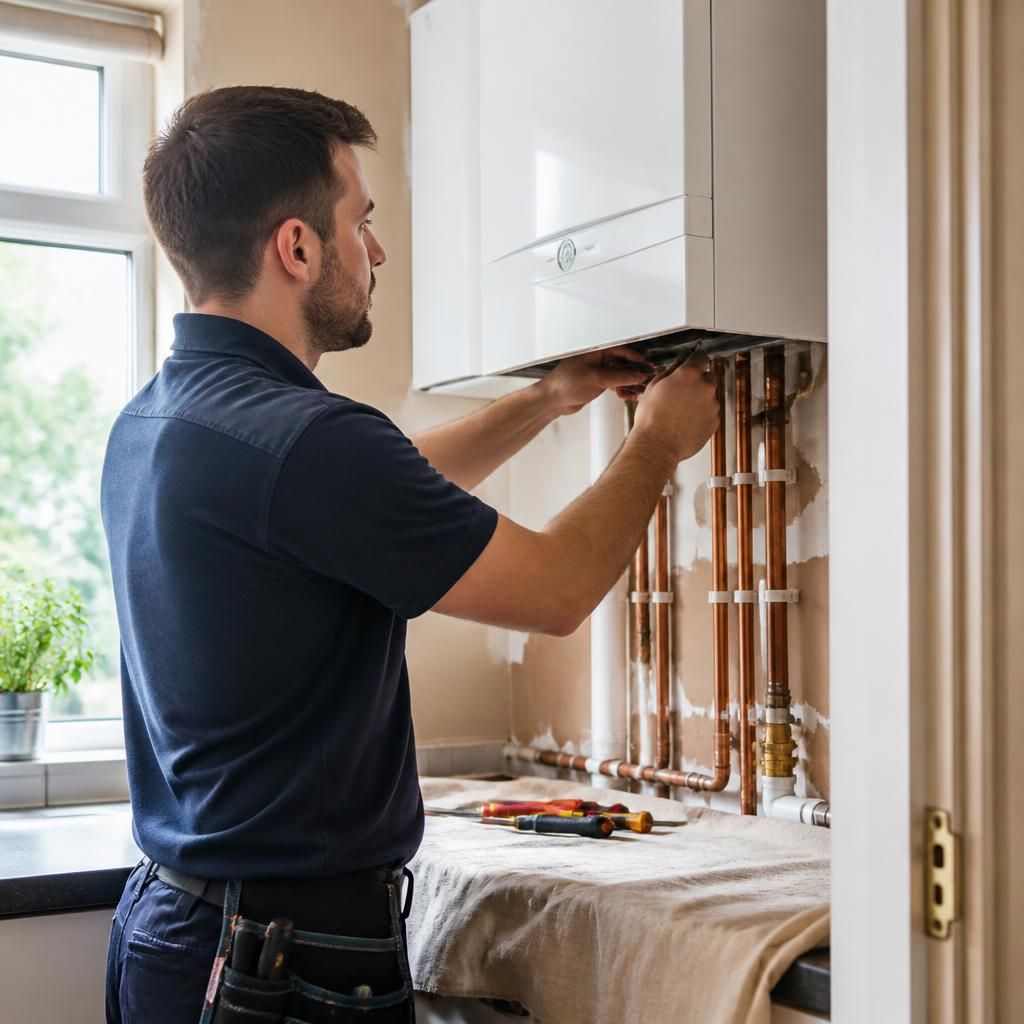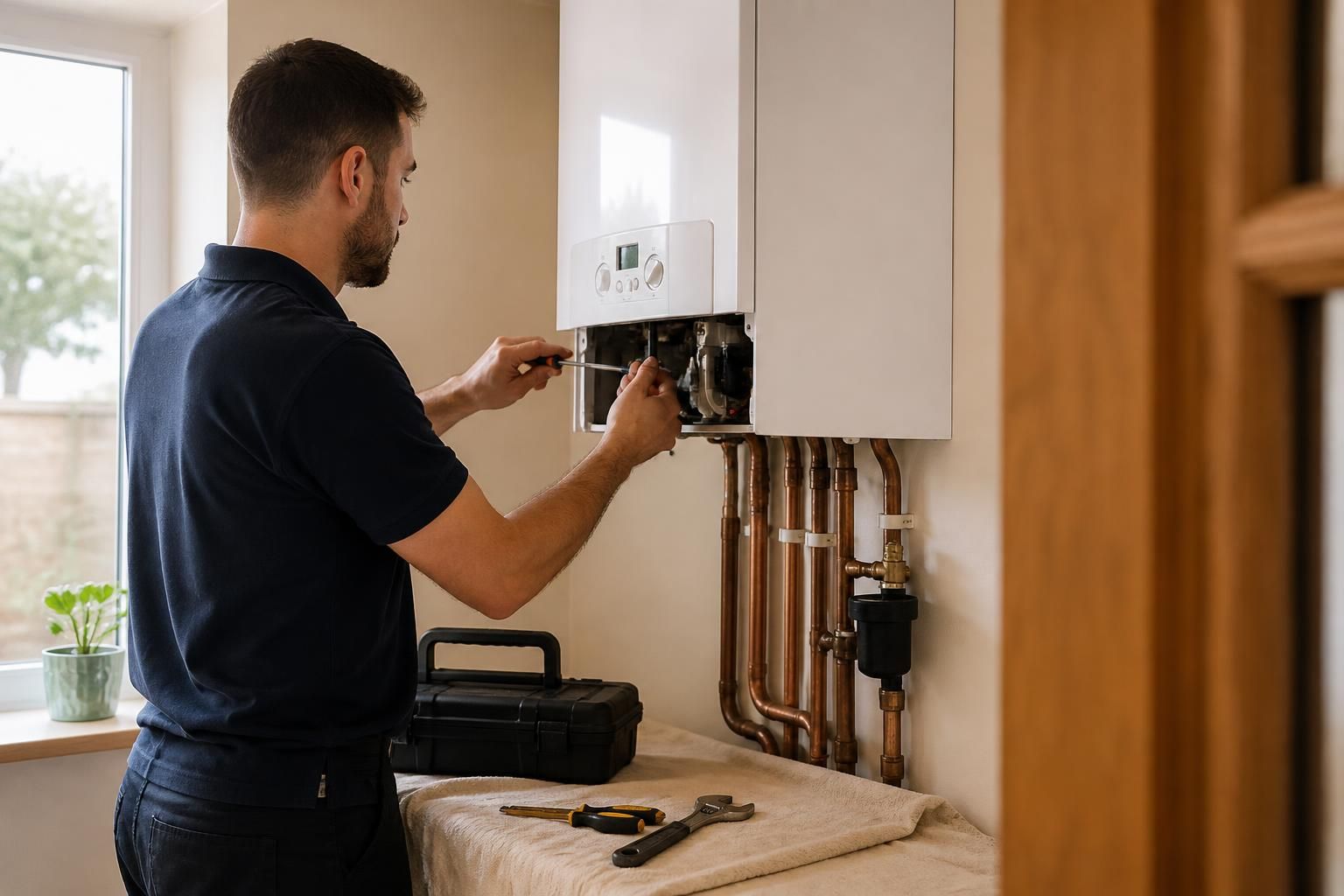
The disruption caused by a new gas boiler installation depends mainly on the work involved, the boiler’s proposed position and the condition of the existing heating system. A straightforward replacement generally involves fewer changes than a relocation or an installation that requires new connections, controls or drainage arrangements.
Before installation
A professional assessment should establish how the work will be completed before the appointment is arranged. This includes checking the boiler position, the route for the flue, the gas supply, the condensate discharge and the heating controls. If the new boiler is moving to another wall, room or floor, the installer may also need to consider additional pipework, access through adjoining areas and any alterations to cupboards or kitchen fittings.
Good preparation can reduce avoidable inconvenience. Remove fragile items from nearby surfaces, clear any cupboards or shelving that the installer has asked you to empty, and make sure the route to the work area is unobstructed. If you rent the property, obtain the landlord’s approval before agreeing to changes that affect cabinets, walls, pipework or the building’s external appearance.
What happens during the work
- The engineer will make the relevant heating and gas connections safe before removing the existing appliance.
- Protective coverings may be used on floors, worktops and furniture, particularly where equipment or materials have to pass through the property.
- The new boiler will be fitted and connected to the heating, hot water, gas, electrical and condensate systems as required.
- New controls may be installed or existing controls adapted so that the boiler operates correctly with the heating system.
- If the installation involves a different position, installers may need to route services through cupboards, walls, floors or ceilings. This can create more making-good work than a direct replacement.
The most disruptive installations are usually those involving a relocation, a difficult flue route, restricted working space, outdated controls or pipework that needs improvement. Work may also be more involved where the boiler is being changed as part of a wider heating upgrade rather than replaced as an individual appliance. A site survey should identify these issues in advance, although concealed defects can occasionally only become apparent once the old equipment has been removed.
Testing and completion
Installation is not complete when the boiler is physically in place. The engineer should commission the appliance, check operating pressures and safety controls, inspect the flue and confirm that the condensate arrangement is suitable. The heating and hot water functions should be tested, along with thermostats, programmers and other controls connected to the system.
You should also receive an explanation of how to use the controls and what routine care is required. Ask the installer to show you the isolation points, explain any new settings and provide the relevant paperwork. Keeping these documents is useful for future servicing, fault diagnosis and property records.
How to reduce inconvenience
- Confirm the boiler’s final position and the extent of the work before installation begins.
- Ask whether cabinets, flooring, walls or external finishes could require alteration.
- Check whether the proposed controls are compatible with your preferred heating schedule.
- Protect or move valuables from areas that may be used for storing tools and materials.
- Arrange the work at a time when the affected rooms can be left available to the installer.
- Discuss how waste materials and the old boiler will be removed.
A competent installer should explain the planned sequence, identify any likely additional work and leave the area safe and operationally tested. When comparing quotations, look beyond the appliance itself: the scope should make clear whether installation, controls, alterations, commissioning, removal of the old boiler and associated finishing work are included.