Before booking a gas boiler installation, establish that the proposed system is technically suitable for the property, compatible with the existing heating infrastructure and fully covered by a clear installation plan. The decision should be based on heat demand, hot-water use, available space, pipework and flue requirements rather than boiler size or price alone.
Check which type of boiler fits your household. A combi boiler heats water directly when a tap is opened and can suit properties with limited space and moderate simultaneous demand. A system boiler works with a hot-water cylinder and may be more appropriate where several bathrooms or outlets could be used together. A regular boiler, sometimes called a conventional or heat-only boiler, normally uses a cylinder and cold-water storage tank. Replacing an existing arrangement with a different type can involve changes to pipework, storage and controls, so ask the installer to explain the practical consequences of each option.
Ask whether the heat output has been properly assessed. The correct output depends on the size and layout of the property, insulation, window area and the number of rooms requiring heat. A boiler that is too small may struggle to meet demand, while one that is unnecessarily large can increase installation and running costs. Ask what information was used to recommend the output and whether the calculation includes hot-water requirements as well as space heating.
Confirm the condition of the existing system. A new boiler does not automatically resolve problems elsewhere in the installation. The installer should consider:
- the condition and size of existing radiators;
- the age and condition of the hot-water cylinder, if one is present;
- water pressure and flow rate;
- the state of primary pipework and isolation valves;
- electrical supplies and controls; and
- signs of sludge, corrosion, leaks or repeated pressure loss.
If additional work may be needed, ask for it to be identified before you commit. This reduces the risk of unexpected changes once the old boiler has been removed.
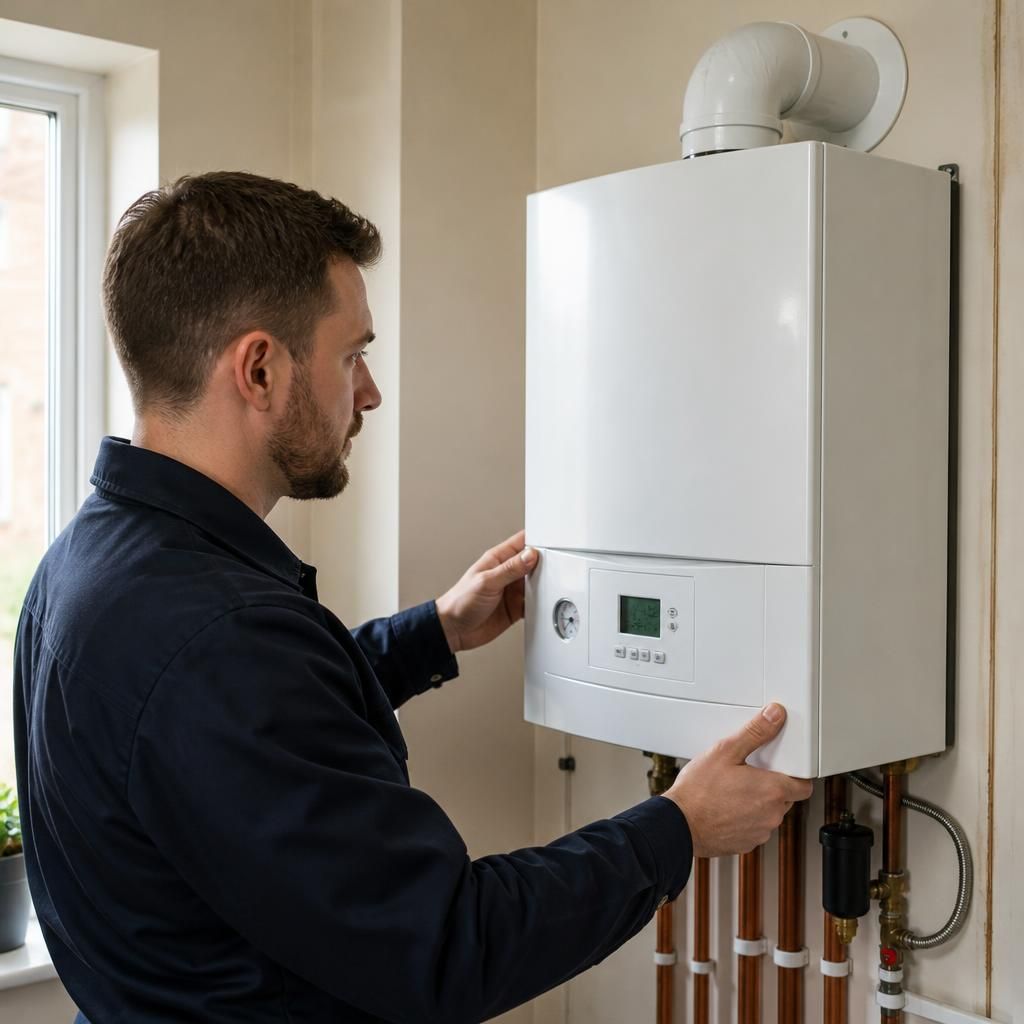
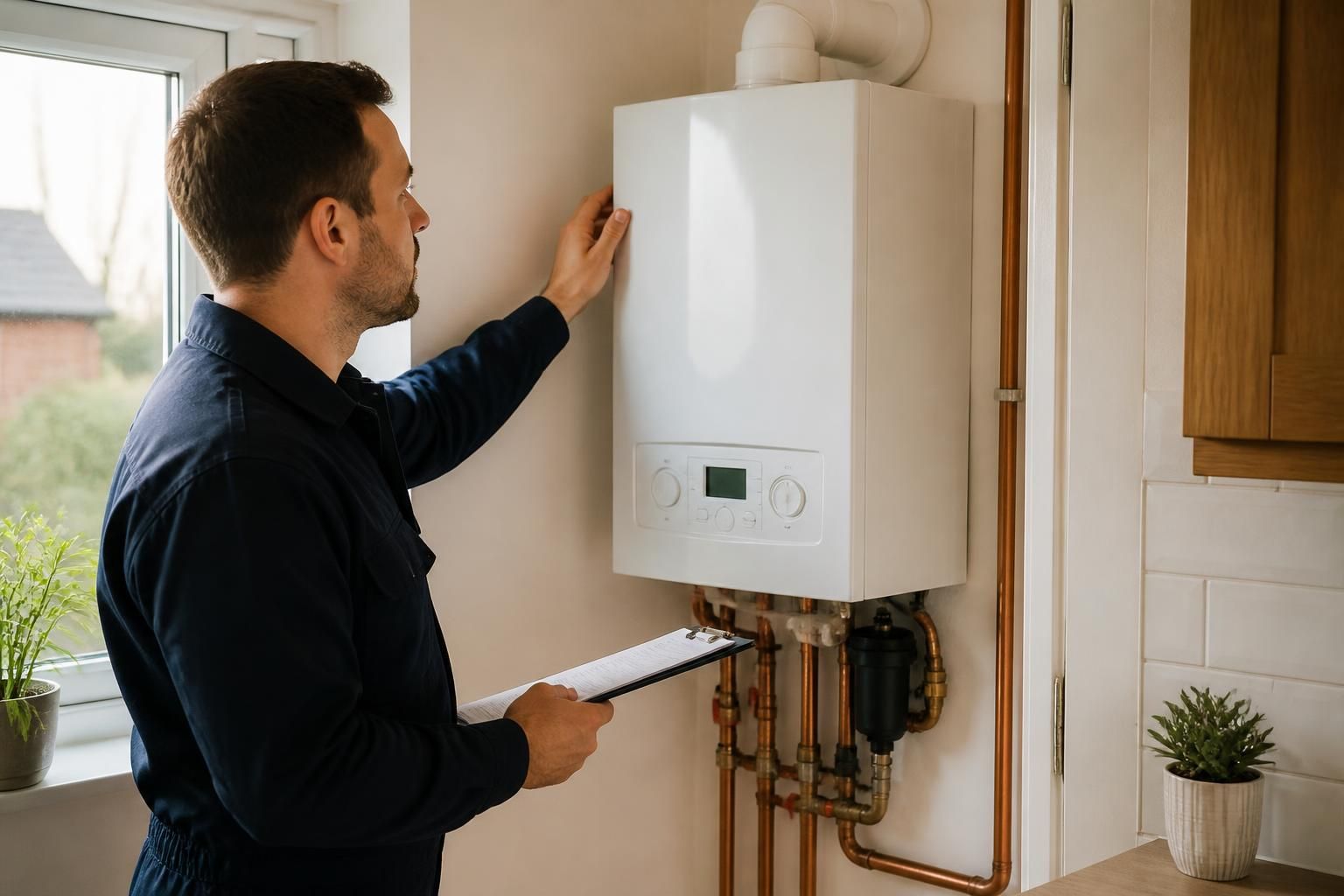
Inspect the proposed boiler location and flue route. The available wall space, cupboard dimensions and access around the appliance can affect the choice of boiler and the installation method. The flue must terminate in a suitable position, and the condensate pipe needs an appropriate route to a drain or other approved discharge point. Ask whether the existing flue opening, condensate arrangement and ventilation are suitable for the new appliance. Any alteration to external walls, cupboards or pipework should be included in the installation plan.
Check what happens to old equipment and waste. Confirm whether removal of the existing boiler, cylinder, tanks and redundant pipework is included, and whether the area will be left clear after the work. If components are to remain in place, ask which ones and why. Some installations require old tanks or sections of pipework to be retained, while others allow them to be removed to create useful storage space.
Clarify property permissions before work starts. Homeowners should check whether restrictions apply to the property, particularly in a leasehold, listed or otherwise controlled building. Landlords may need to arrange records and certificates for the property file. Where the installation changes the flue position, external appearance or internal layout, confirm whether consent or additional notification is needed. Ask who will deal with any required building control notification and what documents you will receive afterwards.
Review the written terms, not just the headline price. In addition to the installation scope, check the payment schedule, deposit arrangements, cancellation terms and the process for approving variations. The paperwork should identify the proposed appliance, associated components, preparatory work, removal of old equipment and any items that are specifically excluded. A low initial price may not be comparable with another quotation if one proposal leaves out system alterations or commissioning tasks.
Make sure the handover is part of the plan. You should expect clear instructions on operating the boiler and controls, along with the relevant manuals, commissioning information and registration documents. Ask how the installation will be recorded and how warranty registration is handled. Keep these documents with any future service records, as they can be useful if the property is sold or if a fault needs to be investigated.
Before accepting a quotation, ask the installer to answer these practical questions:
- Why is this boiler type and output suitable for the property?
- Will the existing cylinder, radiators, pipework and controls remain suitable?
- Does the proposed location meet flue, condensate, clearance and ventilation requirements?
- Which parts of the current system will be removed, altered or retained?
- What work is excluded and how will additional work be agreed?
- Which documents and operating instructions will be provided at handover?
Be cautious if the recommendation is made without inspecting the property, if the proposed output cannot be explained, or if important work is left as an unspecified extra. A sound booking decision comes from matching the boiler to the building, recording the full scope in writing and understanding the practical arrangements before installation begins.