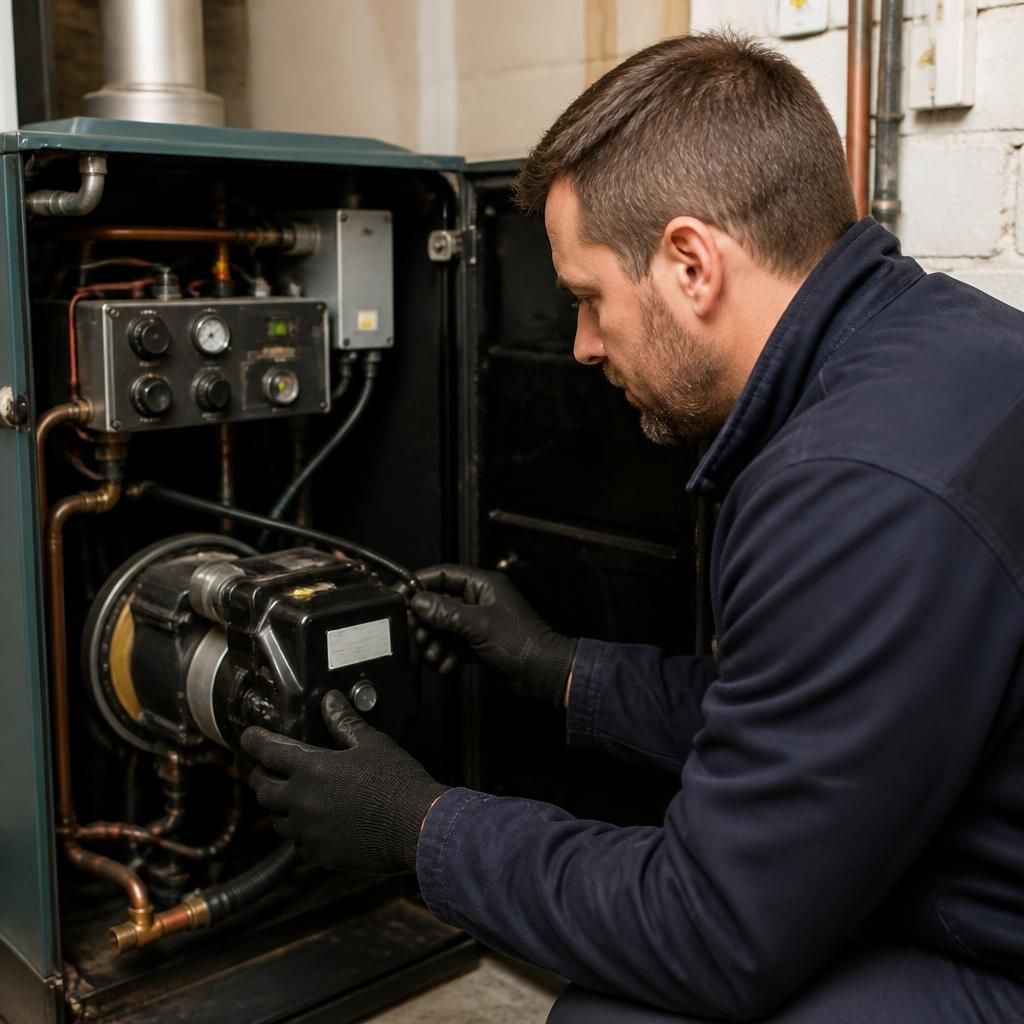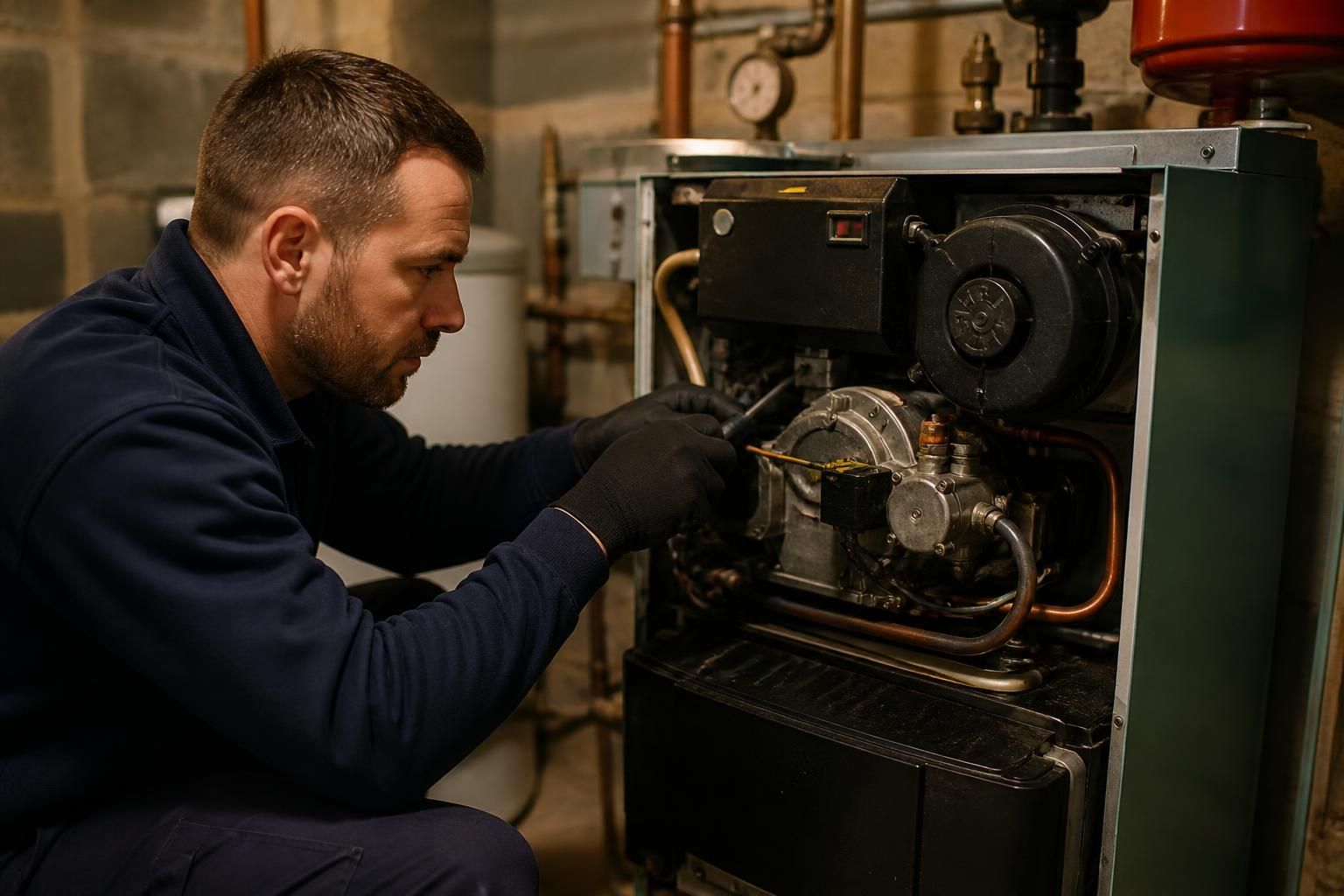
The repair-versus-replacement decision for an oil boiler depends on the condition of the whole appliance, not simply on the fact that it has stopped working. An engineer will identify the failed part, check whether the boiler remains safe to operate, and assess whether repairing it is technically and financially sensible.
Faults that may be suitable for repair
Many breakdowns are caused by an individual component or an issue with the boiler’s controls rather than a failure of the complete appliance. Depending on the model and the engineer’s findings, possible repair items can include:
- the burner, nozzle or ignition components;
- the photocell or other flame-monitoring parts;
- the oil pump or oil supply components;
- thermostats, sensors, programmers and other controls;
- electrical connections, fuses or wiring faults;
- circulating pump or diverter-valve problems; and
- seals, gaskets and minor water leaks.
These repairs are only appropriate after the underlying cause has been established. Replacing a part without checking the oil supply, combustion settings, electrical system and associated controls can leave the original fault unresolved or create a further safety issue.
What an engineer checks before recommending replacement
A proper assessment should cover more than whether the boiler can be made to start. The engineer may inspect the burner operation, oil line, filters, flue, combustion performance, electrical connections, pressure and visible signs of leakage or corrosion. The heating system and controls may also need checking, because a problem elsewhere can appear to be a boiler failure.
Safety is particularly important with oil-fired appliances. Evidence of incomplete combustion, flue-gas problems, damaged casing, fuel leakage or unsafe electrical components can make continued operation unsuitable. A boiler should not be used if it is producing fumes, showing signs of an oil leak, repeatedly locking out or causing a carbon monoxide alarm to activate. Switch it off, ventilate the area where appropriate and seek qualified advice.
When a full replacement may be more appropriate
Replacement becomes more likely when the main heat exchanger or primary structure is badly damaged, essential parts are no longer available, or several major components are failing together. Extensive corrosion, recurring breakdowns and poor overall condition can also make a single repair a short-term solution rather than a sensible long-term one.
The age of the boiler is relevant, but it should not be the only deciding factor. A relatively old boiler may still be repairable if its main components and casing are sound. Conversely, a newer appliance may require replacement if it has suffered severe damage or cannot be operated safely. The engineer should explain the condition of the appliance and distinguish between a necessary safety measure and an optional improvement.
Questions to ask before approving the work
- Which component has failed, and what evidence supports that diagnosis?
- Is the boiler safe to use once the proposed repair is completed?
- Are there signs of another fault that could cause the problem to return?
- Is the required part available and suitable for the appliance?
- Would repair address the immediate failure without resolving a wider condition issue?
- What work is essential now, and what can reasonably be planned later?
A written explanation and clear quotation can help you compare repair with replacement without making a decision based solely on the initial fault code. If the repair is declined, ask the engineer to explain whether the reason is safety, parts availability, the condition of the boiler or the likely reliability of the proposed fix.
Ideal Plumbing Services can assess emergency oil boiler faults for homeowners, landlords and tenants in Birmingham and the wider West Midlands, with advice based on the appliance’s actual condition rather than an automatic recommendation to replace it.