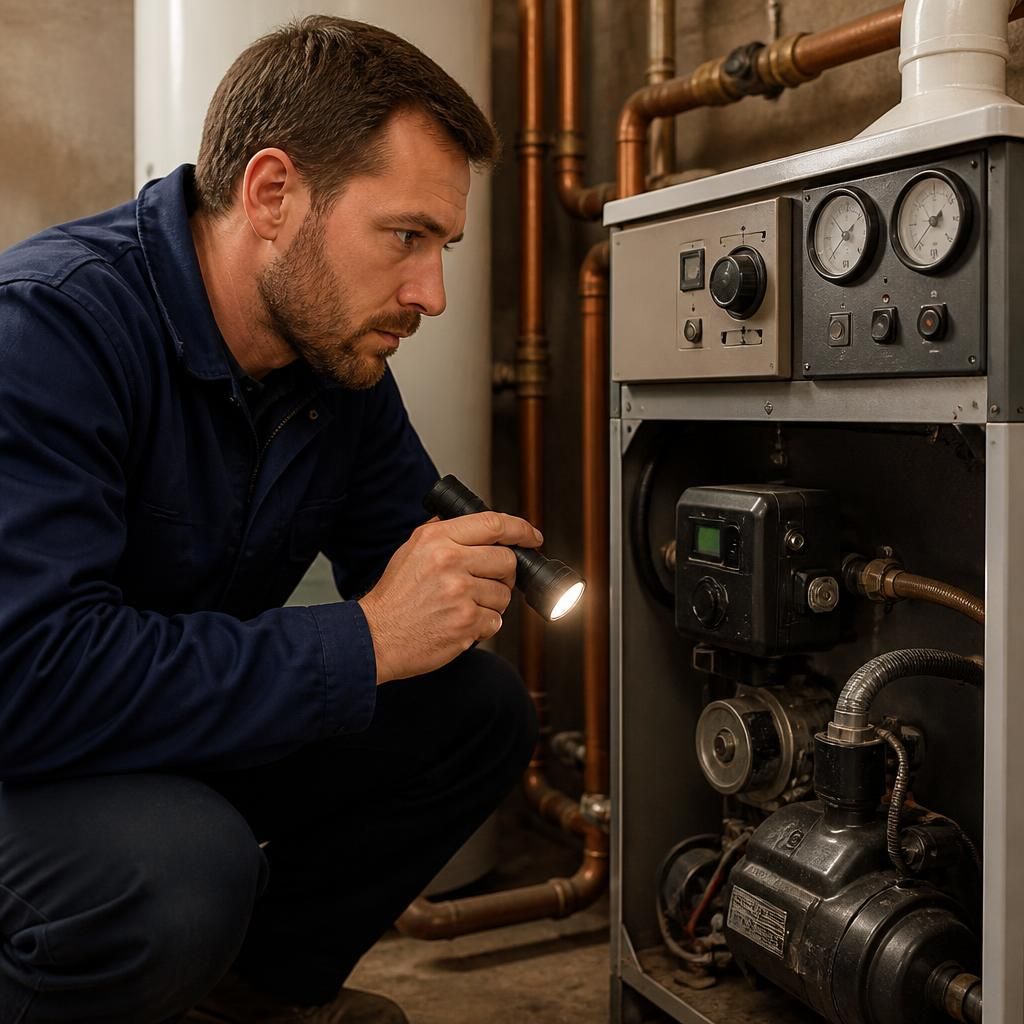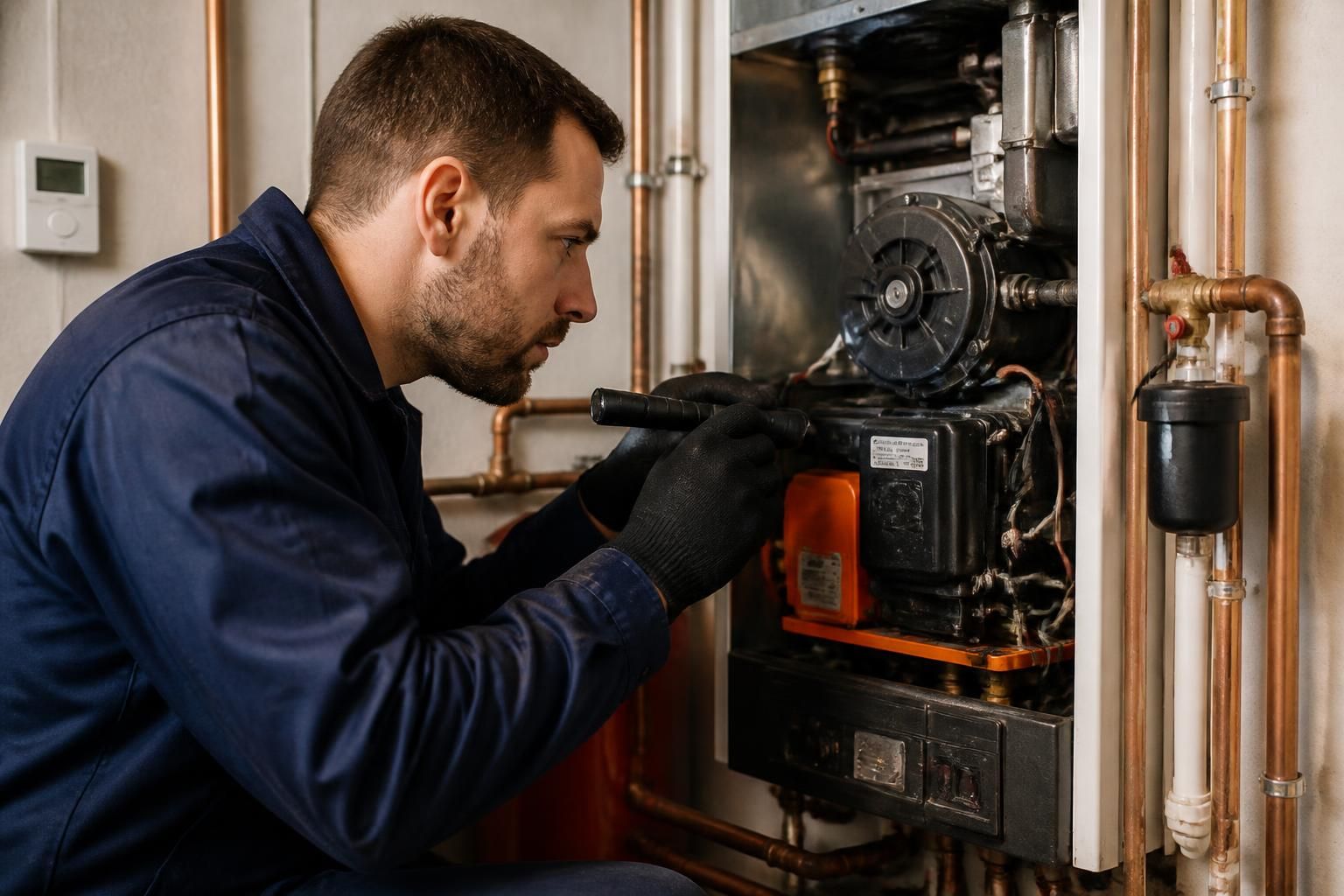
An emergency oil boiler repair is generally a contained engineering job, but its disruption depends on the failed component, the boiler’s location and whether safe access is available. The main effects are usually temporary loss of heating and hot water, restricted access to the boiler area and some noise or interruption while the system is isolated, inspected, repaired and tested.
What can affect disruption? A straightforward fault involving a control, burner component or electrical connection may require access only to the boiler itself. Other faults can involve the oil supply, fuel filter, pump, pipework, thermostat, flue or condensate arrangements. In those cases, the engineer may need to inspect connected parts rather than working solely at the boiler. Where the system is contaminated, poorly adjusted or unsafe to operate, additional checks and corrective work may be necessary before it can be returned to service.
- Access to the boiler: Items stored around the appliance may need to be moved, particularly where the boiler is in a utility room, garage, outbuilding or cupboard.
- Isolation of services: The electricity supply and oil supply may need to be isolated during diagnosis and repair. Water may also need to be drained from part of the heating system for certain repairs.
- Cleaning and adjustment: Oil boilers can require burner cleaning, nozzle replacement or combustion checks. This can create some dust, odour or short-term noise, so protecting nearby surfaces and keeping the work area clear is sensible.
- Parts and access: If the required component is not available at the property, the repair may involve arranging the correct part before the appliance can be fully restored. Difficult access to the boiler, oil tank or flue can also add work.
- Safety testing: The appliance should be checked after repair, including its operation, controls, flue arrangements and combustion where appropriate. This testing is essential and should not be skipped simply to reduce inconvenience.
Will the whole property need to be vacated? Usually, an oil boiler repair does not require the entire property to be cleared. Occupants can often remain elsewhere in the building, provided they stay away from the work area and follow the engineer’s instructions. A boiler in a bedroom, narrow cupboard or shared access route may create more practical disruption than one located in an accessible utility area. If an unsafe flue, oil leak or other hazard is identified, the engineer will explain what areas must remain unused until the issue is dealt with.
How can disruption be reduced? Clear a route to the boiler, oil tank and relevant controls before the appointment. Remove fragile or valuable items from nearby surfaces, make any fault history available, and identify where the electrical and oil isolation points are located if this is known. Keep pets and children away from the work area. Avoid resetting the boiler repeatedly or attempting to dismantle its casing, as this can obscure the fault and create additional safety risks.
Once the repair is complete, the engineer should explain what caused the failure, what was repaired and whether any follow-up maintenance is advisable. Ideal Plumbing Services assesses oil boiler faults for homeowners, landlords and tenants in Birmingham and the wider West Midlands, with the work planned around the condition and accessibility of the individual system.