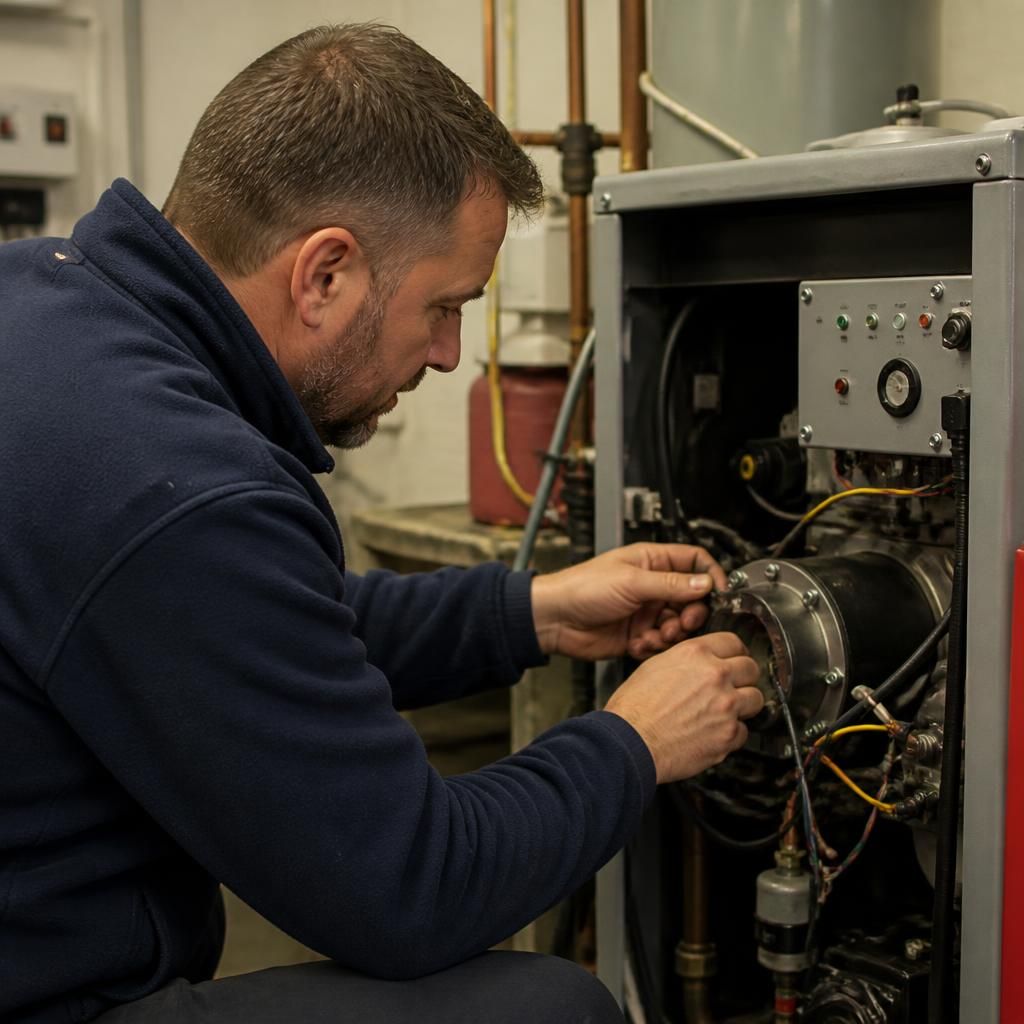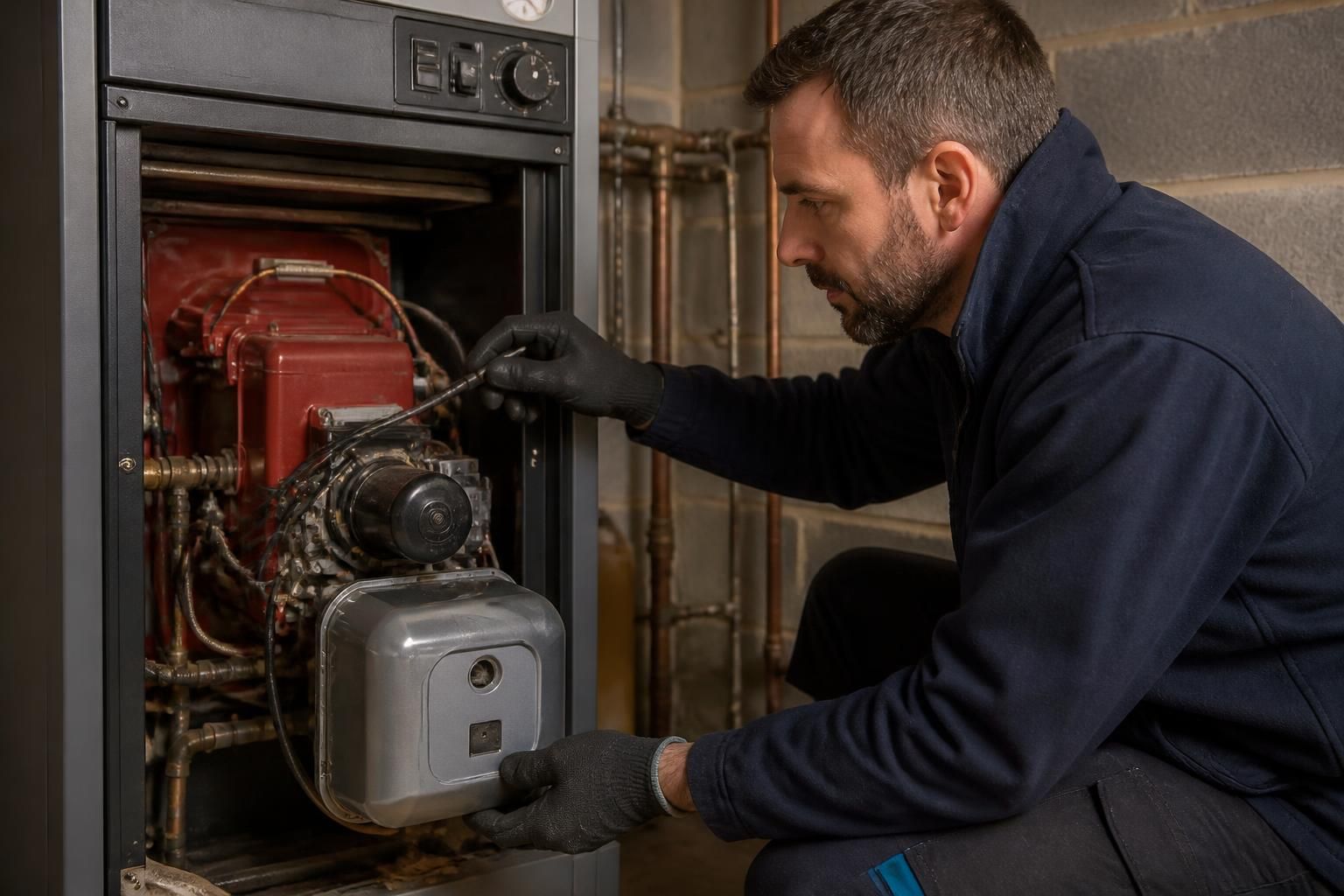
The cost of an emergency oil boiler repair is influenced by the condition and design of the whole heating system, the component requiring attention, and the work needed to leave the installation operating safely. Oil boilers have several connected parts, so the price is not always determined by the boiler itself.
The type of oil boiler and system layout
Combi, system and regular oil boilers use different components and may require different repair procedures. A boiler connected to a separate hot water cylinder, expansion vessel, external controls or a more complex heating circuit can involve additional testing compared with a simpler installation. External boilers may also have weather-exposed electrical connections, pipework or casing components that affect the work required.
The condition and age of the installation
An older boiler may contain worn components that are no longer readily available, or parts may have deteriorated because of corrosion, heat, vibration or water ingress. The condition of connected equipment also matters. A repair may need to address an issue with the oil supply, tank connection, flexible hose, filter, flue, condensate arrangement or heating controls rather than the main boiler casing. If the underlying installation has been poorly maintained, further remedial work may be identified during inspection.
Oil-specific components
Oil boilers rely on a burner assembly and fuel delivery system. The eventual cost can therefore be affected by whether the problem involves a nozzle, pump, motor, ignition component, photocell, control box, thermostat or another part of the burner. Contaminated fuel, blocked filters, air in the oil line and deposits in the combustion area can also require cleaning, adjustment or recommissioning in addition to replacing a failed component.
Safety checks and associated work
Oil combustion equipment must be checked carefully after repair. Depending on the work carried out, this can include examining the flue, checking combustion, confirming that the burner is operating correctly and testing safety controls. If a fault has affected safe operation, the boiler may require further corrective work before it can be put back into service. These checks are an important part of a proper repair, rather than an optional extra.
Parts and sourcing
The price of a replacement part includes more than the component alone. Compatibility with the specific boiler model, whether the part is original or an approved equivalent, and whether associated seals, connectors or fixings should also be renewed can all affect the total. Where a component is obsolete or difficult to obtain, a practical repair may require a different solution, subject to confirming that it is suitable and safe.
Repair or replacement assessment
An emergency visit does not automatically mean that replacing the boiler is the most economical option. A repair may be appropriate where the main appliance remains in sound condition and the failed component can be replaced safely. Conversely, repeated faults, extensive corrosion, unavailable parts or a serious defect may make replacement worth considering. The condition of the boiler and the likely reliability of the proposed repair should be explained before you approve substantial work.
How to assess a quotation
- Check whether the price covers diagnosis, labour, replacement parts, testing and any applicable charges.
- Ask which fault has been identified and whether the proposed work addresses the cause or only a symptom.
- Confirm whether further work requires your approval before it is started.
- Ask whether removed parts, commissioning checks and the condition of connected oil-system components are included.
- Request an itemised explanation if the repair involves several components or a recommendation to replace the boiler.
For a residential property, an accurate cost assessment should follow an inspection of the boiler and relevant oil-heating components rather than relying solely on the reported symptom. Ideal Plumbing Services can assess emergency oil boiler faults for homeowners, landlords and tenants in Birmingham and the West Midlands, explain the available repair options, and provide a clear basis for deciding whether repair or replacement is appropriate.