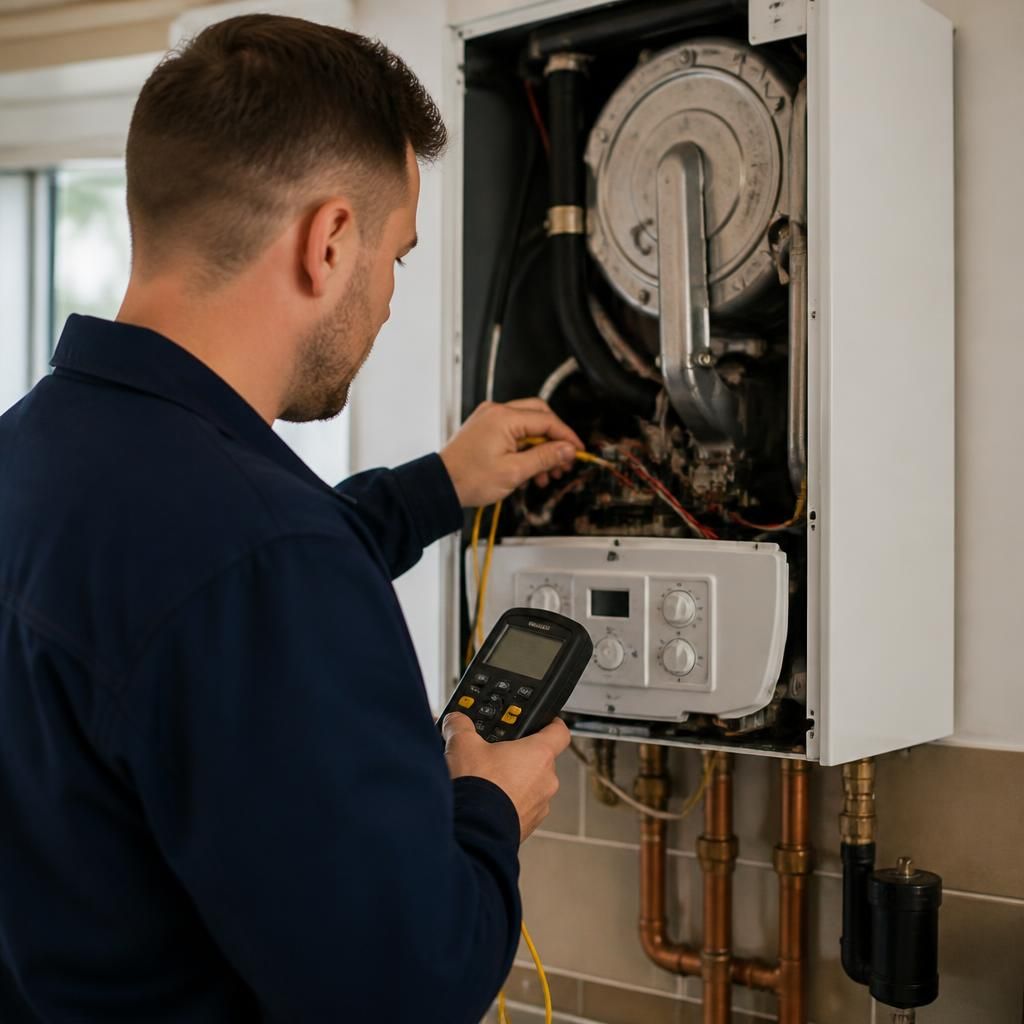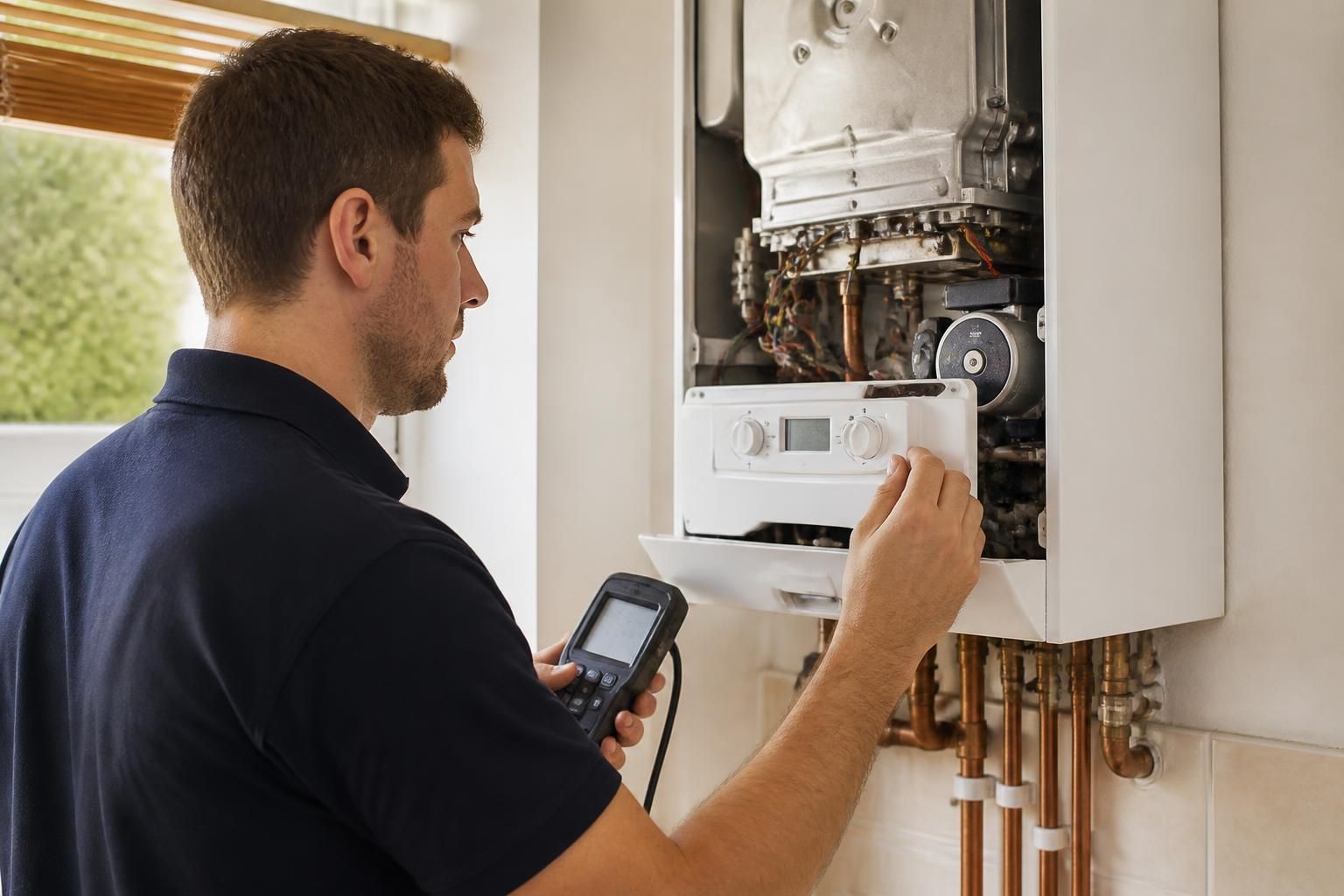
A boiler is generally repairable when a qualified engineer can identify a specific, serviceable fault and restore the appliance to safe, compliant operation. The decision depends on more than whether the boiler starts or stops: the engineer must assess the evidence from testing, the condition of the affected components, the safety of the installation and whether a repair is technically appropriate.
The quality of the diagnosis is the first determining factor. Symptoms such as low pressure, unusual noises, repeated shutdowns or a lack of hot water can have several possible causes. For example, a pressure problem may relate to a leak, expansion vessel, pressure relief valve or filling-loop issue. Replacing a part before confirming the cause can leave the original fault unresolved. A proper assessment typically involves checking fault codes, electrical readings, system pressure, water circulation, temperature changes and relevant safety controls.
The type of component affected also matters. Many faults involve individual parts that can be tested and replaced, such as pumps, sensors, valves, thermostats, ignition components or control boards. A repair is more straightforward when the defective component is clearly identified and replacing it will correct the underlying problem. If several connected components are failing, the engineer may need to establish whether the apparent fault is a symptom of a wider issue rather than an isolated defect.
Safety-critical faults require particular caution. Problems involving gas controls, combustion, the flue, ventilation, overheating protection or electrical connections must be assessed by a suitably qualified professional. An appliance should not be treated as repairable simply because it can be made to run temporarily. It must operate with the correct combustion characteristics, adequate ventilation, secure flue arrangements and functioning safety devices. If these conditions cannot be confirmed, the boiler should remain out of service until the risk has been addressed.
Parts availability and compatibility affect whether the proposed work can be completed properly. The replacement part must be suitable for the exact appliance and system, and it should be installed and tested according to the relevant technical requirements. Improvised substitutions or incompatible components are not appropriate. Where a part is obsolete, difficult to source or no longer supported, the practical options may be limited even if the original fault is clear.
The wider installation can change the diagnosis. A boiler may appear to be faulty when the cause is elsewhere, such as a blocked condensate pipe, restricted system filter, inadequate water circulation, wiring issue, damaged controls or a problem with radiators and pipework. Engineers therefore need to consider the boiler alongside the heating and hot-water system. Repairing the appliance alone may not solve a fault caused by the surrounding installation.
Repair access and installation condition are further considerations. A component may be replaceable in principle, but restricted access, damaged connections, corrosion or signs of water ingress can make the work unsafe or unreliable. The engineer may also identify previous modifications that do not meet current requirements. In those circumstances, the condition of the associated pipework, flue and electrical supply forms part of the repair decision.
A repair assessment will normally consider:
- whether the fault has been positively identified rather than inferred from a symptom;
- whether the affected component can be safely removed, replaced or adjusted;
- whether the replacement part is suitable and available;
- whether the boiler and its controls can be tested after the work;
- whether the flue, ventilation, gas supply and electrical connections remain compliant;
- whether the repair addresses the cause of the fault rather than only its immediate effect; and
- whether further defects could make the repair unreliable or unsafe.
The outcome should be explained in practical terms. A suitable repair recommendation should identify the diagnosed fault, the work proposed, any related defects and any limitations of the assessment. If the boiler cannot be safely returned to service, the engineer should explain why and outline the appropriate next step rather than continuing with trial-and-error part replacement.
For homeowners, landlords and tenants, keeping records of recurring fault codes, pressure changes, previous repairs and unusual noises can help the engineer distinguish a new fault from an ongoing system problem. Do not remove covers, interfere with gas components or repeatedly reset an appliance that is shutting down for safety reasons. Those actions can conceal useful diagnostic information or create additional risk.