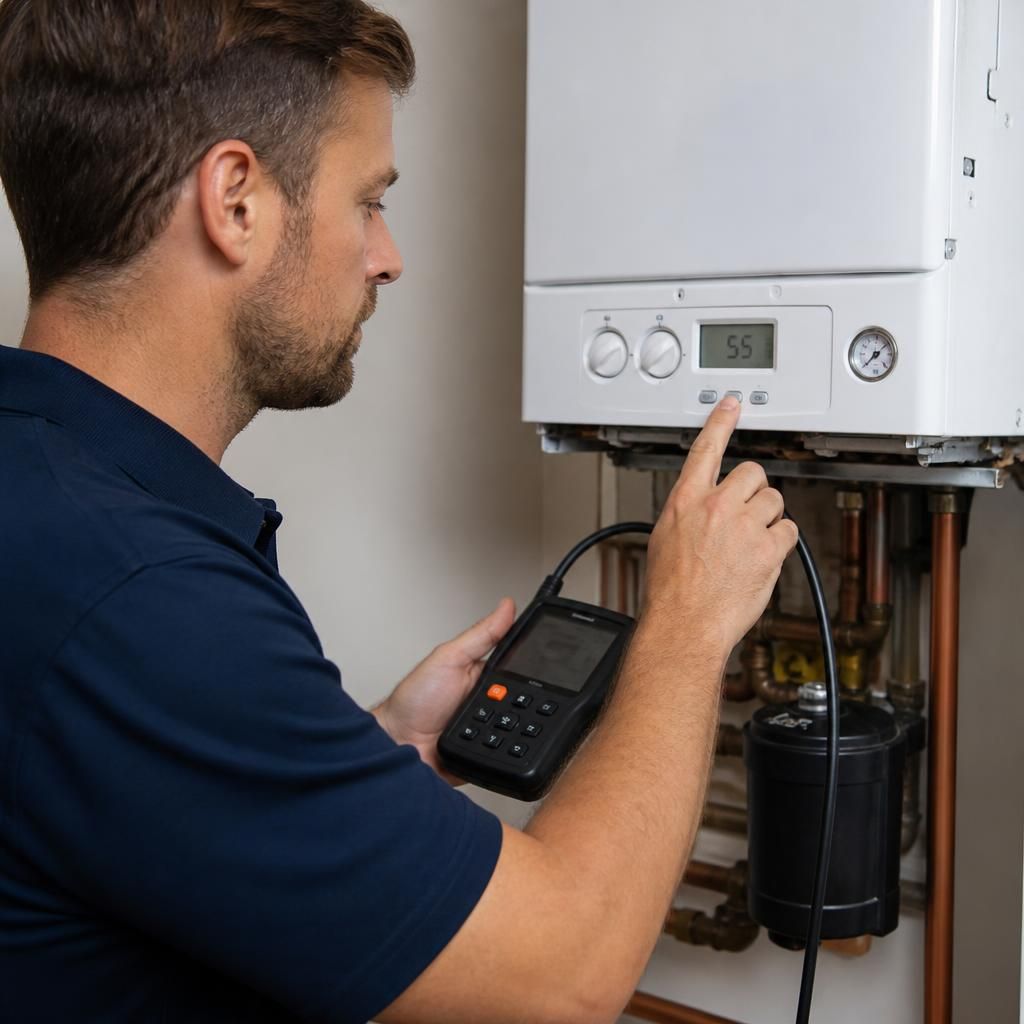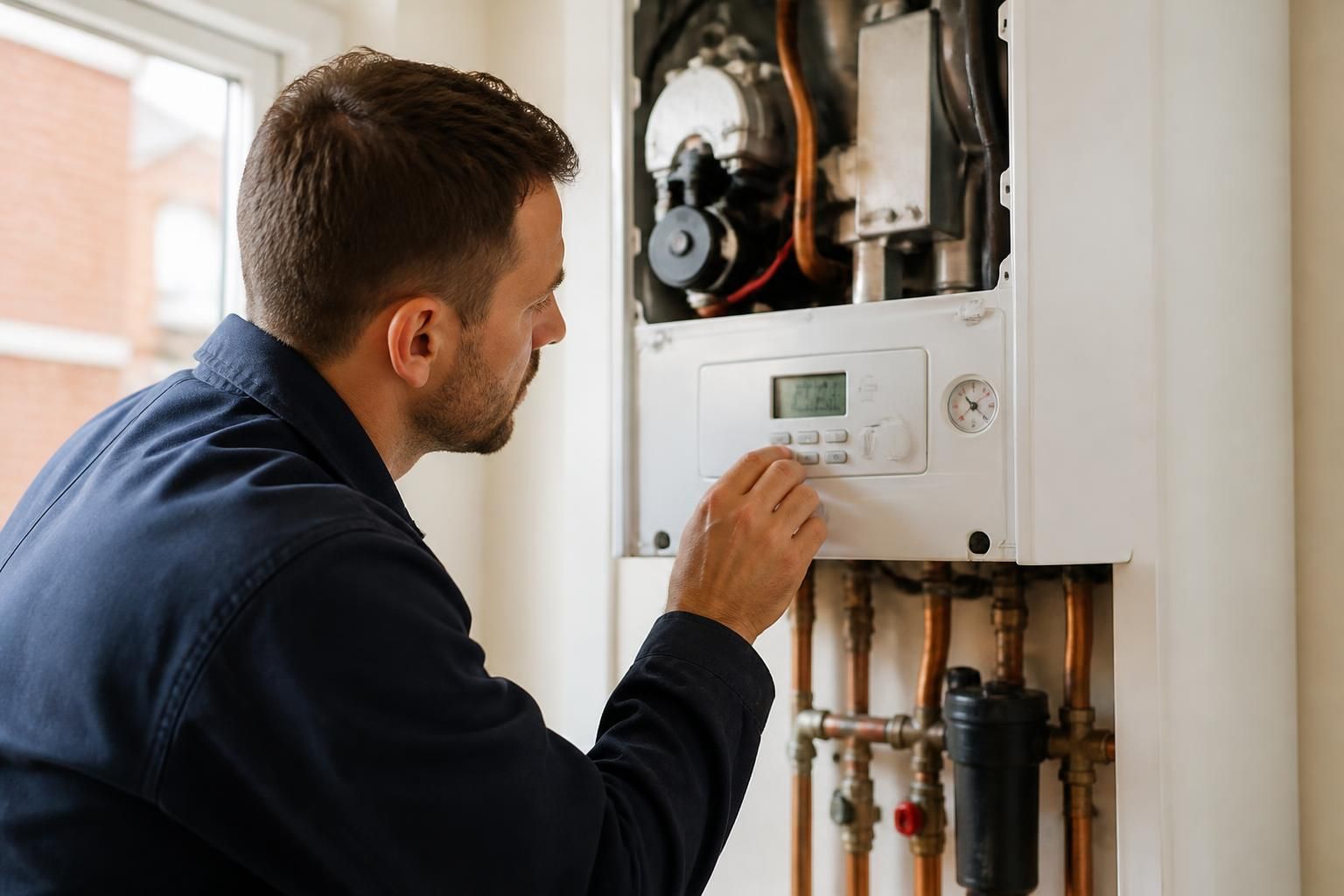
Once a boiler fault has been identified, the next stage is to decide how the fault should be dealt with, make the appliance safe to work on, and carry out the appropriate repair. The process may involve replacing a failed component, correcting an electrical or plumbing connection, restoring system pressure, or dealing with a control, circulation or combustion issue.
The engineer will normally explain the finding in practical terms, including which part or condition has caused the problem and what work is needed. If more than one repair option is technically suitable, these can be compared before work proceeds. The decision may depend on the age and condition of the boiler, the availability of suitable parts, the likely reliability of the repair and whether the appliance remains economical to maintain.
- Safe preparation: The boiler and associated services may be isolated before work begins. This can include switching off electrical supplies, isolating gas or oil supplies where appropriate, and closing water valves to prevent further risk or damage.
- Repair planning: The required components, tools and access arrangements are identified. Some faults can be dealt with during the same visit, while others may require a specific replacement part or additional investigation.
- Component replacement or adjustment: The faulty item may be replaced, repaired or adjusted in line with the boiler’s design. Related connections, seals and wiring are also checked because a visible fault can sometimes be linked to another underlying issue.
- System checks: Following the repair, the heating and hot water controls are operated to assess the boiler’s response. Where relevant, system pressure, water circulation, electrical connections and flue-related conditions are reviewed.
- Information for the customer: The engineer should explain what was done, whether any limitations remain and whether further maintenance or monitoring is advisable.
If the required part is not immediately available, the boiler may not be fully restored during the initial visit. The engineer should identify the outstanding work and explain any safe interim measures. A boiler must not be used if it is unsafe, leaking, producing unusual fumes, repeatedly losing pressure for an unexplained reason, or showing signs of a combustion or flue problem. In these circumstances, follow the engineer’s instructions and do not attempt to bypass safety controls.
There are also cases where repair is not the most appropriate outcome. Extensive corrosion, repeated component failures, obsolete parts, serious heat-exchanger damage or an appliance that is no longer economical to maintain can affect the recommendation. This does not mean replacement is automatically necessary: the condition of the boiler and the nature of the fault should be considered together. Where repair is still reasonable, the implications of proceeding should be made clear before the work is authorised.
After the work, keep any written details of the fault and repair, along with information about replaced parts and any recommendations. This can help identify recurring problems and provides useful history if another issue develops. If the same fault returns, note the displayed code or symptoms, when they occur and whether heating or hot water is affected. Avoid repeatedly resetting a boiler without understanding the cause, as this can conceal a persistent problem rather than resolve it.
For homeowners, landlords and tenants in Birmingham and across the West Midlands, Ideal Plumbing Services provides boiler fault assessment and repair support as part of its residential plumbing and heating service. The important point after identification is that the fault should be dealt with according to its cause, the appliance’s condition and the relevant safety requirements, rather than by replacing parts without establishing why the boiler failed.