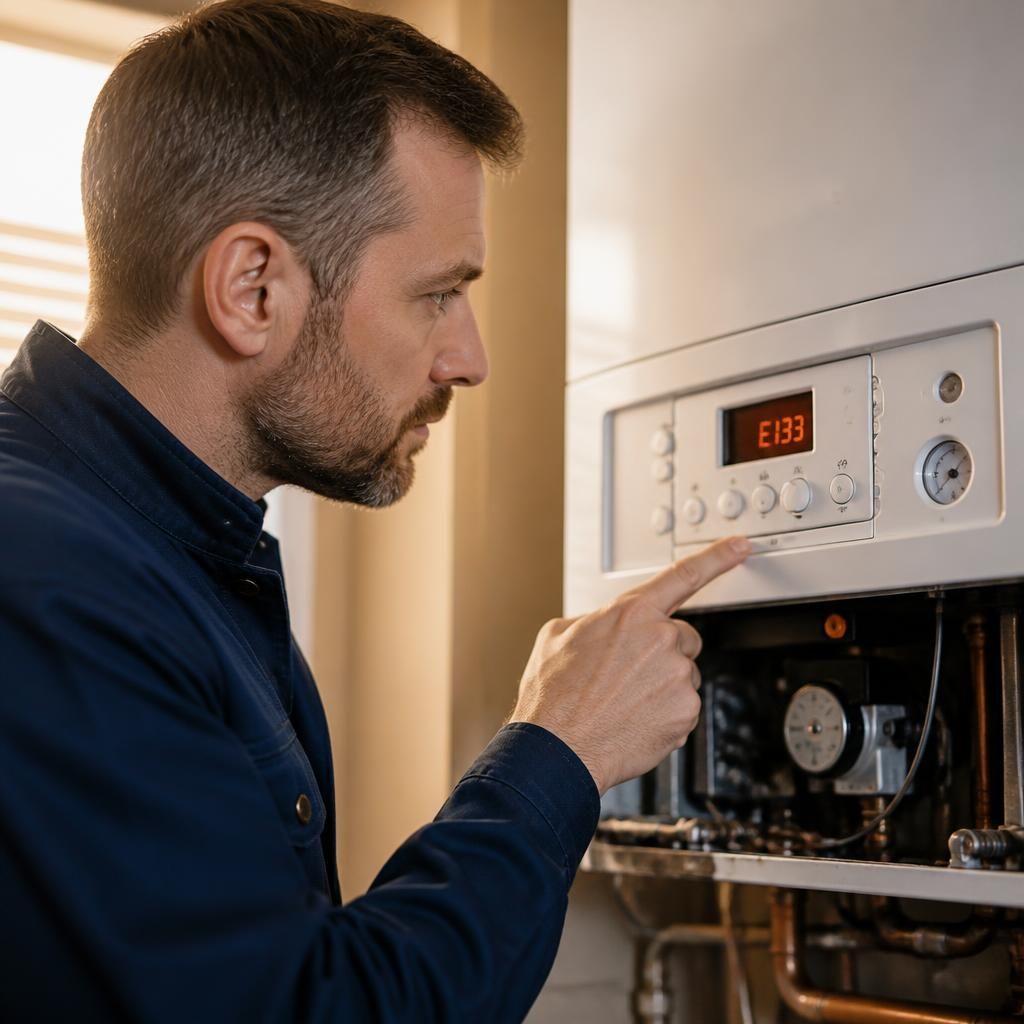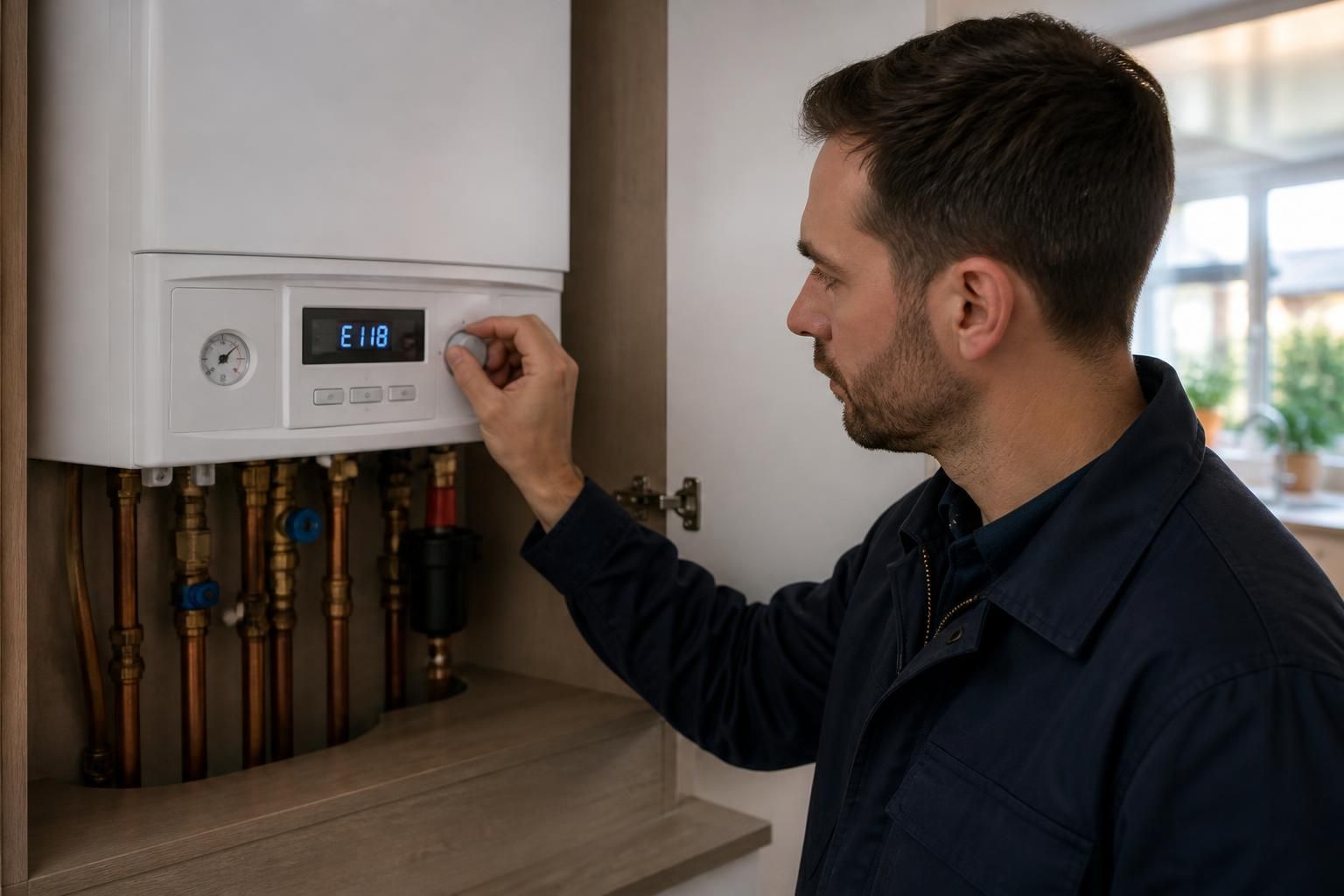
Boiler faults need urgent professional attention when they could compromise safety, cause significant water damage, or indicate that the appliance is overheating or operating outside its normal conditions. A boiler that stops working is not always an emergency, but abnormal pressure, temperature, electrical behaviour or water discharge should not be ignored.
- Rapid pressure changes: A pressure gauge that repeatedly rises towards the red zone, drops soon after being topped up, or fluctuates significantly during normal operation may indicate an expansion vessel problem, a safety valve fault or a leak within the heating system. Repeatedly repressurising the boiler can conceal the underlying fault and place additional strain on the system.
- Signs of overheating: Kettling, loud banging, rumbling, sudden temperature spikes or a boiler that becomes excessively hot can point to restricted circulation, scale, a faulty pump or a problem with the controls. Continued operation may damage internal components, so arrange a professional assessment rather than repeatedly restarting the appliance.
- Substantial water discharge: Water flowing from a pressure relief pipe, pooling around the boiler or appearing beneath connected heating components requires prompt investigation. Even a small leak can affect electrical parts or cause damage to flooring, cupboards and surrounding materials if it continues.
- Electrical malfunction: Sparking, buzzing, flickering displays, melted switches or signs of heat around the boiler supply are reasons to stop using the appliance and seek qualified help. Do not remove the boiler casing or attempt to repair wiring yourself.
- Condensate drainage problems: A frozen, blocked or disconnected condensate pipe can prevent a modern boiler from operating correctly. If the fault returns after following the appliance manufacturer’s safe external reset guidance, professional attention is appropriate, particularly where there is visible damage or a risk of wastewater entering the property.
- Persistent mechanical noise: A new grinding, screeching, vibrating or clicking sound may indicate a failing fan, pump, valve or other moving component. Noise accompanied by poor heating, pressure changes or repeated lockouts should be treated as more urgent than an isolated minor sound.
What to do before an engineer assesses the fault
- Stop using the boiler if its operation appears unsafe or is causing damage.
- Keep people away from leaking water, hot surfaces and damaged electrical equipment.
- Do not remove the casing, bypass safety controls, repeatedly reset the appliance or carry out gas-related work.
- Make a note of any display message, pressure reading, unusual noise and circumstances in which the fault occurs. A photograph of a gauge or visible leak can also help explain the problem.
- If there is a risk of water reaching electrical equipment, only isolate the relevant supply if this can be done without touching wet or damaged components.
A qualified boiler engineer can establish whether the problem involves the appliance, controls, pipework, condensate system or wider central-heating circuit. They should check the fault safely, explain whether repair is suitable and identify any related issue that could cause the fault to return.
Ideal Plumbing Services provides boiler fault assessment and repair for homeowners, landlords and tenants in Birmingham and the wider West Midlands. Professional advice is particularly important where a fault affects safety, pressure control, overheating, electrical components or continuing water discharge.