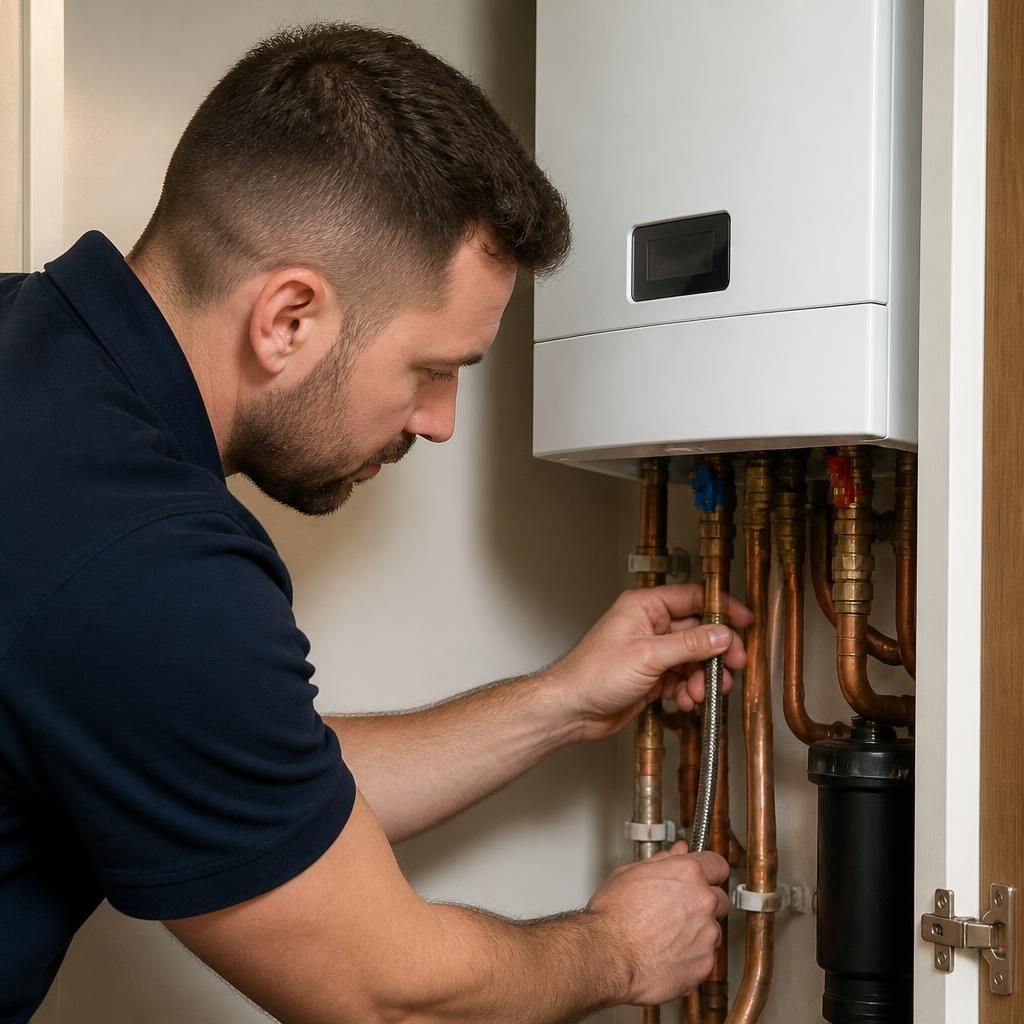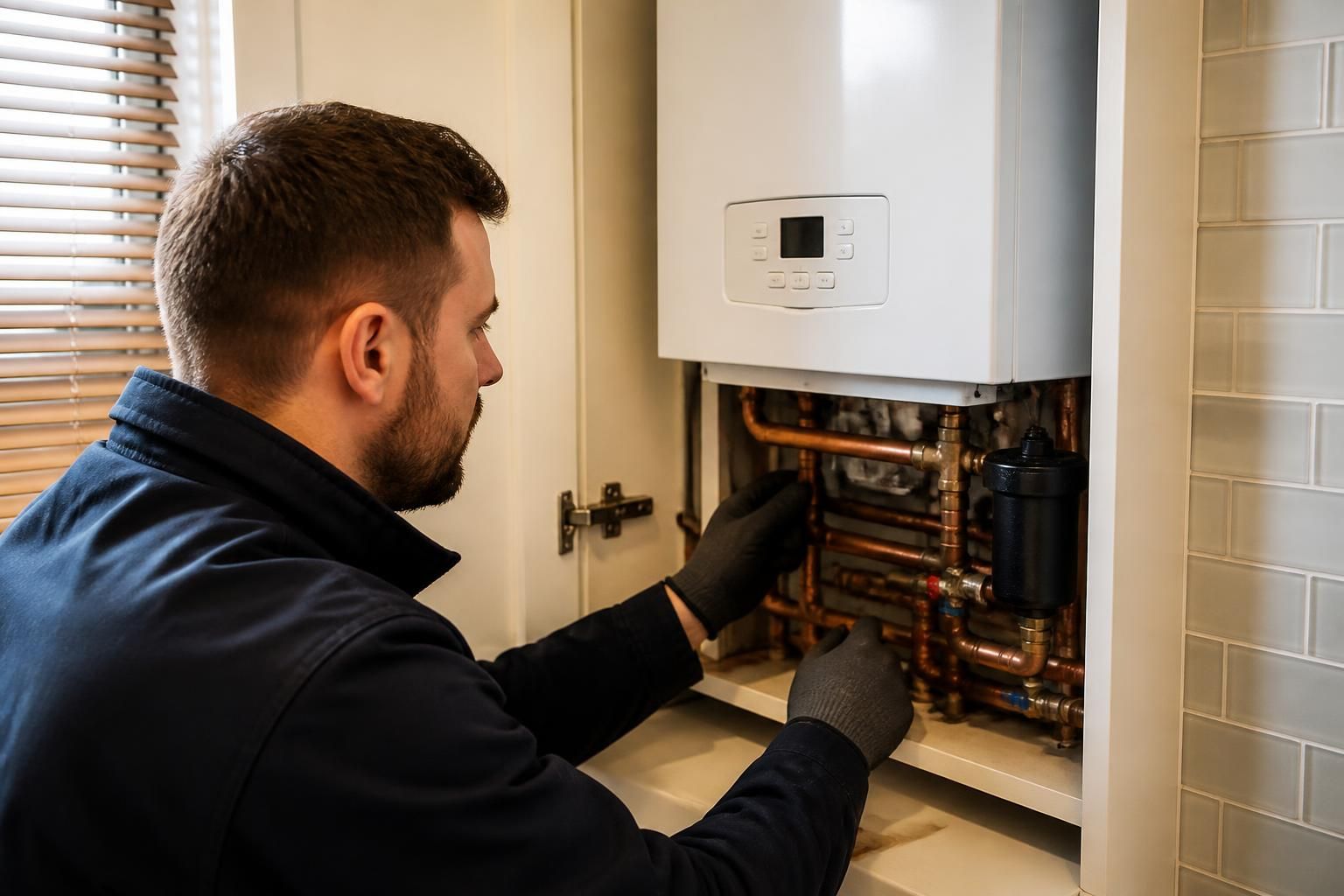
A gas boiler replacement is normally a controlled installation rather than a major building project. The main disruption comes from temporary loss of heating and hot water, access to the boiler and associated pipework, and the checks needed before the new system is left operating safely.
The amount of work involved depends largely on whether the replacement is straightforward or whether the installation needs adapting. Disruption may be greater where:
- the new boiler is a different size or type;
- the flue route needs changing;
- pipework requires alteration, support or replacement;
- the condensate drain needs a new connection;
- the controls are being upgraded or relocated;
- the boiler is in a cupboard, loft or other restricted location; or
- the system needs cleaning or corrective work before the replacement can be commissioned.
Work around the installation area can involve drilling, cutting, lifting and the use of hand tools. There may be some dust or debris, particularly when brackets, flue components or pipework are removed. A competent installer should protect suitable surfaces, keep the work area orderly and explain any preparation needed before starting.
During the installation, household routines may need to change. You may not be able to use hot water from the boiler, and central heating will not operate until the new appliance is connected and commissioned. If the boiler is located in a kitchen, utility room or cupboard, that area may need to remain clear so the engineer can work safely. Pets and children should be kept away from tools, materials and the installation area.
The replacement process generally includes isolating the existing appliance, disconnecting it, positioning the new boiler, connecting the gas, heating, water, electrical and condensate services, and fitting the flue and controls. The engineer may also need to inspect the system pressure, radiators and visible pipework. These steps are important because a boiler cannot be assessed only by whether it starts up.
Before the work begins, remove items stored around the boiler and create a clear route to it. If the appliance is inside a cupboard, check whether doors, shelves or stored belongings obstruct access. Tell the installer about any known issues, such as pressure loss, unusual noises, previous leaks or radiators that do not heat evenly. This information can help identify related work before the new boiler is commissioned.
It is also sensible to plan for the period when the heating and hot water are unavailable. Complete tasks that depend on hot water beforehand, keep access routes clear and avoid scheduling other work in the same area. Where the property is rented, the landlord or managing agent should confirm approval and any access arrangements before installation.
Once the boiler is fitted, the engineer should commission it in accordance with the manufacturer’s instructions and check that the controls, flue, gas supply, pressure and safety functions operate correctly. The heating system should be tested, and the controls explained so you know how to adjust heating times and hot water settings. The installation area should also be left safe, with waste and removed components dealt with appropriately.
A replacement becomes more disruptive when hidden problems are discovered, access differs from the information provided beforehand, or additional components are required to bring the system up to a suitable standard. A proper site assessment and clear quotation can reduce uncertainty, although the installer may still need to discuss any necessary changes once the old boiler and pipework are visible.
Ideal Plumbing Services provides gas boiler replacement and related plumbing and heating support for homeowners, landlords and tenants across Birmingham and the wider West Midlands. A detailed assessment can establish what access, preparation and system alterations are likely to be required before work is scheduled.