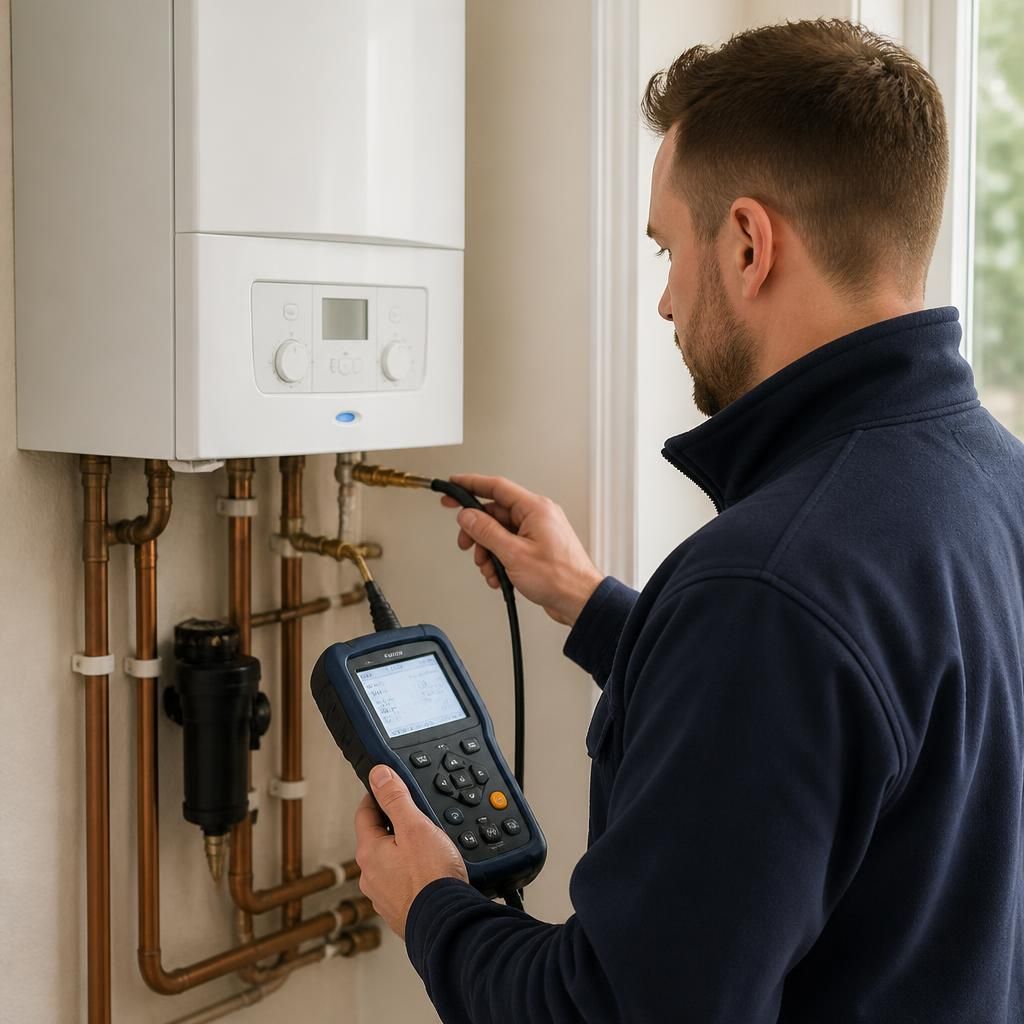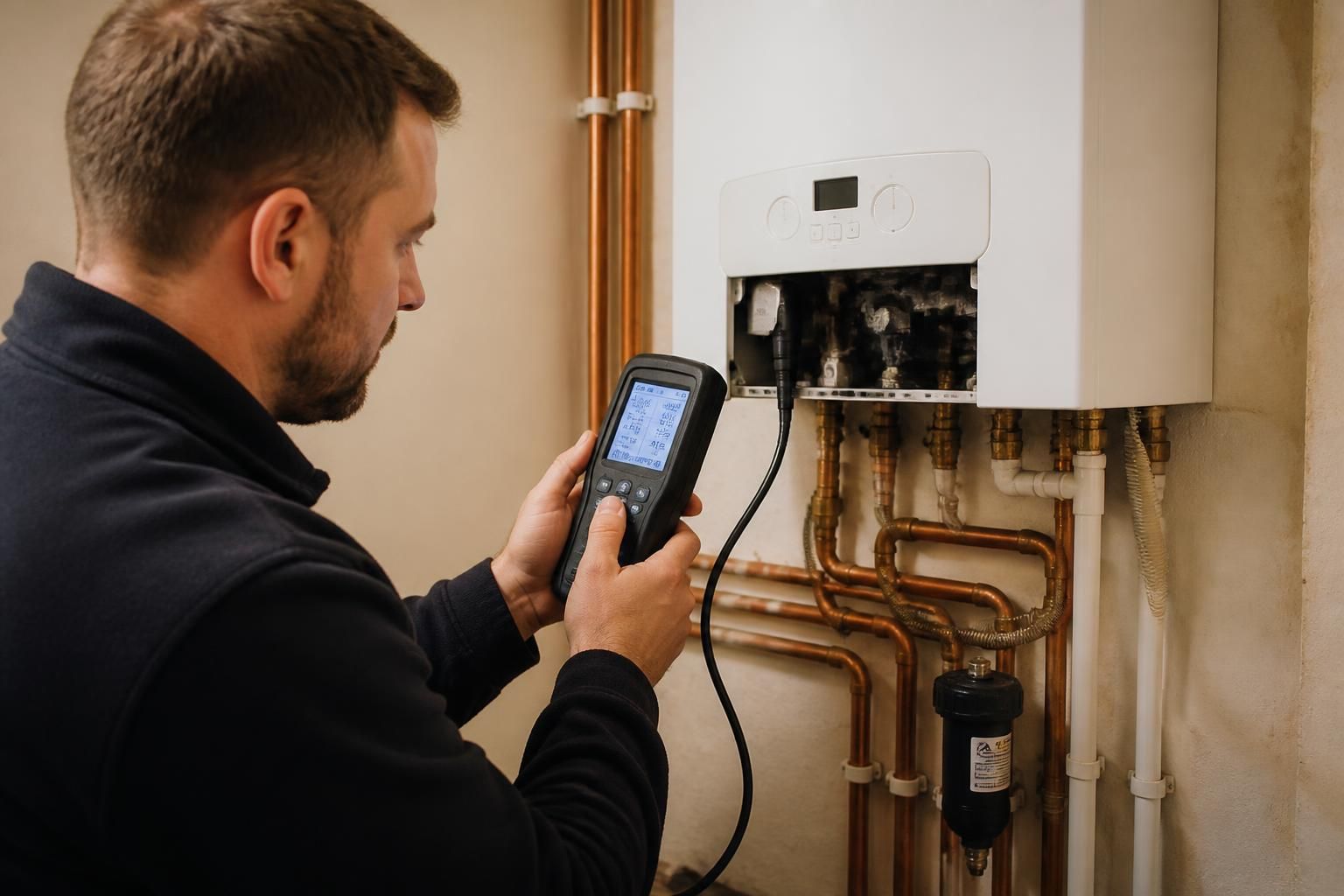
The final stage of a gas boiler replacement is commissioning: the engineer verifies that the installation has been completed in accordance with the boiler manufacturer’s instructions and relevant safety requirements, records the results and confirms that the system is suitable to hand over. This goes beyond switching the boiler on; it involves checking that the whole installation works together correctly and that the homeowner understands its operation.
Further checks may include:
- Installation condition: the boiler should be securely fixed, accessible for servicing and installed with appropriate clearances. Visible pipework should be properly supported, and the route of the condensate discharge should be suitable for continued use.
- Heating and hot-water performance: the engineer can run the system through normal heating and hot-water demand to identify poor circulation, unusual noises, delayed ignition, overheating or fault codes. Where controls have been replaced or rewired, each relevant setting should respond correctly.
- System condition: air may need to be removed from the system, radiators checked for uneven heating and the pressure observed after the system has cooled. The engineer may also check that the system water is suitably treated where this forms part of the installation requirements.
- Safety equipment: any associated carbon monoxide alarm should be correctly positioned and operating. The engineer should also confirm that the user knows where the boiler isolation controls are located and what to do if the appliance displays a fault.
The engineer should complete the relevant commissioning information, including the appliance details and test results. Depending on the type of installation and the installer’s registration arrangements, the work may also need to be notified under the applicable building regulations process. A homeowner should retain the paperwork because it provides a useful record for future servicing, repairs or property records.
For a rented property, the replacement does not remove the landlord’s separate responsibility to arrange the required gas safety checks and provide the appropriate record. Commissioning a new boiler and carrying out a later gas safety inspection are related but different procedures.
After handover, watch for persistent pressure loss, water around the appliance, recurring fault codes, unusual smells or abnormal noises. Turn the boiler off and seek qualified assistance if a gas smell is suspected; do not attempt to remove the boiler casing or alter combustion settings yourself. Keeping the commissioning documents and following the servicing recommendations helps ensure that any later issue can be assessed against the original installation record.