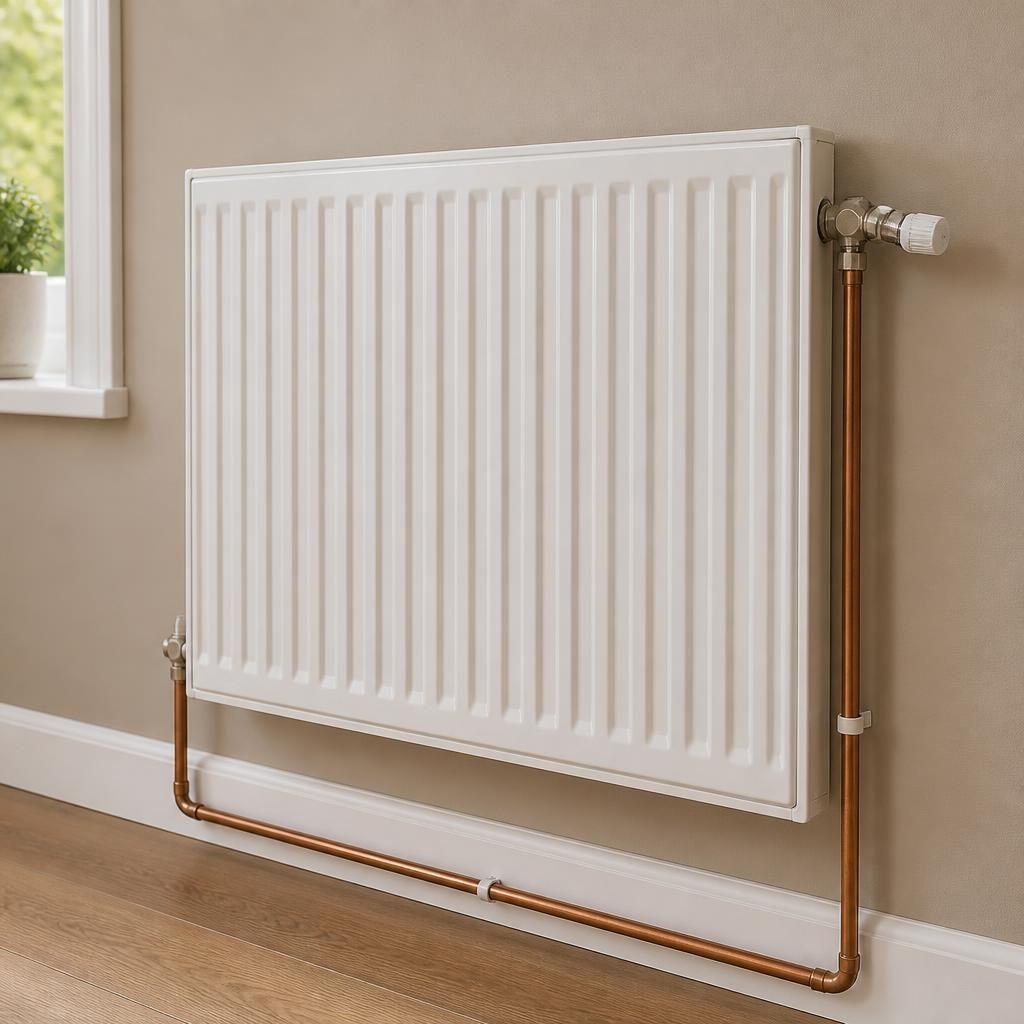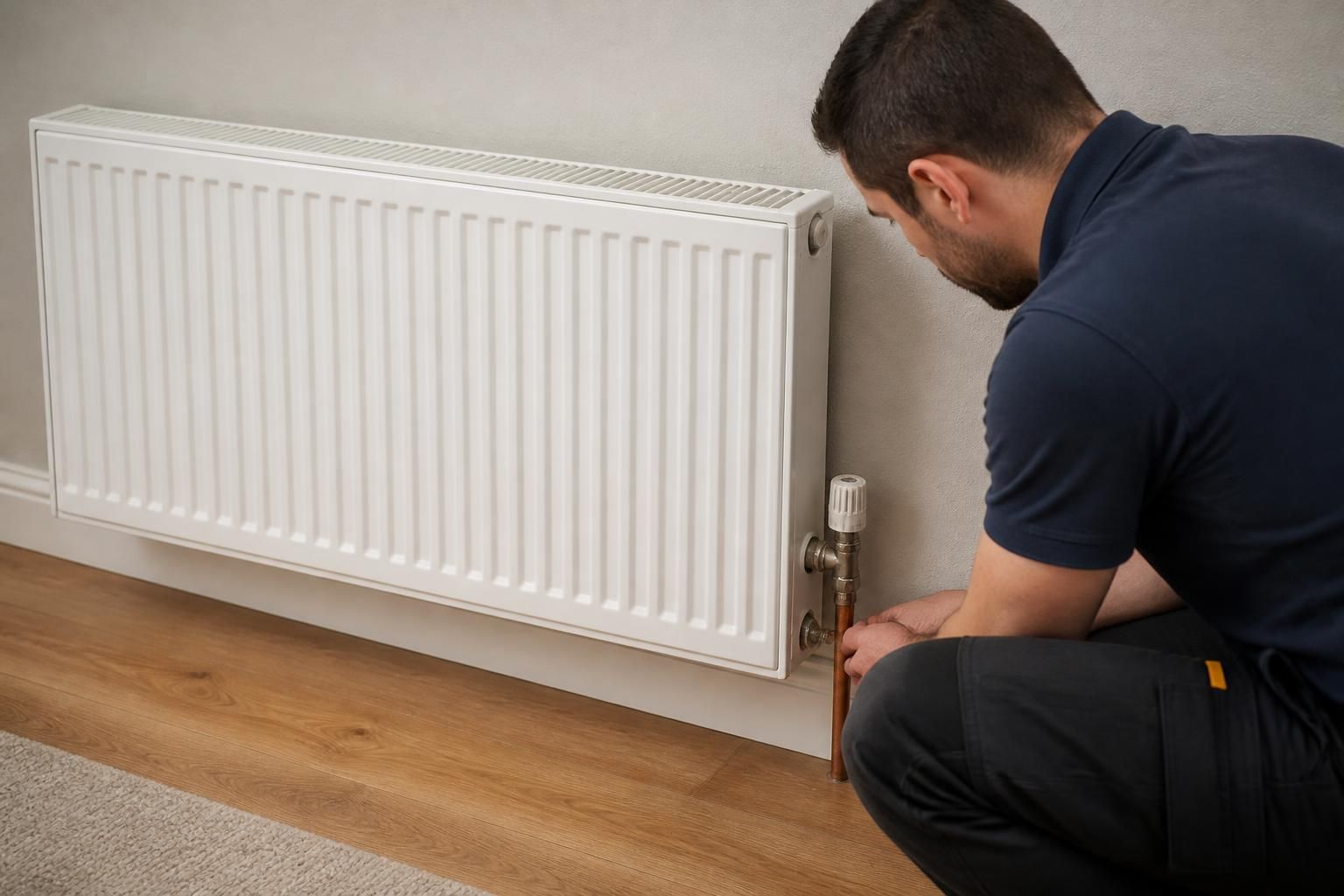
The decision depends on the condition, output and compatibility of the existing radiators, not simply on the installation of a new gas boiler. A suitable assessment should establish whether each room can reach the required temperature at the flow temperatures the replacement boiler is designed to use.
Radiator output and room heat loss
Radiators are selected according to the heat loss of the room they serve. Factors such as room size, insulation, windows, external walls and ceiling height all affect the amount of heat required. The output of each radiator should therefore be compared with the heat demand of its room rather than judged by the size of the boiler alone.
A modern condensing boiler can be operated at lower flow temperatures to improve efficiency. Existing radiators may still provide adequate heat, but their output is lower at reduced temperatures. In some rooms, particularly those with high heat loss, a larger radiator or an additional radiator may be needed to maintain comfort without operating the heating system at unnecessarily high temperatures.
When replacement may be sensible
- There is visible corrosion, leaking or physical damage.
- The radiator has persistent cold areas caused by internal sludge or restricted circulation.
- It is too small for the room when the system is assessed at suitable operating temperatures.
- The radiator has corroded internally and is likely to compromise the cleanliness or reliability of the heating system.
- The existing valves are seized, leaking or unsuitable for the planned controls.
- The layout is being altered and a different size or style is required to heat the room effectively.
Cold spots do not automatically mean that a radiator must be replaced. Air, trapped debris, poor balancing or a faulty valve can produce similar symptoms. Cleaning or flushing the system, bleeding the radiator, replacing a valve or correcting the system balance may resolve the problem without installing a new radiator.
System condition and pipework
Before connecting a replacement boiler, the heating circuit should be checked for sludge, corrosion, leaks and restricted flow. If contaminated water is left in the system, it can affect the boiler, pump and radiators. The appropriate cleaning method depends on the condition of the installation and should be agreed as part of the replacement work.
Pipework and radiator connections also need to be checked. A radiator that is in good condition may still perform poorly if the connecting pipework is restricted, incorrectly configured or unable to provide adequate circulation. These issues should be separated from a radiator fault before replacement is recommended.
What the assessment should cover
- Inspect the radiators, valves and visible pipework for leaks, corrosion and damage.
- Review the heating performance of individual rooms, including any rooms that remain colder than others.
- Calculate or assess the heat requirement of each room.
- Check whether the proposed boiler and controls can operate effectively with the existing heating circuit.
- Identify any cleaning, balancing, valve replacement or pipework work needed.
- Recommend radiator replacements only where their condition, size or performance justifies them.
It is common for some radiators to remain in place while others are replaced. This avoids unnecessary work and allows the heating system to be improved where it matters most. Where several radiators are approaching the end of their serviceable life, replacing them during the boiler project may be more practical than carrying out separate heating work later, but this should be based on their condition and the overall design rather than treated as an automatic requirement.
Ask for the boiler proposal to state clearly whether the existing radiators are being retained, which units require replacement and why. The specification should also explain any recommended system cleaning, valve changes, balancing or adjustments to operating temperatures so that the compatibility of the complete heating system is understood before work begins.