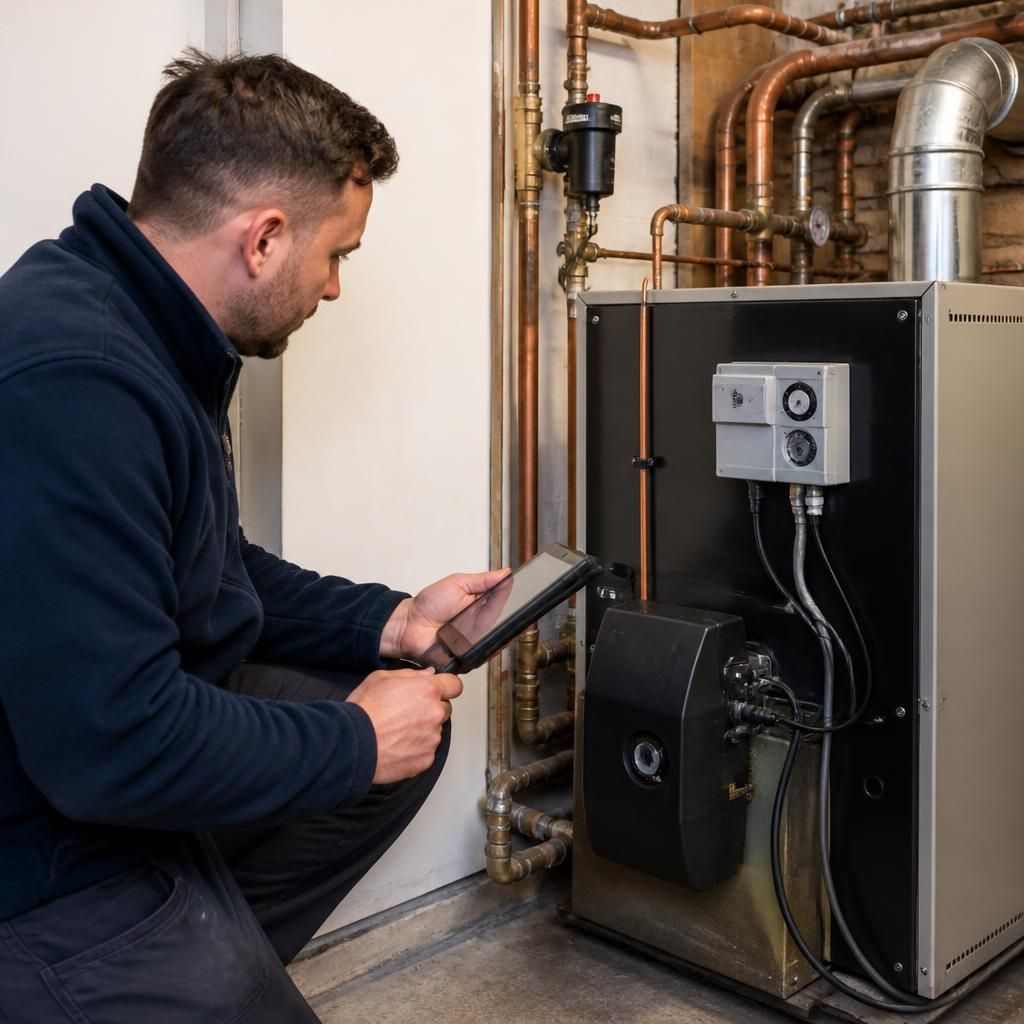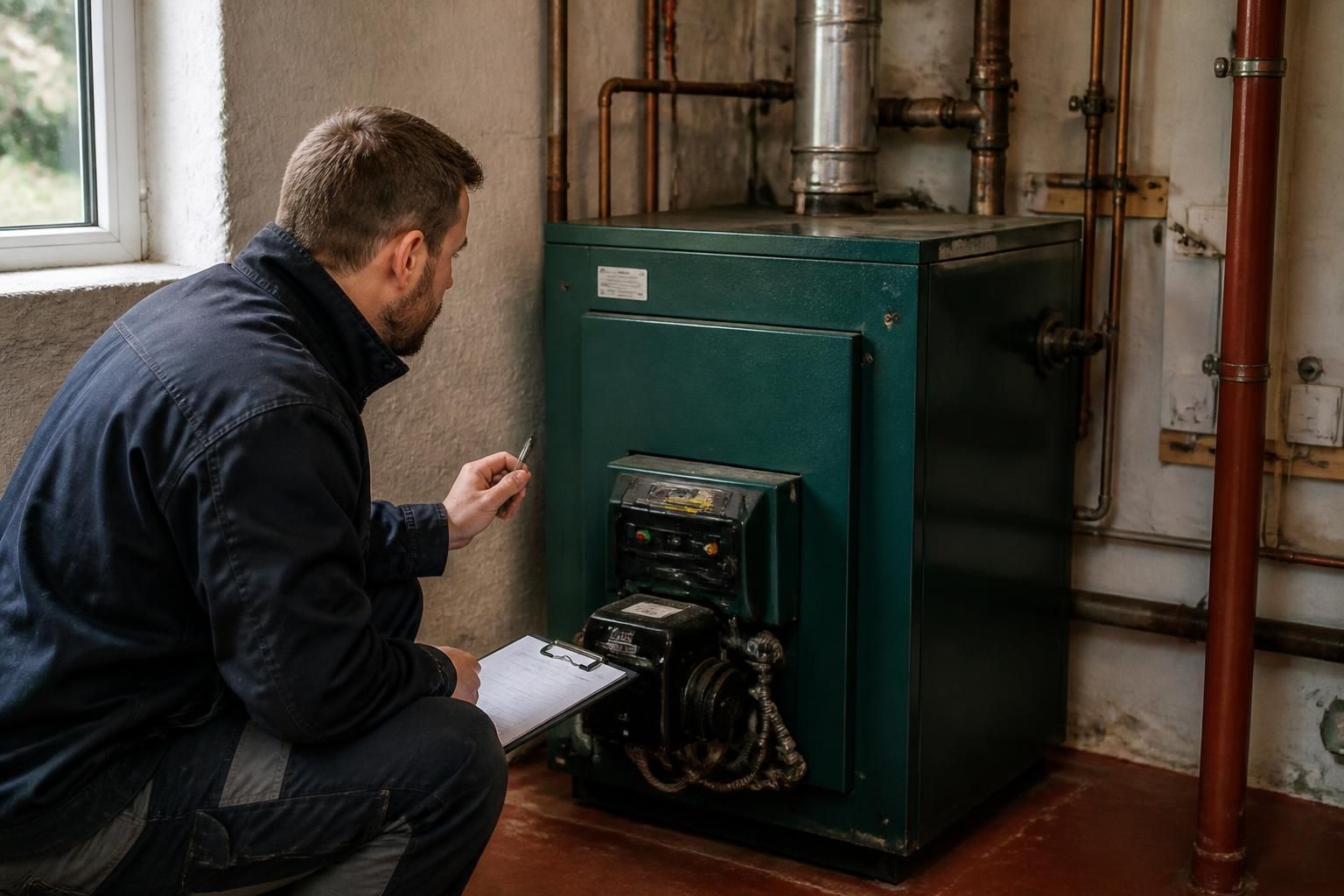
An oil boiler replacement is generally a controlled installation rather than a whole-house upheaval, but the level of disruption depends on whether the work is limited to the boiler or includes changes to the flue, oil supply, controls, hot water cylinder or heating pipework. A like-for-like replacement in an accessible location is usually less disruptive than an installation that requires alterations to the system or building.
What happens during the replacement?
- The engineer checks the existing installation, confirms the proposed position and identifies any access or safety issues.
- The boiler and relevant parts of the heating system are safely isolated. The old appliance is disconnected and removed, with care taken around the oil supply and electrical connections.
- The new boiler is positioned and connected to the heating, hot water, flue, condensate and oil systems as required.
- Controls and associated components are installed or adapted where necessary.
- The system is refilled, checked for leaks, balanced where appropriate and tested through its operating settings.
- The installation is commissioned so that combustion, safety devices and controls operate correctly, and the engineer explains the basic operation to the homeowner.
Which parts of the home may be affected?
The main work area is the boiler location, but access may also be needed to nearby pipework, the flue terminal, electrical controls and other heating components. If the boiler is in a garage, utility room, outhouse or cupboard, the route between the entrance and the installation area needs to remain clear. Where pipework is altered, small sections of flooring, boxing or wall covering may need to be opened and subsequently made good by agreement.
A replacement can involve more work if the existing flue is unsuitable, the boiler position does not meet current installation requirements, the oil line needs modification or the system has older components that are no longer appropriate. Moving the boiler is a separate level of work because it can require new flue routing, drainage, electrical connections and heating pipework.
How can you reduce the disruption?
- Clear furniture, stored items and personal belongings from the route to the boiler.
- Remove items from the cupboard or room where the installation will take place.
- Tell the engineer about access restrictions, pets, vulnerable occupants or areas that cannot be entered.
- Keep any documents relating to the existing boiler, controls, oil tank or heating system available.
- Discuss beforehand whether flooring, boxing, cupboards or decorations may need to be disturbed.
- Arrange access to external areas if the flue, oil line or other components are outside the main boiler room.
Protective floor coverings and sensible preparation can limit dirt and accidental damage, although drilling, cutting and removal work can still create some dust. Keeping the work area accessible is usually more helpful than trying to continue normal use of the room while the installation is under way.
Will the whole heating system need replacing?
Not necessarily. A boiler replacement may leave radiators, the hot water cylinder, storage tank and much of the existing pipework in place if they are compatible and in suitable condition. However, the engineer may recommend changes where components are damaged, incorrectly sized, contaminated or incompatible with the new appliance. A system clean or filter installation may also be considered where the condition of the heating water could affect the replacement boiler.
This distinction is important when assessing disruption. Replacing only the boiler is usually more contained, while upgrading several system components creates additional work in different parts of the property. Ask for the proposed scope to be explained clearly so you know which rooms, fixtures and external areas may be affected.
What should happen before the installation is finished?
The engineer should check that the boiler operates safely and that the heating and hot water controls respond correctly. They should also inspect visible joints and connections, verify the flue arrangement and explain routine operation, control settings and any maintenance requirements. The old appliance and installation materials should be removed or dealt with as agreed.
If the property will be occupied during the work, plan around the temporary loss of normal heating and hot water identified during the assessment. Keep essential belongings accessible, avoid storing items directly beside the work area and raise questions before the old boiler is disconnected. For landlords, it is also sensible to agree access and reinstatement arrangements with the tenant in advance.
For a straightforward replacement, the greatest disruption is normally concentrated around the boiler area and installation period. More extensive alterations can affect additional rooms and extend the work, so the assessment should identify these issues before a final installation plan is agreed.