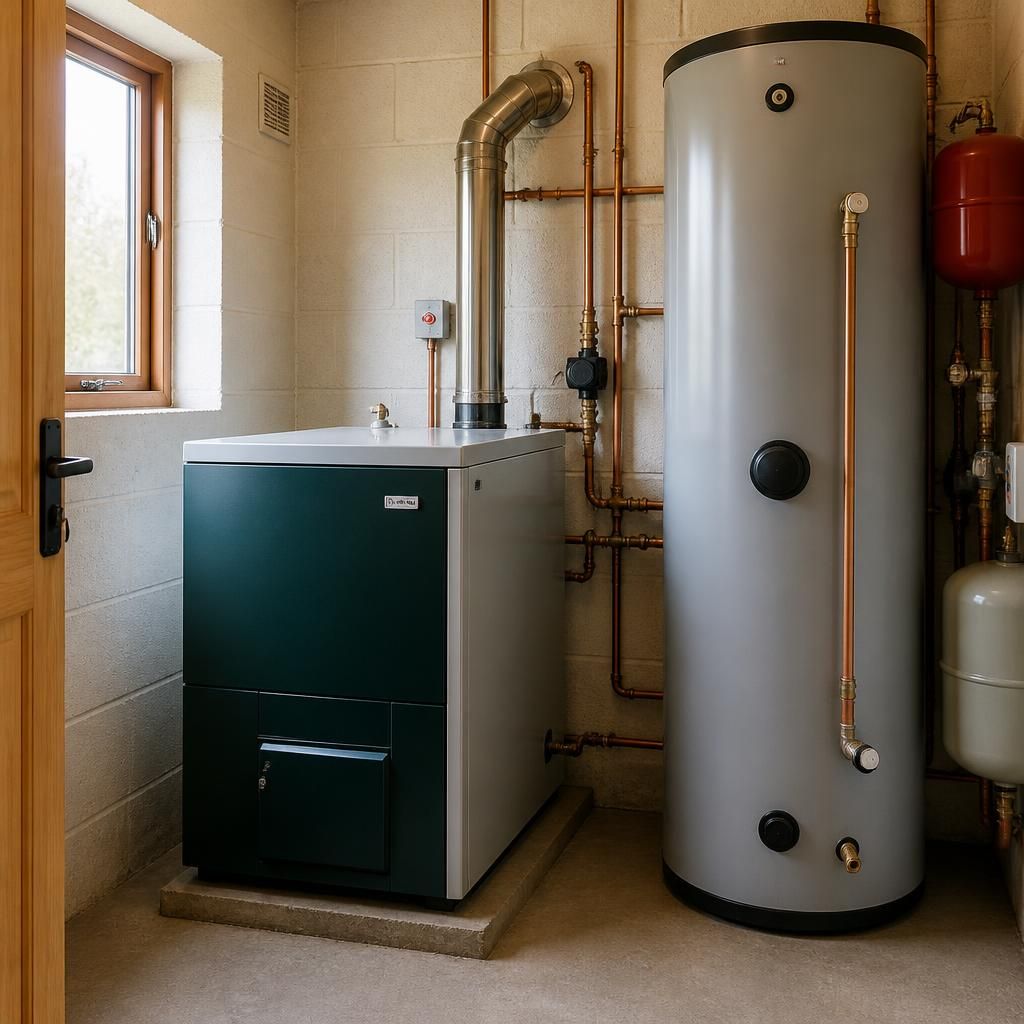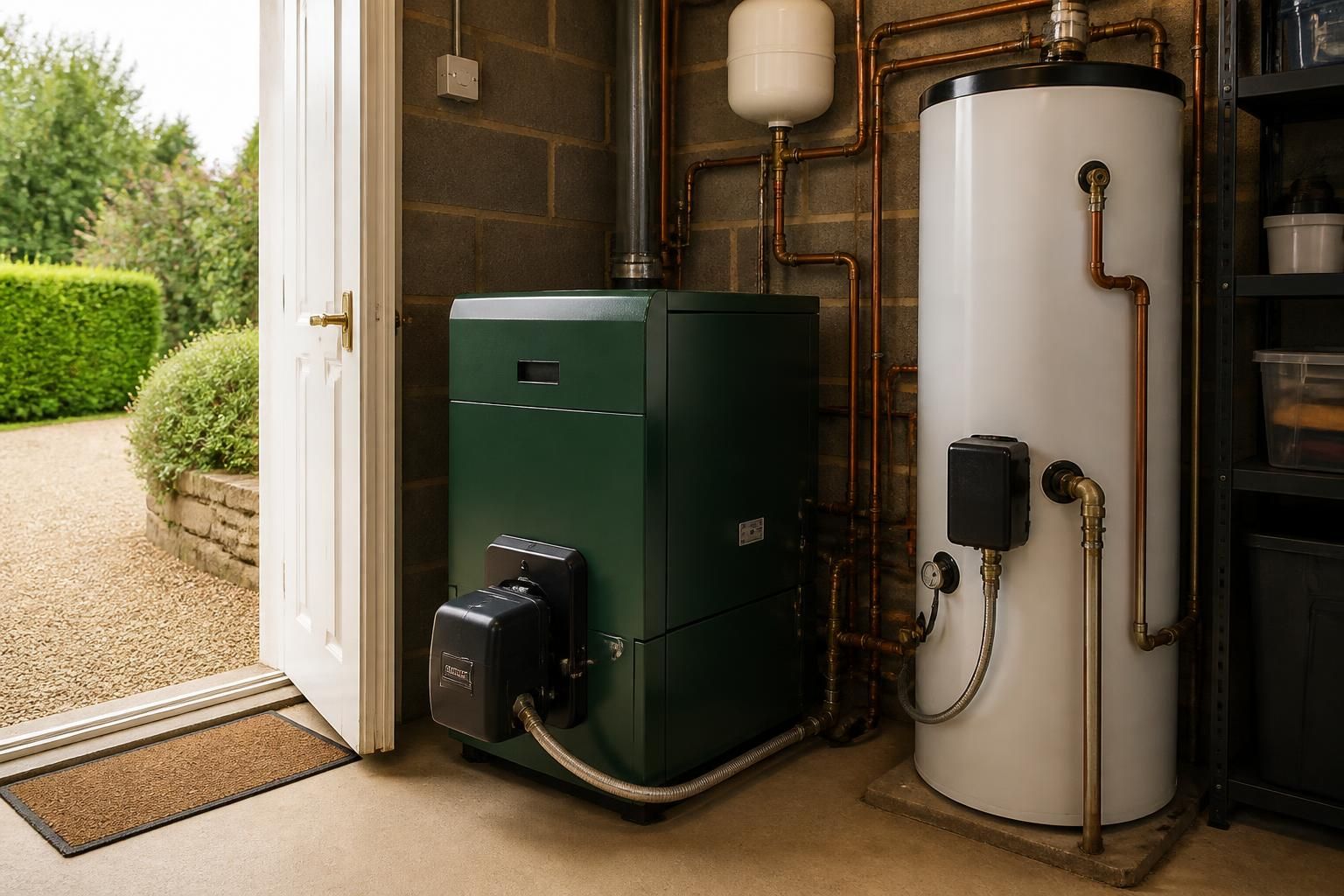
Oil boiler replacement can suit most property types with an established oil-fired wet heating system, provided the replacement can be correctly sized and the property has a compliant arrangement for fuel storage, combustion air, flueing and heating distribution. Suitability depends more on the existing system and the building’s heating requirements than on whether the property is old, modern, large or compact.
Commonly suitable property types include:
- Bungalows: A single-storey layout can work well with an oil boiler, particularly where the boiler already supplies radiators and domestic hot water. The assessment should consider the floor area, insulation and the number of rooms requiring heat.
- Cottages and period homes: Older properties may retain oil heating because of their location, construction or previous system design. Replacement is possible, but heat loss, insulation, radiator output and the condition of older pipework should be considered before selecting the new boiler.
- Farmhouses and homes with annexes: A suitably designed oil heating system can serve a main dwelling and an attached or nearby annexe. The installer needs to establish whether both areas require simultaneous heating and whether separate controls or heating zones would improve operation.
- Properties with underfloor heating: Oil boilers can form part of systems that use underfloor heating, radiators or a combination of both. Where different temperatures are needed, the controls, pumps and mixing arrangements should be checked as part of the replacement rather than assuming the existing setup can be reused unchanged.
- Homes with high or variable hot-water demand: Properties with several bathrooms, a large household or regularly occupied guest accommodation may be suitable, provided the boiler, hot-water cylinder and controls are assessed as one system. A boiler replacement alone may not address limited hot-water storage or poor circulation.
- Rented houses and managed properties: Landlords can consider replacement where an existing oil system is part of the property’s fixed heating provision. The work should be documented clearly, with attention to safe operation, maintenance access and controls that are straightforward for tenants to use.
Smaller homes are not automatically unsuitable. If the property already has oil heating, a replacement may remain practical after a heat-loss calculation and system review. The important issue is avoiding an oversized boiler, which can cycle unnecessarily and may indicate that the proposed replacement has been selected from the property’s previous boiler rating rather than its current requirements.
Flats and apartments need more careful consideration. An individual replacement may be feasible where the flat has its own oil boiler, dedicated heating circuit and lawful arrangements for the tank and flue. It is usually not a straightforward like-for-like project where heating is supplied by a communal plant room or where the individual dwelling has no suitable provision for oil storage and flue discharge.
Properties that have been extended, divided into separate accommodation or converted from another use should also be assessed as a complete heating layout. The original boiler may no longer match the altered floor area, insulation levels or hot-water demand. A survey should identify every heated zone, existing controls, radiator condition and any areas added since the current boiler was installed.
Listed buildings and homes in conservation areas may be suitable, but external alterations can require additional consideration. The position and appearance of a flue, tank or other equipment may be restricted by planning requirements, lease conditions or the building’s construction. These points should be checked before the replacement is specified.
A professional assessment should therefore confirm:
- the property’s current and intended heat demand;
- the condition and layout of radiators, pipework, pumps and controls;
- whether hot-water storage matches the household’s needs;
- that the proposed boiler can be installed and maintained safely;
- that the oil tank, supply route and delivery access remain appropriate; and
- whether alterations to the building have changed the heating requirements.
In Birmingham and across the West Midlands, an oil boiler replacement assessment can establish whether the existing arrangement remains suitable for the property or whether changes to controls, hot-water storage or heat distribution should be included in the work. The result should be a system specified for the building as it is now, rather than simply a replacement based on the old boiler’s output.