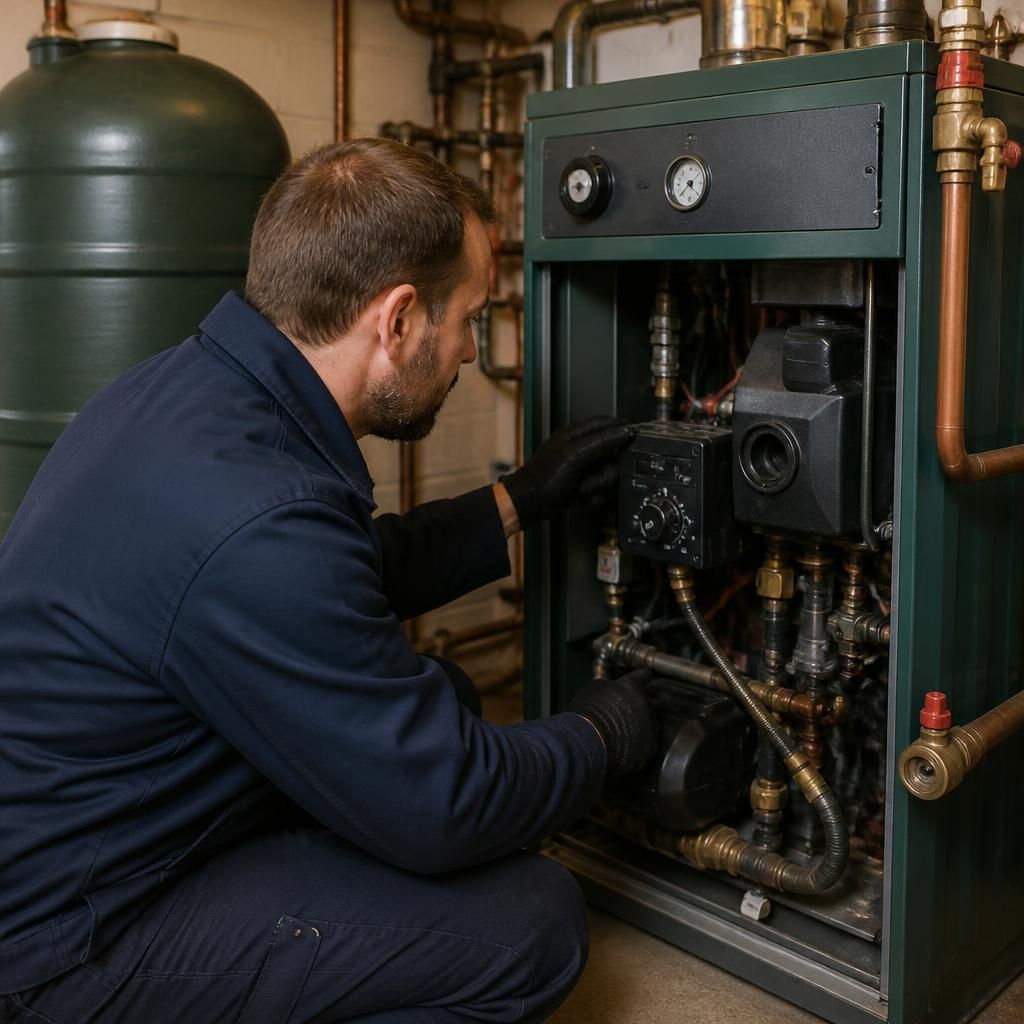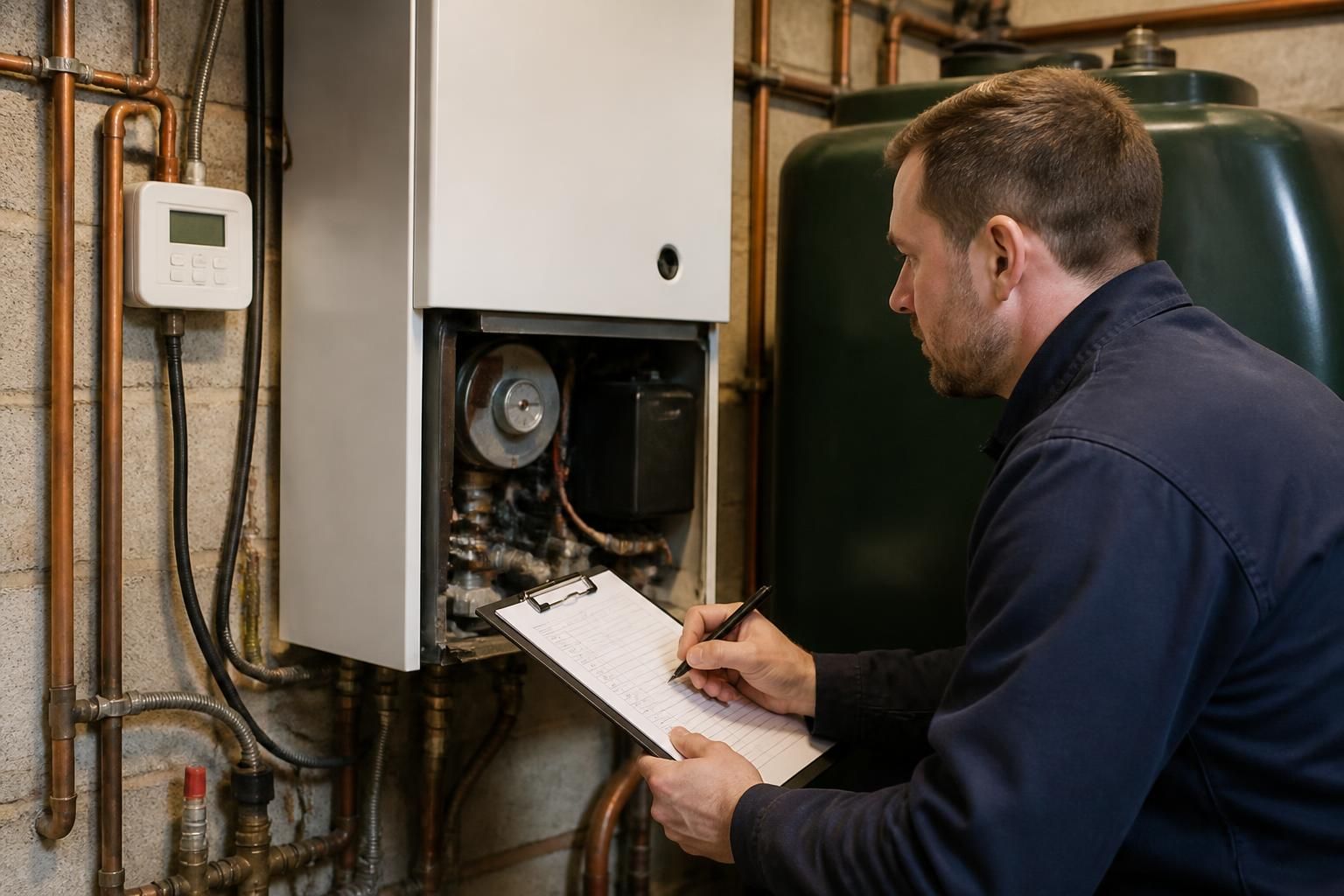
Preparing for an oil boiler replacement assessment means giving the engineer enough information to evaluate the whole heating system, the property and the practical requirements of the proposed installation. Alongside the boiler information and access arrangements already noted, gather the following details before the visit.
Collect relevant documents and records
- Any previous installation paperwork, commissioning records or inspection reports.
- Recent oil delivery records, if available, to help indicate typical fuel usage.
- Information about previous alterations to the heating, hot-water or fuel-storage system.
- Property plans or details of extensions, conversions or rooms that may affect heat demand.
These records are not essential in every case, but they can help the engineer understand how the system was designed and identify changes that may affect the replacement proposal.
Consider the property and installation constraints
Make a note of any practical restrictions that could affect the work. This may include narrow entrances, stair access, limited parking, difficult routes to the boiler or oil tank, and areas where equipment or materials cannot be stored. Mention listed-building requirements, restrictive covenants or other property conditions if they apply. The assessment should also consider the flue route, ventilation, fuel pipework, electrical supply, condensate arrangements and the position and condition of the oil tank.
It is useful to identify any rooms or areas that are unusually cold, difficult to heat or prone to condensation. Do not try to calculate heat loss yourself, but point out relevant features such as newer windows, insulation upgrades, extensions or rooms with high ceilings. These details can affect the heating assessment and whether existing radiators are suitable for the replacement system.
Decide what you want included in the assessment
Before the appointment, write down the outcomes you want the engineer to address. For example, you may want advice on whether the existing hot-water arrangement should remain, whether controls need updating, or whether the oil tank and associated components should be replaced at the same time. Separating essential work from optional improvements makes it easier to compare proposals accurately.
Also consider any plans that could affect the installation, such as insulating the property, converting a room or carrying out building work. Sharing these plans can prevent a replacement being designed around requirements that may soon change.
Prepare questions about the proposed work
- What parts of the existing system can remain, and what must be altered?
- Will the assessment include the flue, ventilation, oil tank, fuel lines, controls and hot-water cylinder?
- Are any remedial building, electrical or plumbing works likely to be needed?
- How will the old boiler and any redundant components be removed?
- What commissioning, safety checks and certification will be provided?
- Which controls or efficiency improvements are compatible with the proposed system?
- What is included in the quotation, and which items would be treated as additional work?
Ask for the findings to be explained in practical terms rather than accepting a boiler size or replacement specification without understanding the reasons behind it. A suitable assessment should consider heat demand, hot-water requirements, system condition, fuel storage and installation compliance together.
Finally, ensure that someone who can answer questions about the property is available for the assessment and that the engineer can inspect all relevant areas safely. A clear description of the property, its history and your priorities will help produce a more accurate replacement recommendation. Ideal Plumbing Services can provide professional advice on oil boiler replacement assessments for homeowners, landlords and tenants across Birmingham and the wider West Midlands.