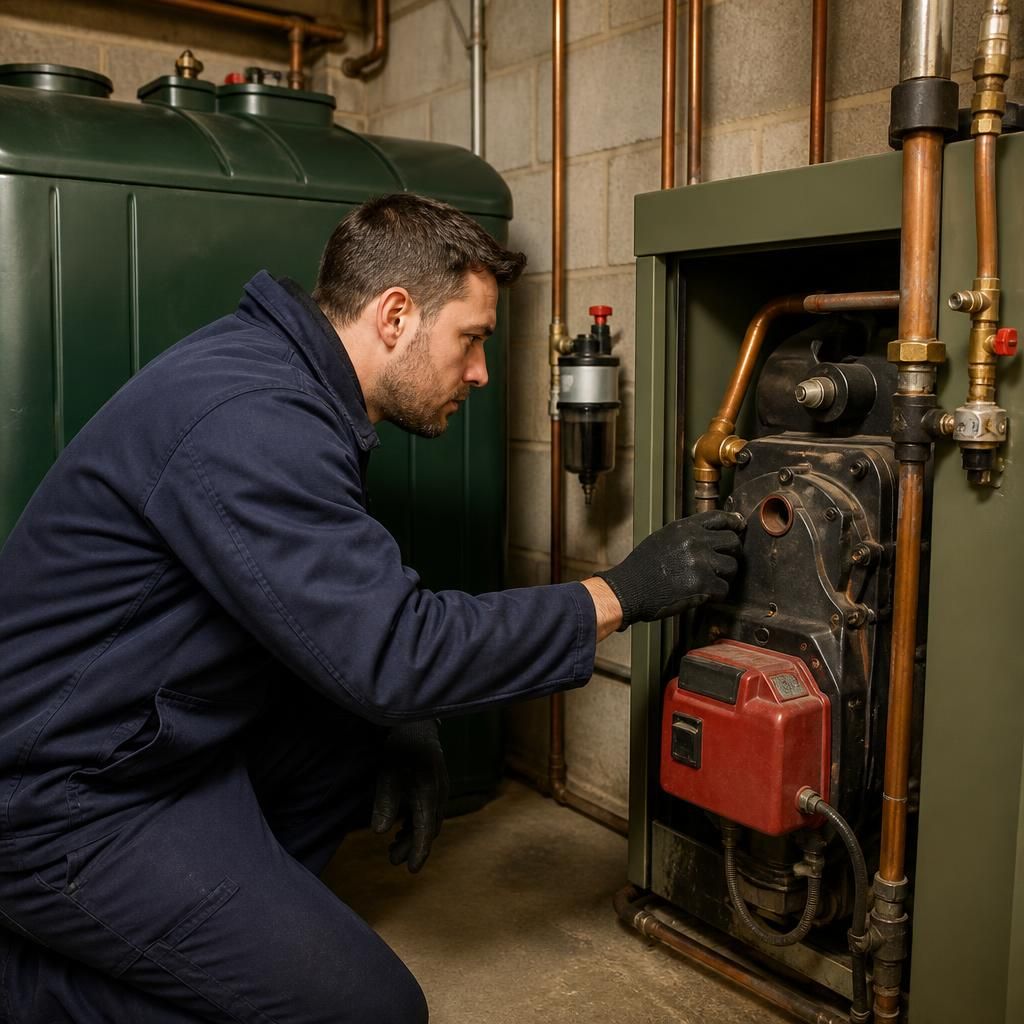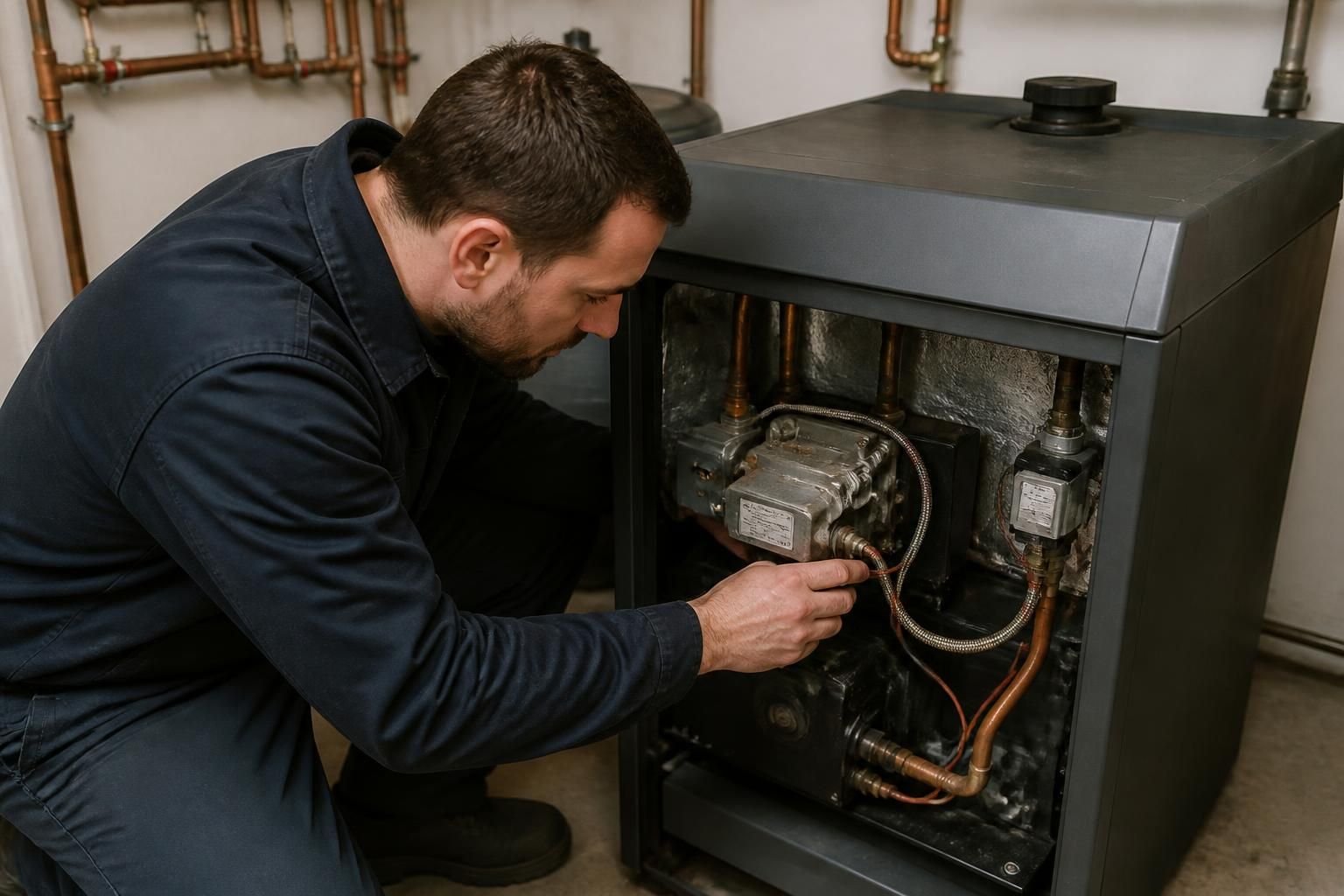
Deciding whether to repair or replace an oil boiler depends on its safety, condition, reliability and the likely cost of keeping it in service. A repair is generally sensible when a qualified engineer identifies one straightforward fault and the rest of the appliance is in sound condition. Replacement deserves serious consideration when problems are recurring, several major parts are deteriorating, or the boiler no longer provides dependable heating and hot water for the property.
When repairing the oil boiler is usually appropriate
- The fault has a clear and limited cause, such as a failed control, pump or sensor.
- The heat exchanger, combustion components, casing and associated pipework are in good condition.
- Suitable replacement parts can be sourced without unreasonable delay or uncertainty.
- The appliance has been maintained properly and has not developed a pattern of repeated breakdowns.
- The repair restores safe operation without leaving other significant faults unresolved.
A repair assessment should distinguish between a genuine fault and a symptom caused elsewhere in the heating system. For example, poor heating performance may relate to circulation, controls, sludge, radiators, fuel supply or the boiler itself. Replacing a single component will not solve the wider problem if the underlying cause is not identified.
When replacing the boiler is usually the better option
- Breakdowns are becoming more frequent or repairs are dealing with one problem after another.
- The appliance shows substantial corrosion, combustion damage, oil leakage or deterioration around key components.
- A major component has failed and the repair would represent a considerable proportion of the boiler’s remaining value.
- Parts are obsolete, difficult to obtain or no longer supported.
- The boiler is no longer properly suited to the property’s heating and hot-water requirements.
- The appliance cannot be confirmed as safe after inspection or testing.
The boiler’s age is relevant, but it should not be the only deciding factor. An older appliance in good condition may be repairable, while a less old boiler with serious corrosion or repeated faults may be uneconomical to retain. The condition of the oil tank, flue, controls and heating system should also be considered because replacing the boiler alone may not resolve problems elsewhere in the installation.
Compare the full cost, not just the immediate repair price
Ask for a clear explanation of the fault and a written breakdown of the proposed work. The decision should take account of the repair itself, any further work that is reasonably foreseeable, the condition of related components and the likelihood of further failures. A low-cost repair may be appropriate if it restores a sound appliance. However, repeated call-outs and several separate component replacements can make a planned replacement more sensible over time.
A replacement quotation should explain what is included, such as removal of the existing appliance, connection to the existing heating system, checks to the flue and oil supply, controls, testing and commissioning. It should also identify any work required to bring associated equipment into suitable condition. Comparing like-for-like quotations is important, as a cheaper headline price may exclude necessary preparatory or remedial work.
Safety should take priority over cost
Do not continue using an oil boiler that produces unusual smoke or fumes, has visible oil leakage, shows signs of scorching or soot, or repeatedly shuts down. A carbon monoxide alarm sounding should be treated as a serious warning: stop using the appliance, leave the property if necessary and obtain appropriate professional advice. An engineer should inspect the appliance and confirm whether it is safe before repair or continued use is considered.
What happens during an assessment?
- The engineer records the boiler’s make, model, condition and service history.
- The appliance is inspected for visible damage, corrosion, leaks and combustion-related issues.
- Controls, fuel supply, flue arrangements and relevant heating-system components are checked.
- The fault is diagnosed rather than treating only the most obvious symptom.
- The engineer explains whether repair is practical and identifies any limitations, risks or likely follow-on work.
- If replacement is advised, the proposed boiler size, system compatibility and installation requirements are reviewed.
Before agreeing to either option, ask whether the appliance is safe to keep using, what caused the fault, whether the repair is likely to be durable, which parts may need attention next and what would be included in a replacement. This gives you a better basis for comparing immediate expenditure with the condition and expected reliability of the complete heating system.
For a property owner, landlord or tenant, the most appropriate decision is therefore the one supported by a documented diagnosis rather than the boiler’s age or the repair price alone. A qualified oil-boiler engineer can assess the appliance and explain whether a targeted repair or a properly planned replacement is the safer and more practical route.