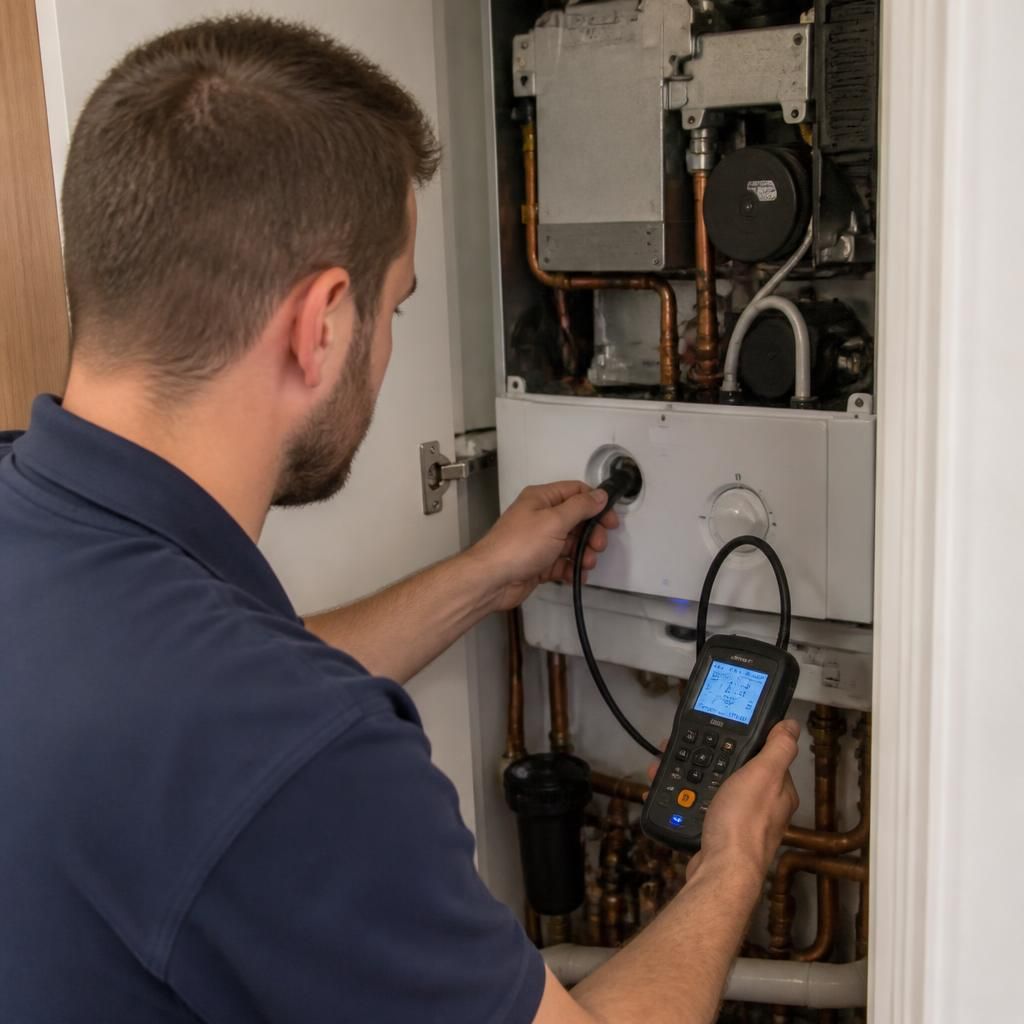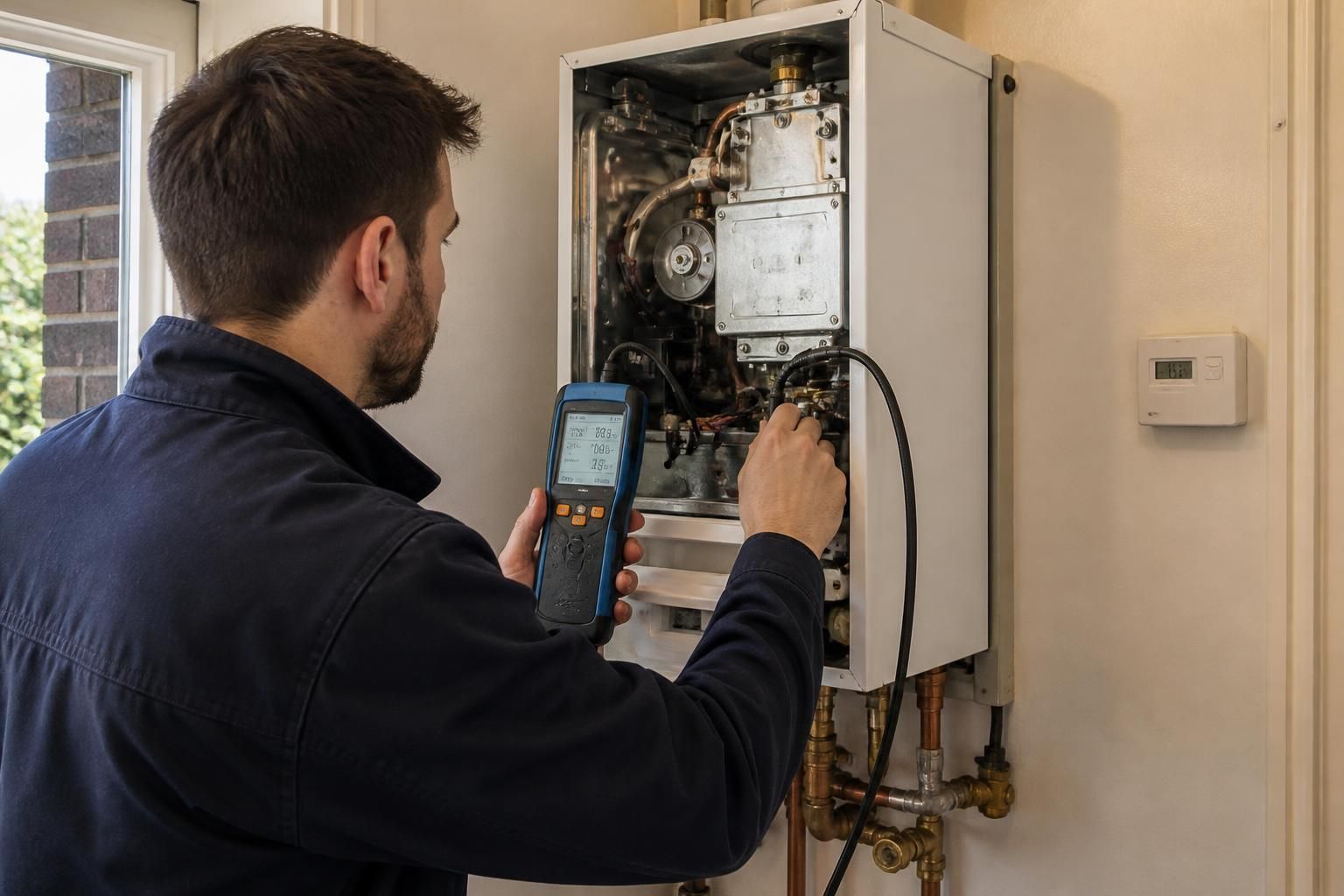
Preparing for a boiler service mainly involves making the appliance safe and easy to inspect, collecting useful information and ensuring that the engineer can discuss the system with someone who understands its recent use. Good preparation helps the service focus on safety, performance and any developing faults rather than avoidable access or information problems.
Before the appointment
- Make sure an adult who can authorise work and answer questions is available, particularly where the boiler is in a rented home or managed property.
- Keep children and pets away from the boiler and surrounding work area. The engineer may need to operate heating controls, inspect pipework or carry out safety checks.
- Do not remove the boiler casing, adjust gas components or attempt a repair before the service. Internal inspection and combustion-related checks should only be carried out by an appropriately qualified engineer.
- Check whether the boiler has displayed a pressure warning, shut down unexpectedly or produced changes in hot water temperature. A pressure reading, if shown on the gauge, can also be useful information to report, but do not alter the pressure unless you have been advised how to do so safely.
- Make a short list of any changes noticed since the previous service, such as radiators heating unevenly, repeated loss of pressure, dripping pipework or a condensate issue. These observations can help the engineer decide whether further investigation is needed.
Safety information to provide
Tell the engineer about any concern involving gas, combustion, carbon monoxide or the boiler switching itself off. If you suspect a gas leak or carbon monoxide exposure, do not wait for a routine service: leave the property if necessary and follow the appropriate emergency safety guidance. Do not operate electrical switches or use flames in an area where gas may be present.
If the property has a carbon monoxide alarm, mention its location and any recent alerts. Testing the alarm according to its manufacturer’s instructions is separate from servicing the boiler; an alarm should not be removed or treated as a substitute for professional inspection.
What to have ready for the engineer
- The name and contact details of the property owner, managing agent or landlord where relevant.
- Information about any previous repair, replacement part or alteration to the heating system.
- Details of any other heat source or hot-water arrangement connected to the boiler, such as a cylinder, programmer or room thermostat.
- Questions about the boiler’s condition, recommended maintenance, controls or likely future work.
During and after the service
A standard service may involve operational checks, inspection of accessible components, safety testing and an assessment of whether the appliance is working within acceptable parameters. The engineer may need to run the heating or hot water during the inspection, so avoid scheduling the service at a time when operating the system would cause a problem.
Ask the engineer to explain any safety issue, fault or recommendation in practical terms. If additional repairs are suggested, request a clear explanation of what is required, whether the boiler can continue to be used safely and which work is separate from the service itself. Keep the completed service record with other property documents, as it provides a useful maintenance history for future engineers, homeowners, landlords or tenants.
For rented properties, the person arranging the service should also confirm who is responsible for approving repairs and retaining the service documentation. This prevents useful findings from being delayed or lost after the inspection.