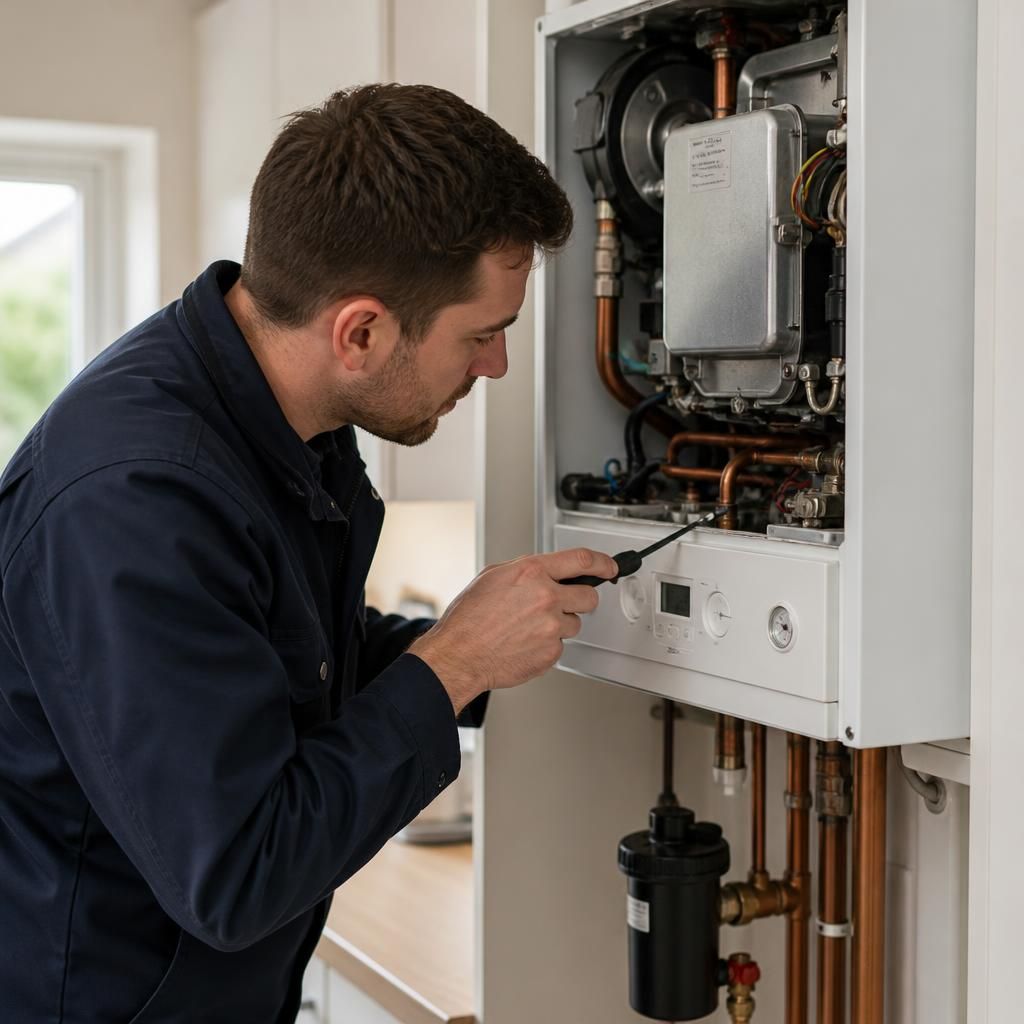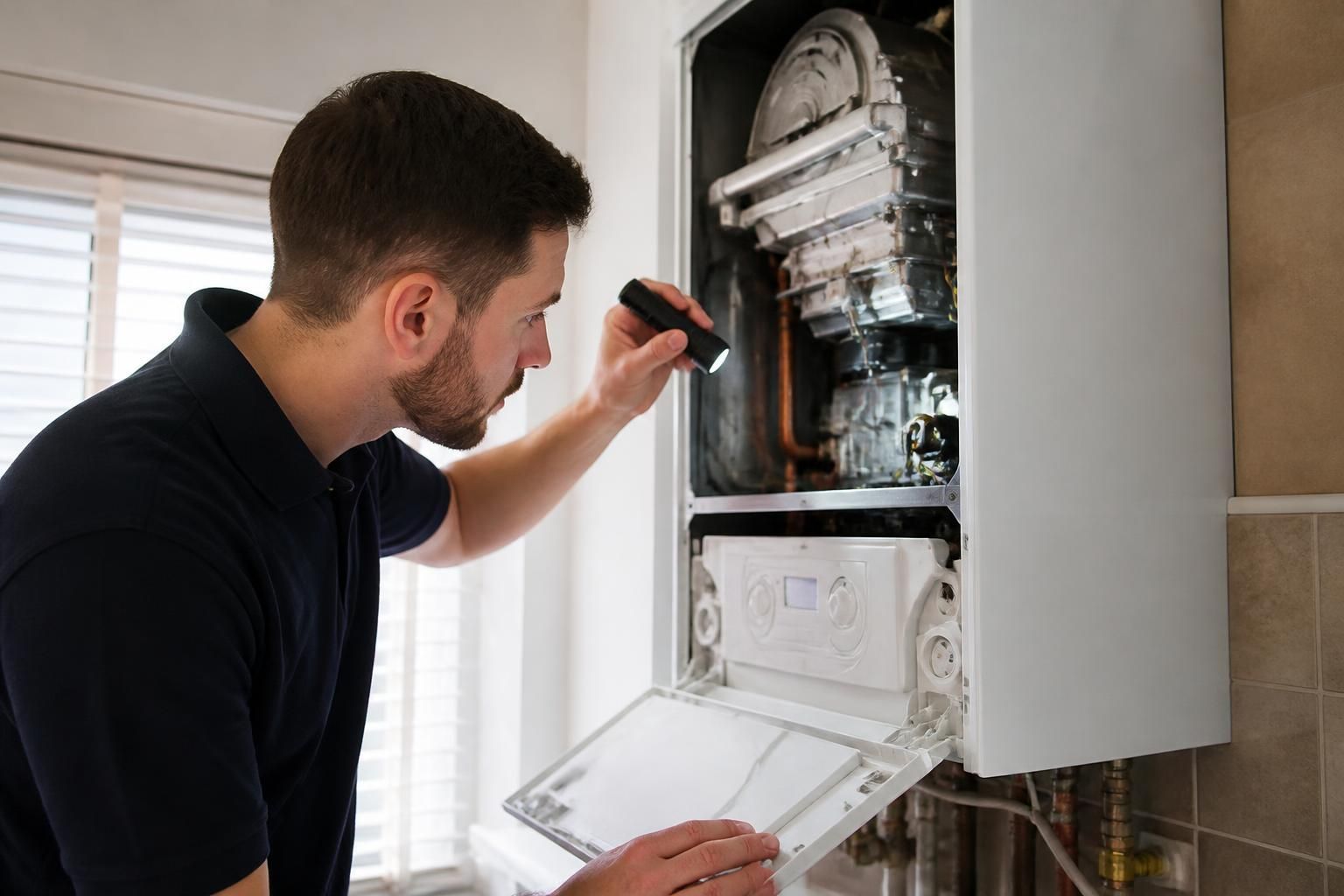
A boiler that fails its service checks has a defect, unsafe condition or performance issue that must be assessed before it can be treated as satisfactory. The outcome may be a straightforward adjustment or repair, a recommendation to monitor a non-urgent issue, or a decision that the appliance should remain out of use until corrective work and further checks have been completed.
What the engineer checks
A boiler service normally involves examining the appliance and its associated components rather than simply confirming that it turns on. Depending on the installation, the engineer may check:
- the boiler casing, seals, combustion chamber and visible pipework;
- the flue and its termination for damage, obstruction or installation concerns;
- the burner and combustion performance;
- gas pressure, where relevant;
- water pressure, expansion arrangements and signs of leakage;
- safety controls, thermostats and other protective devices;
- condensate pipework and drainage;
- unusual noises, fault codes or signs of inefficient operation.
A service check can therefore identify a problem that is not obvious during normal use. A boiler may still provide heating and hot water while having a damaged seal, poor combustion, a flue defect or a failing safety component.
How the result is recorded
The engineer should explain which check has not been satisfied and record the relevant findings. Ask for the report or service documentation, including any fault codes, test results, photographs or notes about the condition of the installation. This gives you a clear basis for deciding whether to authorise a repair and provides useful information if the appliance needs to be assessed again.
A failed service does not automatically mean that the boiler must be replaced. The appropriate remedy depends on the fault, the availability of suitable parts, the age and condition of the appliance, and whether it can be returned to safe and reliable operation. Some findings can be corrected by cleaning, adjustment or replacing an individual component. More extensive defects may make replacement the more practical option.
What you should do next
- Read the engineer’s findings and ask which defect caused the failed result.
- Confirm whether the boiler can remain in use or should be switched off.
- Ask what repair is required, which parts are involved and whether additional testing will be needed.
- Request a clear written quotation before approving chargeable work.
- Keep the service report, repair information and any follow-up documentation.
Do not remove safety covers, alter gas settings or attempt to repair the boiler yourself. If you notice a gas smell, soot marks, unexplained staining, unusual combustion noises or symptoms that could indicate carbon monoxide exposure, stop using the appliance, ventilate the area if it is safe to do so and seek appropriate professional guidance. Gas-related work should be carried out by an engineer who is suitably qualified for the appliance and installation.
After a repair, the boiler should be tested again to confirm that the original defect has been addressed and that it meets the relevant safety requirements. If it still fails, the engineer should explain whether further investigation is worthwhile or whether replacement should be considered. For a rented home, the landlord or managing agent should receive the failed report and repair recommendation, since responsibility for authorising the work may rest with them.