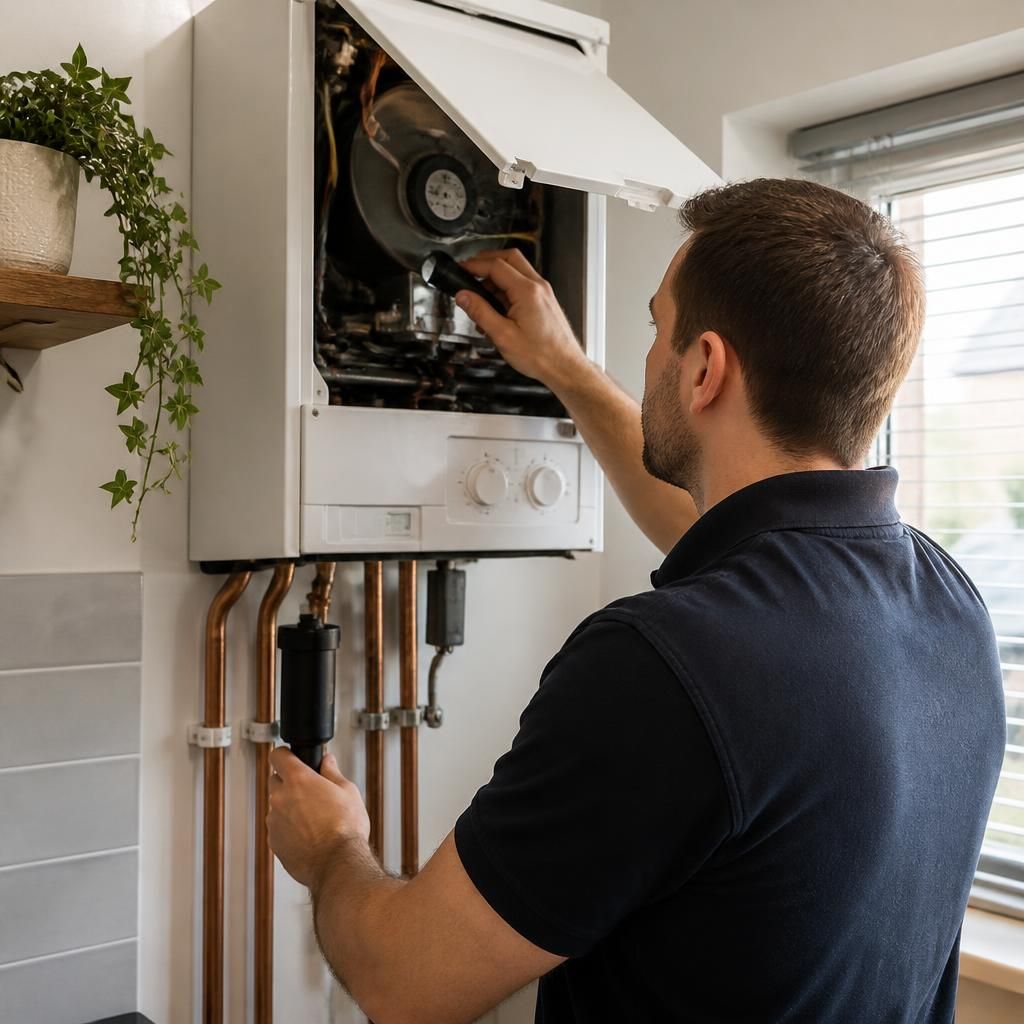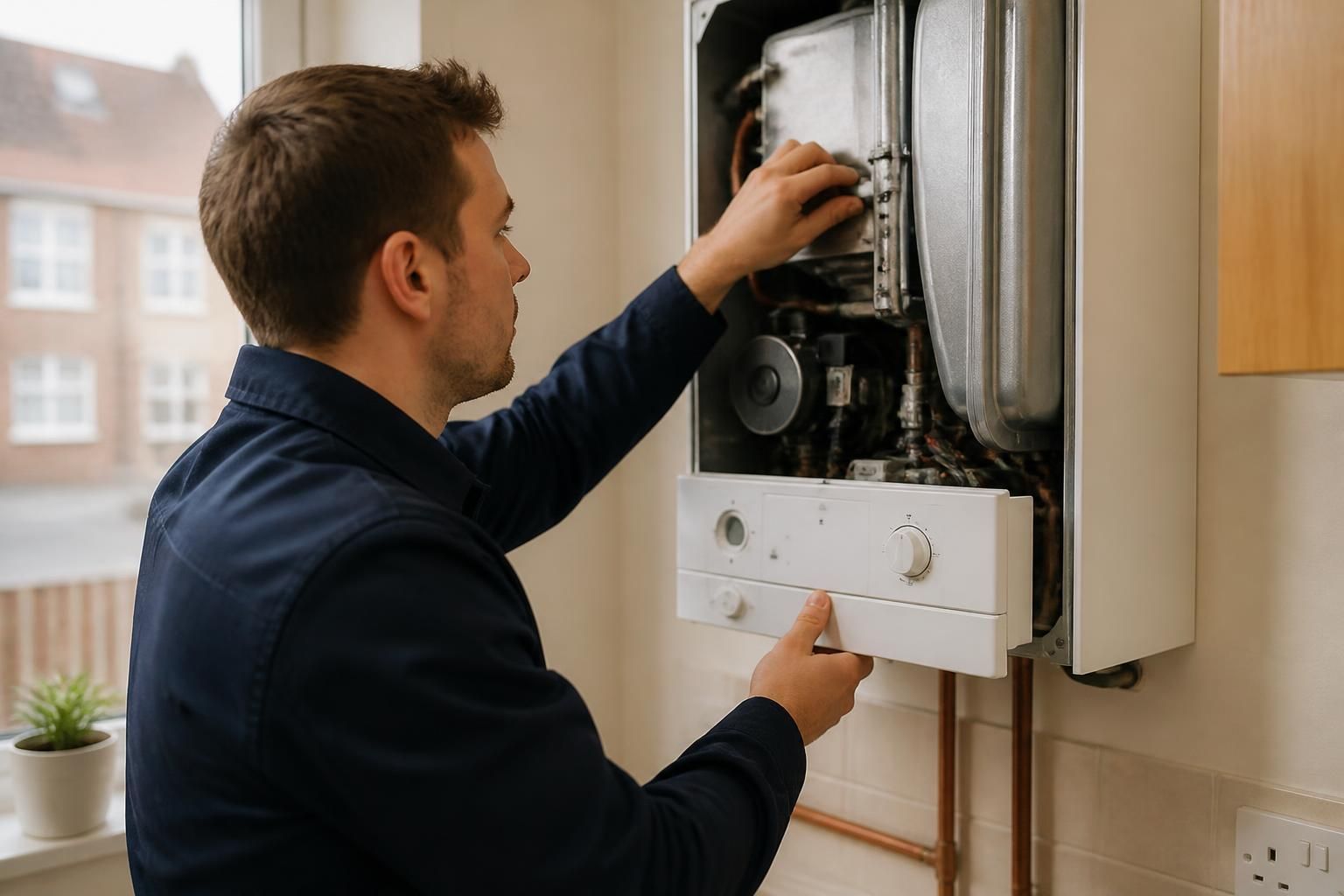
For a rented property, a boiler service is a planned maintenance inspection that checks the appliance, associated controls and flue for safe, efficient operation. It is appropriate for homes occupied by tenants and is normally arranged by the landlord or managing agent, rather than left for the tenant to organise.
The service gives the engineer an opportunity to identify deterioration or developing faults before they become more disruptive. It can also help the landlord maintain the condition of the heating system and demonstrate that reasonable maintenance arrangements are being made. The exact work depends on the boiler and installation, but a service will commonly include:
- Visual checks of the boiler, pipework, ventilation and accessible components
- Inspection of the flue and its termination for signs of damage or obstruction
- Checks on the burner, heat exchanger, seals, condensate arrangements and safety devices where applicable
- Testing of the appliance controls and heating operation
- Combustion or flue-gas analysis using suitable testing equipment
- Identification of leaks, corrosion, unusual noises, poor operation or other signs of wear
A service and a gas safety inspection have different purposes. The legally required gas safety process is focused on gas appliances, pipework and flues being safe to use. A service is a broader maintenance assessment that may examine cleanliness, condition, performance and components that are not fully covered by a safety check. Arranging both where appropriate helps avoid treating a basic safety record as a substitute for proper boiler maintenance.
Landlords remain responsible for ensuring that gas appliances and flues provided with the property are maintained safely. Any engineer carrying out gas-related work must be registered with the relevant UK gas safety scheme and competent to work on the installation. The landlord should retain service documentation and any recommendations, particularly where the property is managed by an agent or the boiler is covered by a maintenance agreement.
Tenants also have a practical role. They should report faults such as loss of pressure, repeated shutdowns, unusual smells, leaking water, noisy operation or inconsistent heating. They should not remove boiler covers, attempt gas-related repairs or reset an appliance repeatedly when it is showing a fault. Reporting symptoms accurately can help the engineer investigate the underlying cause rather than treating only the visible problem.
Access should be arranged with the tenant or managing agent in advance, with suitable consideration for the occupants and the property. The engineer may need access to the boiler, controls, flue inspection points, radiators or other parts of the heating system. Items stored around the appliance may need to be moved so that the inspection can be completed safely. If access is repeatedly unavailable, the landlord or agent should keep a clear record of attempts to arrange the appointment and follow the tenancy and housing rules that apply.
The outcome of the service may be one of several things:
- Serviceable: the boiler operates safely and no significant defect is found.
- Serviceable with recommendations: the appliance is operating, but the engineer identifies wear, cleaning requirements or work that should be planned.
- Repair required: a fault needs correcting, and the engineer explains whether the boiler can continue to be used safely before the repair.
- Unsafe or immediately hazardous: the appliance may need to be isolated or taken out of use until the danger is addressed.
A service does not guarantee that a boiler will remain fault-free. Older appliances can develop faults between inspections, and a service cannot correct every defect unless repair work is authorised and included separately. The landlord should ask for a written service record that identifies the appliance, work completed, test results where relevant, defects found and any recommended follow-up action.
For landlords, planned servicing can support better maintenance records and help identify when repair or replacement should be considered. For tenants, it provides a structured opportunity to raise heating concerns and have the appliance assessed by a competent professional. If the boiler is not operating correctly or there are signs of a gas-related danger, the tenant should follow the property’s emergency instructions and report the issue to the landlord or managing agent without delay.