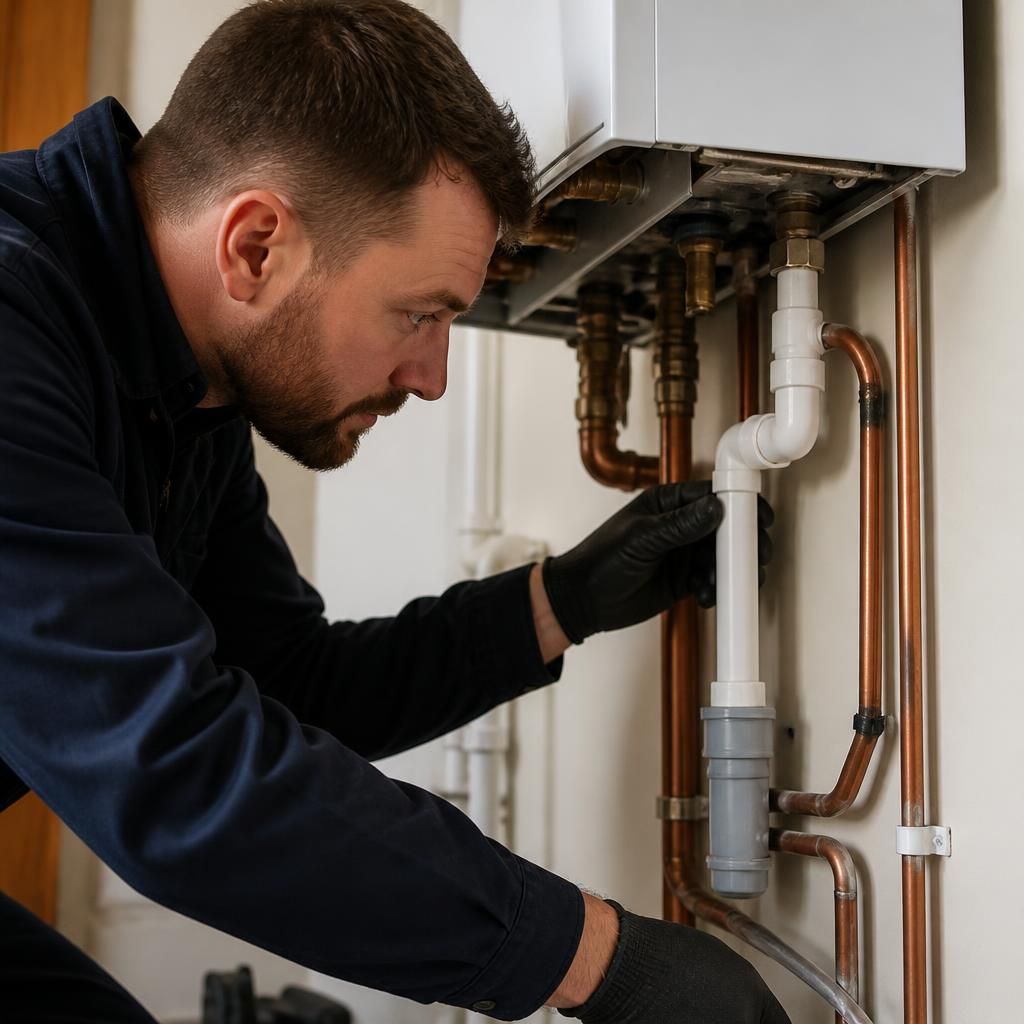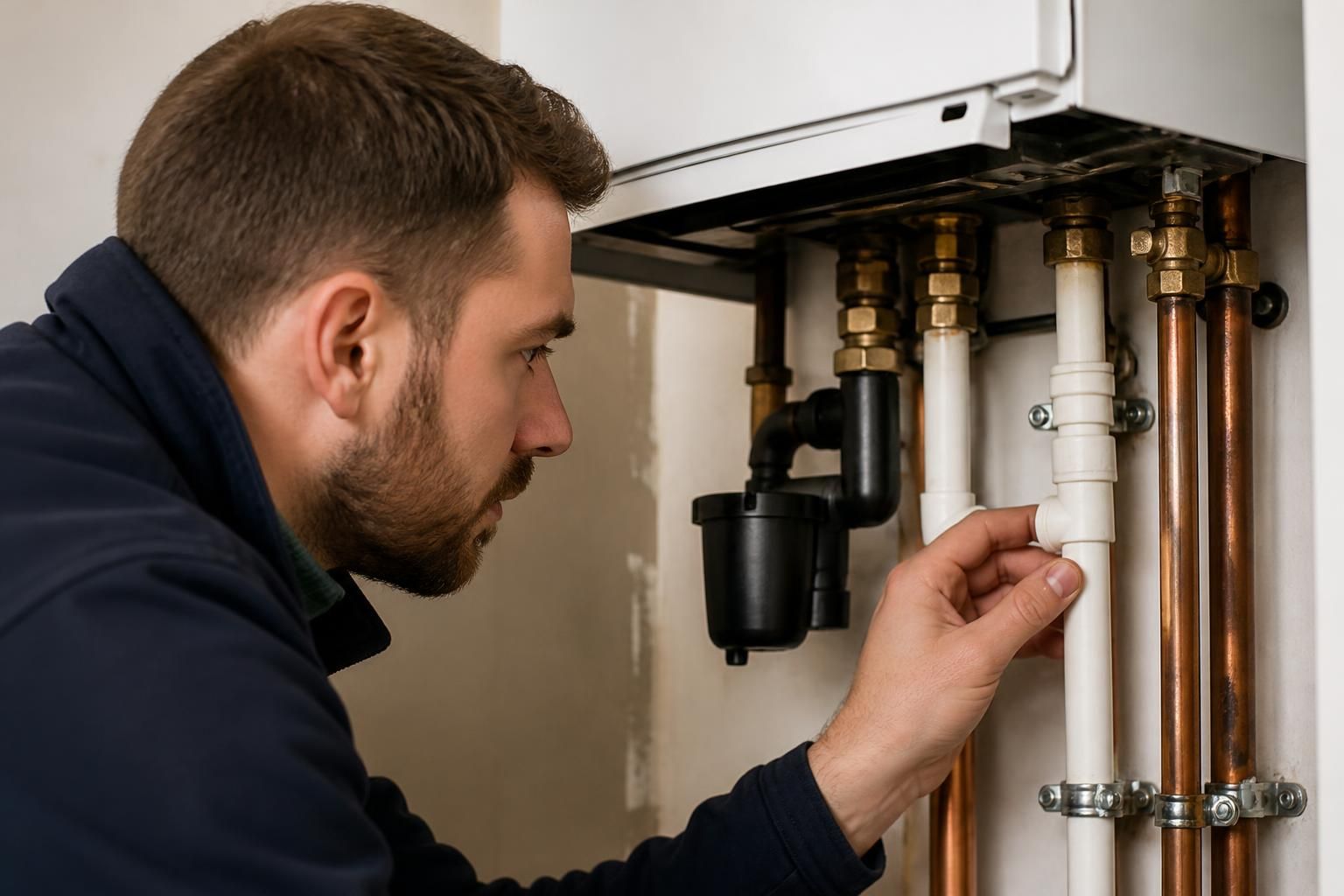
Yes. Condensate pipe checks form part of a properly completed boiler service because the pipe is essential to the boiler’s safe operation. It carries acidic wastewater from the boiler to a suitable drain, and a fault can cause the appliance to shut down, leak or discharge water where it should not.
During the service, the engineer will assess the condition and installation of the pipe rather than simply looking at the boiler itself. This can include checking:
- Whether the pipe is securely connected to the boiler and drainage point.
- Whether joints, seals or fittings show signs of dripping or moisture.
- Whether the pipe has cracks, splits, distortion or other physical damage.
- Whether its route allows condensate to drain properly without unnecessary low points or obstructions.
- Whether an external section is adequately protected against cold conditions.
- Whether the termination is suitable and does not create a risk of water entering the property or affecting other components.
The engineer may also check for symptoms of restricted flow. A partially blocked pipe can prevent condensate from leaving the boiler, while a frozen section can produce similar symptoms. Depending on the boiler design and the service procedure, the engineer may test the drainage arrangement or inspect accessible sections of the pipework.
A condensate pipe problem does not always produce an obvious leak. The boiler might display a fault code, repeatedly shut down, make unusual gurgling noises or fail to ignite. Water around the pipe connection, staining near the discharge point or dampness beneath the boiler can also indicate a drainage issue. These signs should be reported rather than ignored, particularly if the boiler stops working in cold weather.
Checking the pipe is different from replacing or repairing it. A standard service identifies defects and may allow minor issues to be addressed, but damaged pipework, an unsuitable route or a blocked drain may require separate remedial work. The engineer should explain what has been found, whether the boiler can continue to operate safely and what work is recommended.
It is also important to distinguish the condensate pipe from the boiler’s gas, heating and pressure-related components. Inspection of the condensate arrangement is one part of a wider service, which should follow the requirements for the particular appliance and include the relevant safety and operational checks. If a suspected condensate fault is causing a leak or boiler shutdown, arrange an assessment by a suitably qualified heating engineer rather than attempting to dismantle the boiler yourself.