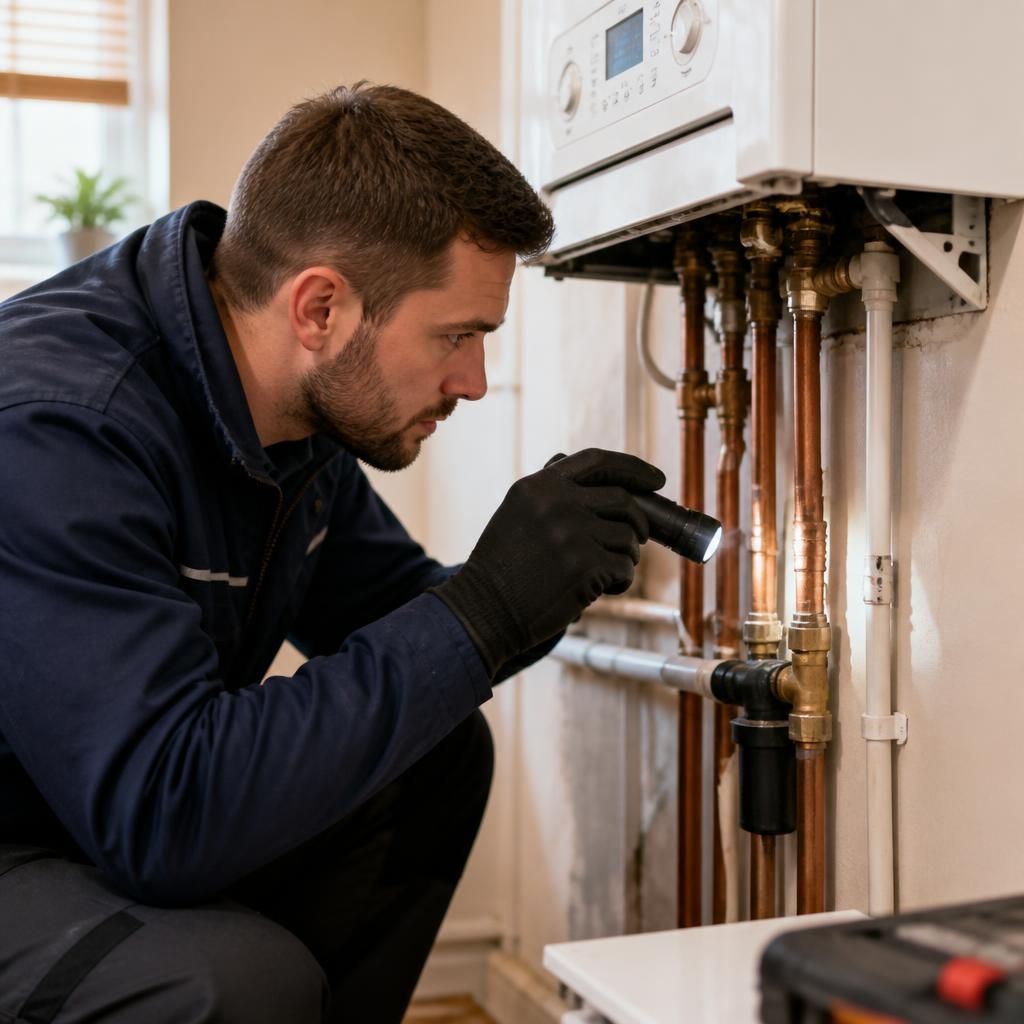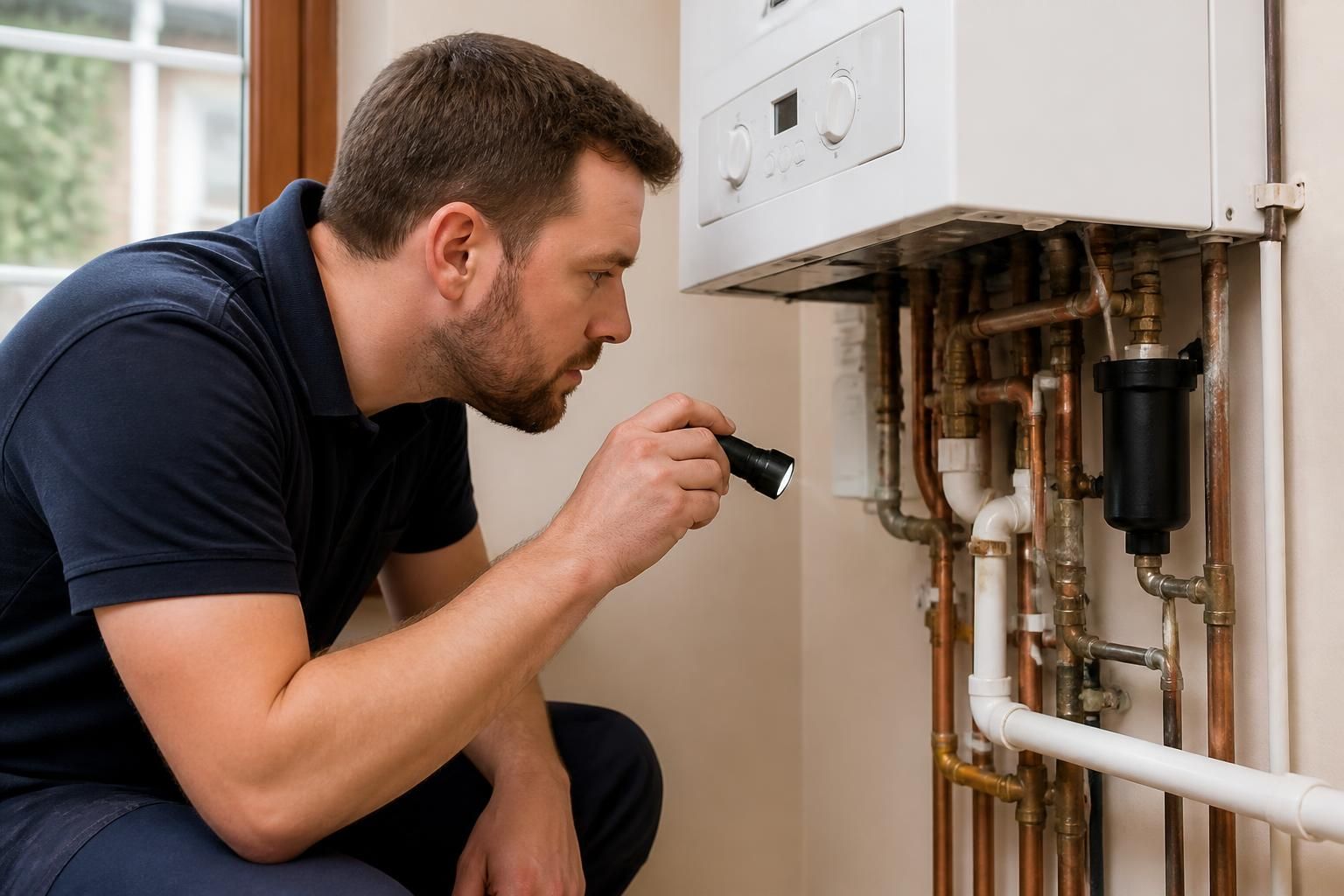
A boiler leak investigation normally requires safe, unobstructed access to the boiler and the connected components that could be releasing water. The engineer may need to examine the appliance, valves, visible heating pipework, pressure controls, condensate pipe and nearby surfaces before tracing the leak into a concealed area.
Access to the boiler itself
- The front, underside and sides of the boiler should be accessible for visual inspection and testing.
- If the boiler is installed inside a kitchen, airing cupboard or utility cupboard, the doors should open fully and stored items should be removed.
- The engineer may need to read the pressure gauge or display, operate controls and inspect the area beneath the appliance.
- A boiler casing must not be removed by an unqualified person. If internal access is necessary, it should be carried out by an appropriately competent engineer using the correct safety procedures.
Access does not usually mean dismantling surrounding units or removing the boiler. However, a tight installation can restrict the view of joints, valves and connections, making it harder to identify whether water is coming from the appliance or from nearby pipework.
Access to connected pipework and components
Leak investigations can involve more than the boiler casing. The engineer may inspect the flow and return pipes, filling loop, isolation valves, pressure relief discharge pipe and connections to the heating system. Depending on the installation, access may also be needed to the condensate pipe, condensate trap and the route leading away from the boiler.
If the boiler serves radiators or underfloor heating, the leak may be located elsewhere in the heating circuit. In that situation, access to visible pipe joints, radiator valves, the hot water cylinder, central-heating pump or expansion vessel may be relevant. The exact components depend on the system design, so not every investigation requires access to all of them.
Access to concealed areas
Water can travel along pipes, walls and flooring before appearing some distance from its source. If the visible boiler area is dry, further inspection may require access to:
- the cupboard or room containing the hot water cylinder or heating controls;
- floor-level pipework behind removable panels;
- the space beneath a sink or other nearby appliance where connections are present;
- a loft, service void or adjacent room if heating pipework passes through it; and
- the wall, ceiling or floor area where staining, dampness or bubbling paint suggests that water has travelled.
Floorboards, boxing-in or fixed units should not be removed simply to search for a leak. If opening up is considered necessary, the likely location, extent of the work and any associated risks should be discussed first. An initial inspection may identify the probable source without disturbing the building fabric.
What should be cleared before the inspection?
Remove boxes, cleaning products, clothing and other stored items from around the boiler and any accessible heating equipment. Keep the floor clear enough for the engineer to work safely and to see signs of water beneath the appliance. If a cupboard contains a consumer unit, stop tap or other services, make sure the engineer can reach the relevant area without moving heavy or fixed items.
Where water has reached flooring or electrical equipment, do not touch wet electrical components. Tell the engineer what has become wet and identify any valves or switches that have already been operated. Do not repeatedly repressurise the heating system or seal a suspected connection before the source has been assessed, as this can obscure evidence or allow more water to escape.
Information that can help
Access is most useful when combined with details about the leak. Note where water was first seen, whether it appears only when the heating or hot water is running, whether the boiler pressure changes, and whether the water is clear, dirty or oily. Photographs of staining or a connection that has been dripping can also help if the area has dried before inspection.
For rented property, the tenant should arrange permission for access with the landlord or managing agent where required. A landlord or agent should also identify any restrictions on entering cupboards, loft spaces or adjoining rooms. If the boiler is in a communal or shared area, the engineer may need access arrangements for that space before the investigation can be completed.
If only the front of the boiler is accessible, an engineer can still carry out a limited visual assessment, but the source may remain unconfirmed if pipework, valves or connected equipment cannot be inspected. Providing practical access to the appliance and the surrounding heating system gives the investigation the best chance of distinguishing a boiler leak from a separate plumbing or central-heating leak.