A hidden boiler leak may not produce an obvious stream of water. It can release a small amount only when the heating is operating, allowing the water to evaporate or travel beneath flooring, inside a cupboard or behind a wall. The less obvious clues are often changes to the surrounding materials, corrosion on components, moisture near discharge points and unexplained boiler faults.
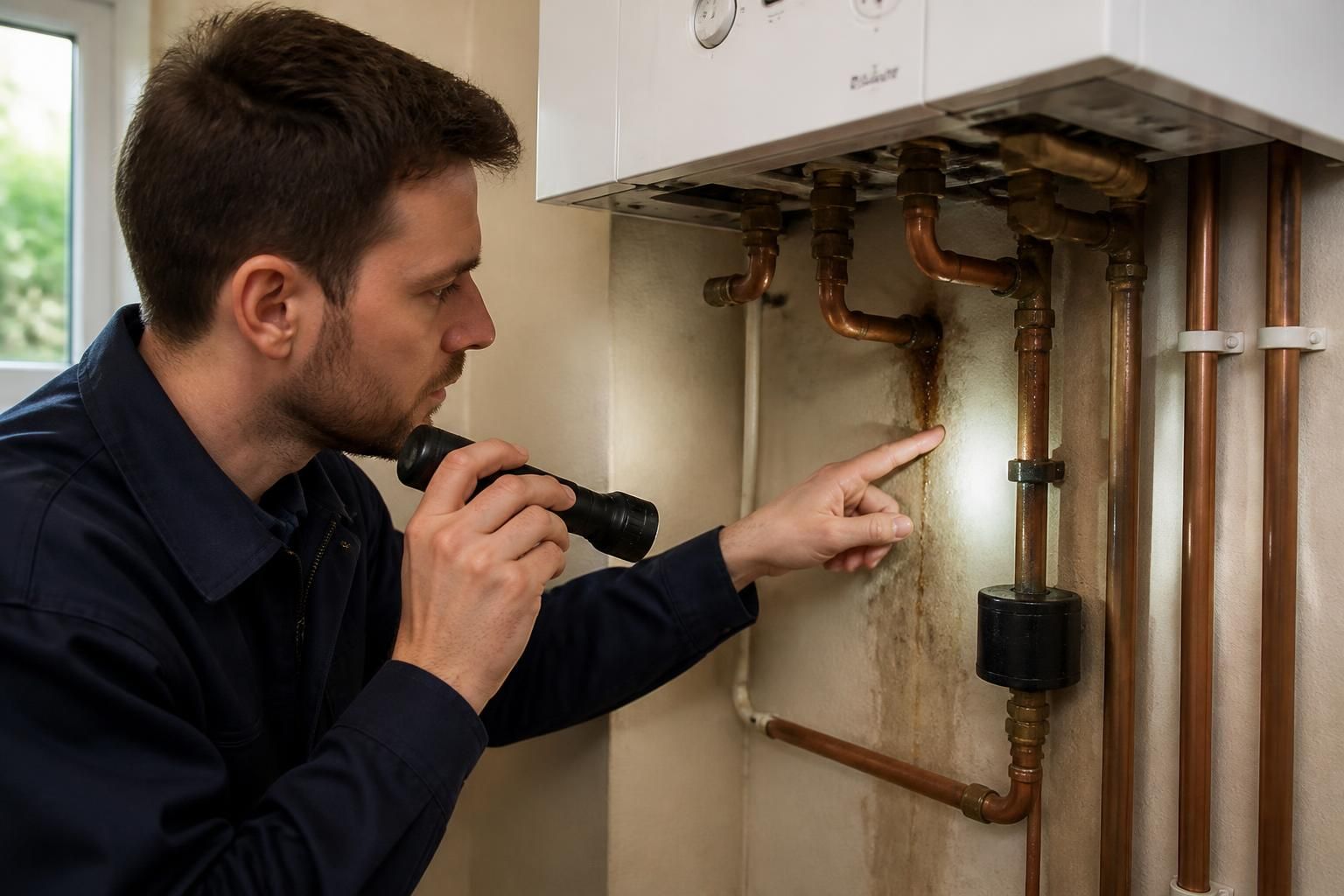
Look for staining, distortion or a musty smell. A leak may leave brown marks, bubbling paint, softened plaster, swollen skirting boards, warped flooring or a persistent damp odour around the boiler cupboard. These signs can remain after visible water has dried. Check the underside of the boiler, nearby pipe joints, the wall behind the appliance and the floor directly below it. Avoid assuming that the nearest damp patch is directly beneath the source, as water can run along pipework or building materials.
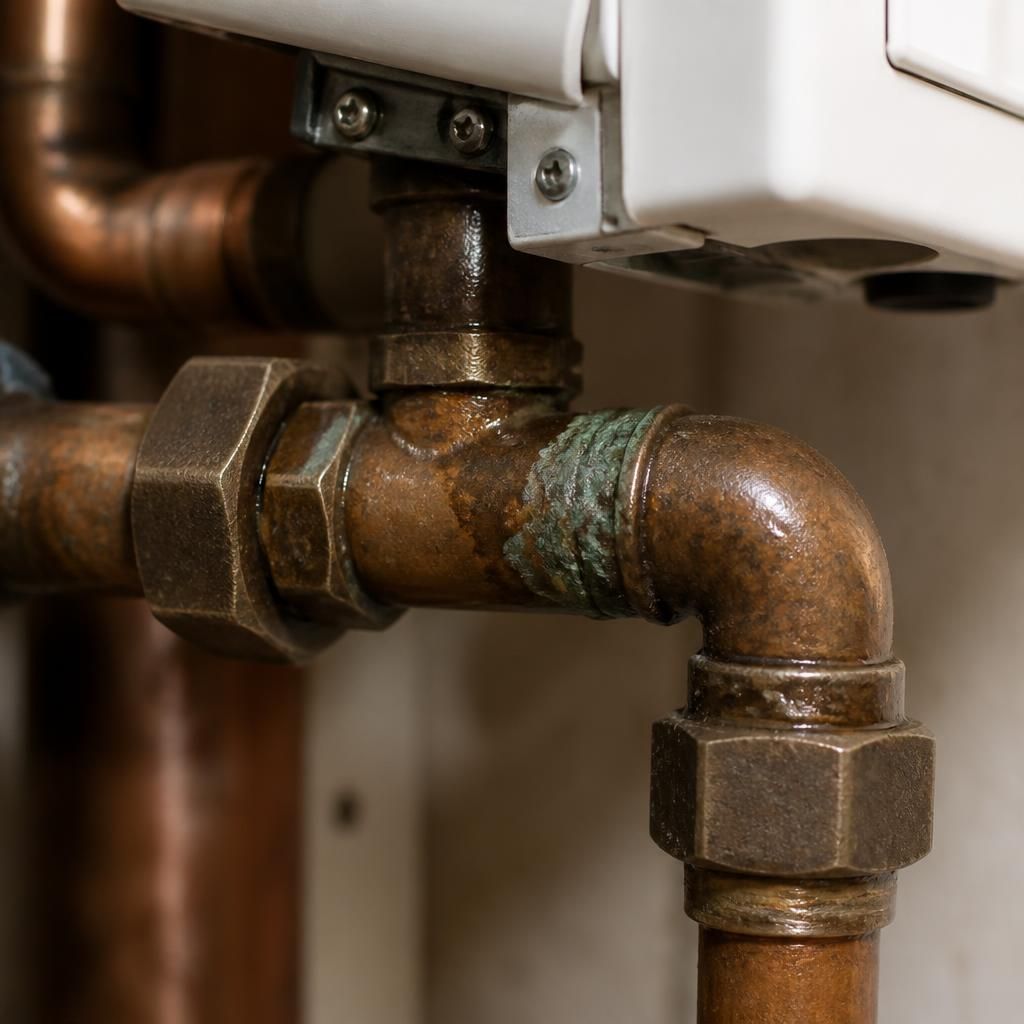
Corrosion and deposits can indicate a slow leak. Rust around valves, joints or the lower edge of the boiler casing should be investigated, particularly if it is accompanied by white or green deposits on copper pipework. These marks can form when small amounts of water repeatedly escape and dry. Surface corrosion does not prove that the boiler itself is leaking, because a nearby connection, valve or heating pipe may be responsible.
Moisture around the condensate system is another clue. A damaged condensate pipe, trap or connection can allow water to escape when the boiler produces condensation. Check for dampness beneath the condensate route or around its connection, but do not disconnect or dismantle the pipe. A condensate problem can also affect boiler operation, so an engineer should assess the appliance and its drainage route together.
Water from a discharge pipe should not be ignored. Many sealed heating systems have a pressure relief discharge pipe leading outside. Drips or staining at its termination can indicate that water is being released from the heating system. This may result from a faulty relief valve, an expansion problem or another fault rather than a leak in the boiler casing, but it still requires investigation. Do not block, cap or interfere with the pipe.
Intermittent fault codes or shutdowns may be related to water loss. Moisture affecting electrical components, a faulty internal part or a problem with the heating circuit can cause a boiler to stop operating or display a fault code. A code alone does not identify a leak, and repeatedly resetting the appliance can conceal an underlying problem. Record the code, when it appears and whether it occurs during heating or hot-water use so the engineer has useful information.
Not every sign around a boiler confirms a hidden leak. Condensation, a blocked condensate route, a leaking radiator valve, pipework beneath the floor or a faulty component can create similar symptoms. The location and timing of the moisture are important: a leak that appears only while the heating is running may point to the central-heating circuit, while water linked to hot-water use may require a different line of investigation.
An engineer investigating the issue will normally inspect accessible joints, valves, the boiler connections, the condensate system and any visible discharge pipework. They may operate the heating and hot water separately to see when moisture appears, check components for corrosion and use suitable diagnostic equipment to trace dampness. If the suspected source is behind a wall or beneath flooring, the investigation should identify the likely route before unnecessary access is created.
Do not remove the boiler casing or attempt to repair internal components yourself. Gas appliances contain safety-critical parts, and opening the casing should be left to a suitably qualified professional. If water is close to electrical controls, isolate the appliance only if it is safe to do so and do not touch wet electrical equipment. If there is a smell of gas or a carbon monoxide alarm sounds, leave the property and contact the appropriate emergency service.
Keeping a short record of damp areas, boiler messages, operating conditions and any visible discharge can help separate a boiler leak from a wider plumbing fault. Early investigation is particularly important where moisture is reaching electrical connections, flooring or structural materials, or where the appliance is repeatedly shutting down.