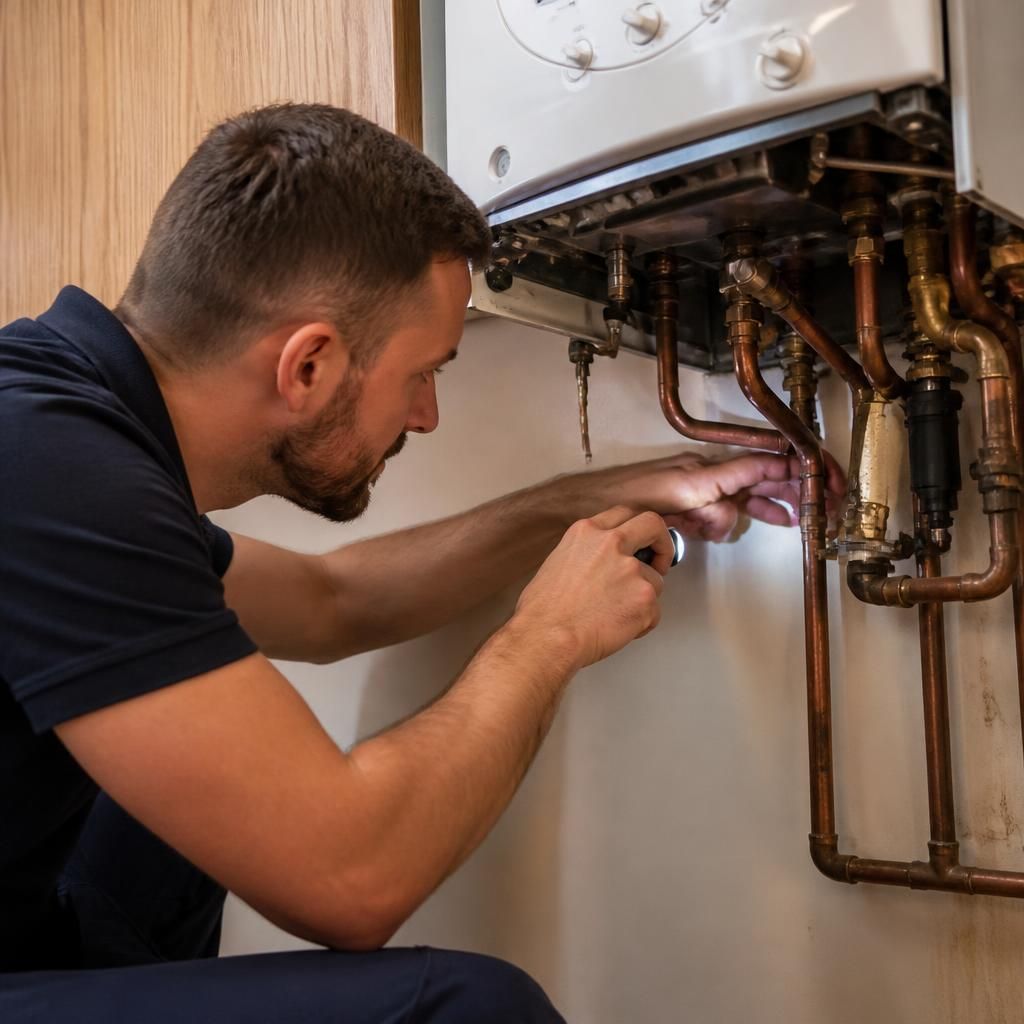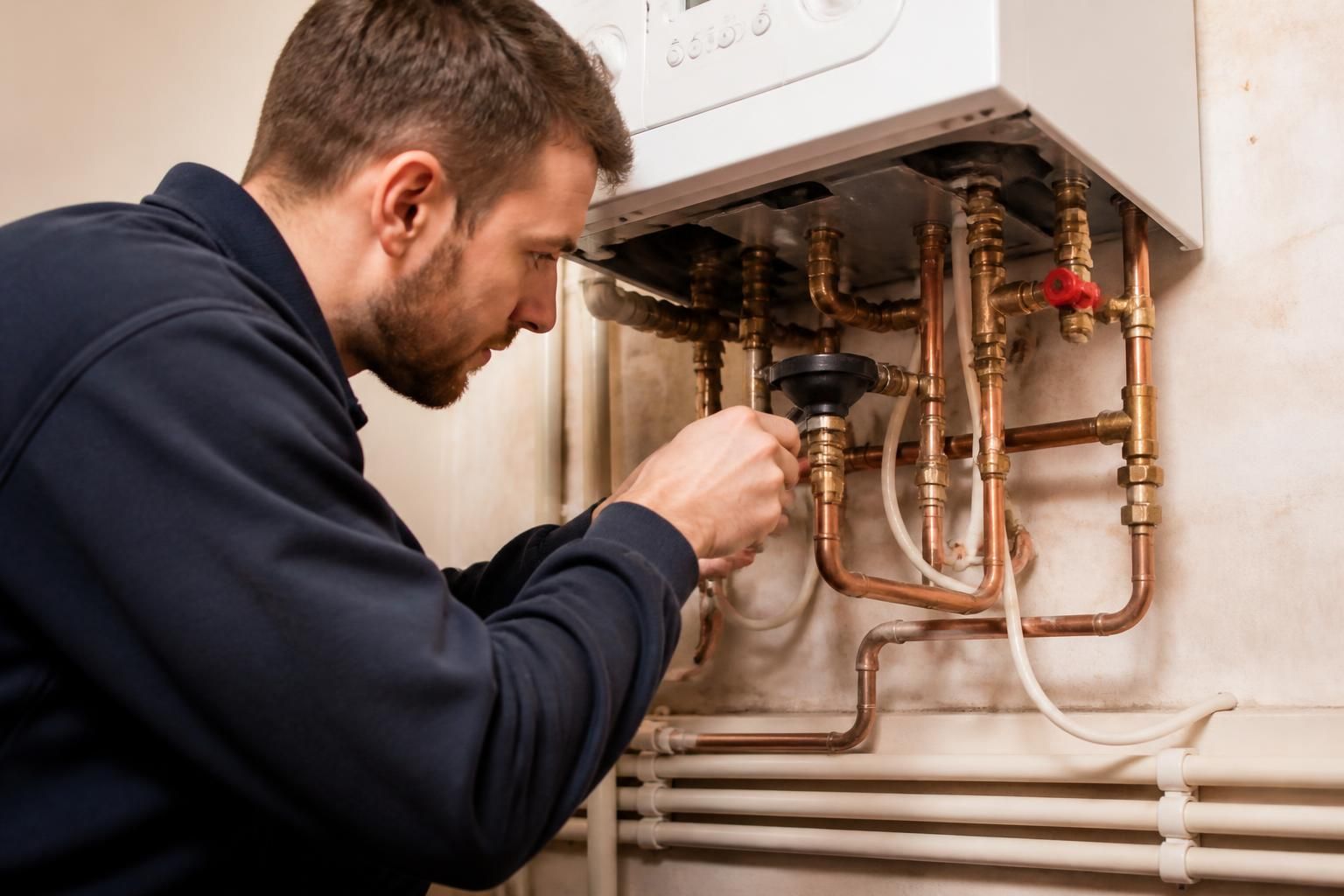
After a boiler leak has been located, the next stage is to establish exactly which component has failed, how far the water has travelled and whether the boiler can be repaired safely. The findings determine whether the work involves replacing a seal, valve, pump, heat exchanger, condensate component, pipe connection or another part of the heating system.
The engineer will usually inspect the area around the suspected source rather than relying only on the visible drip. Water can run along pipework, casing panels or wiring before appearing at a lower point, so surrounding components are checked for staining, corrosion, limescale and moisture. This helps distinguish the original fault from secondary damage and reduces the risk of replacing the wrong part.
- The affected component is identified: common causes include loose joints, worn seals, pressure relief components, pumps, valves, expansion vessels and internal boiler parts.
- The condition of connected parts is considered: corrosion, damaged insulation, degraded seals or water-affected electrical connections may need attention as part of the repair.
- The most suitable repair is explained: this may involve tightening a connection, replacing an individual part or carrying out more extensive work where the leak has affected several components.
- The boiler’s age and condition are taken into account: where a repair is disproportionately complex or the appliance has widespread deterioration, the available options may differ from those for a single, accessible fault.
Any water near electrical components requires particular care. The boiler should not be operated if there is visible water inside the casing, repeated pressure loss, unusual electrical behaviour or damage to nearby controls. Gas-related work and work inside the boiler must be undertaken by a suitably qualified engineer, while the appliance should remain unused if there is a smell of gas or concern about combustion.
Once the physical repair has been carried out, the heating system may need to be refilled or repressurised in accordance with the manufacturer’s instructions. The engineer can then assess whether the pressure remains stable and whether radiators, hot-water outlets and heating controls are responding normally. A boiler that continues to lose pressure after the visible leak has been dealt with may have another fault elsewhere in the system.
Water damage outside the boiler should also be addressed. Wet flooring, cupboards, insulation or surrounding surfaces need time to dry, and any signs of mould, swollen materials or damaged electrics should be dealt with separately. If the leak reached a ceiling, wall or fitted unit, photographing the affected area before cleaning can help with maintenance records or an insurance claim.
For a landlord or property manager, the useful follow-up information is the cause of the leak, the component repaired, any parts that remain under observation and any recommendations for future servicing. Homeowners should keep the repair details and note any recurrence of dripping, pressure changes, staining or unusual boiler noises. These signs should be reported rather than repeatedly topping up the system or attempting to access the boiler casing.
A professional boiler leak investigation therefore ends with more than stopping visible water. It should leave the occupant with a clear explanation of the fault, the work completed and any precautions or monitoring needed afterwards. Ideal Plumbing Services provides boiler leak detection and repair support for residential properties in Birmingham and the West Midlands, including further assessment where the cause is not limited to the first visible symptom.