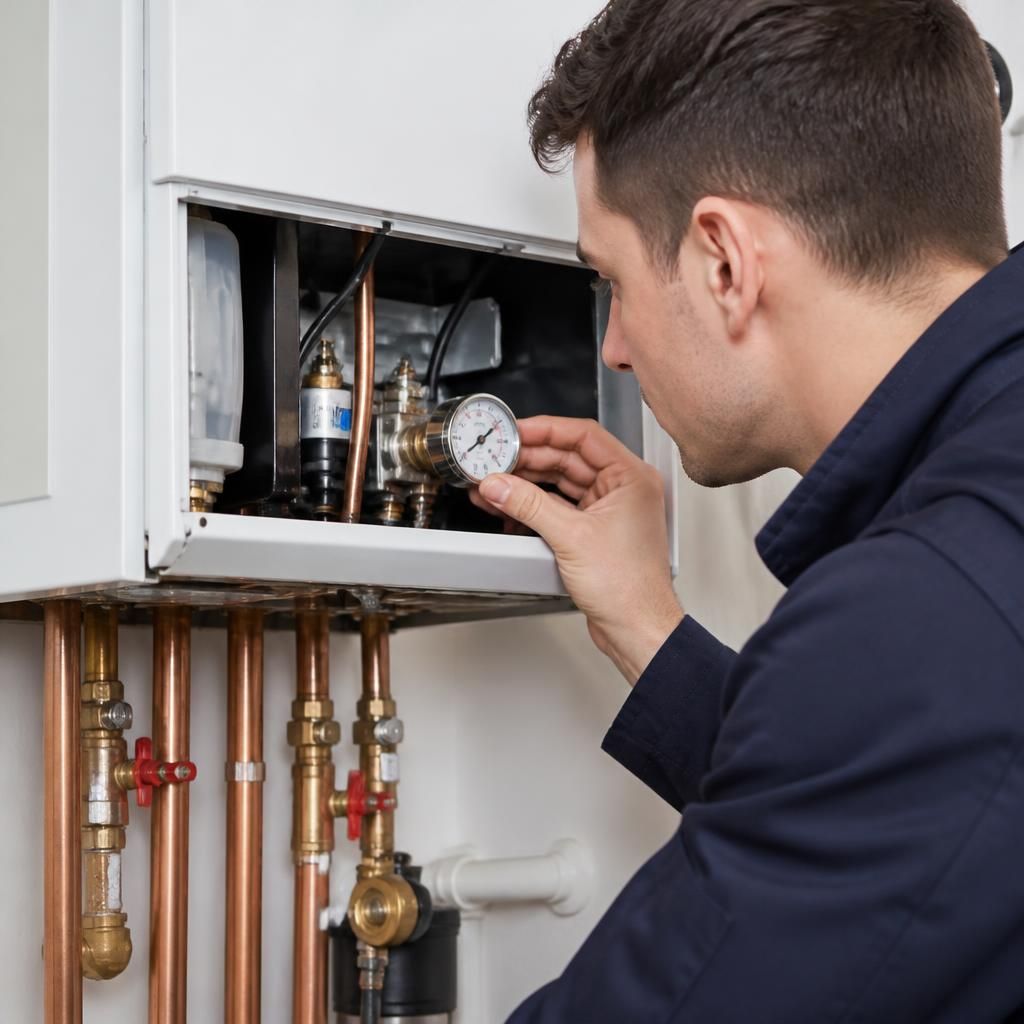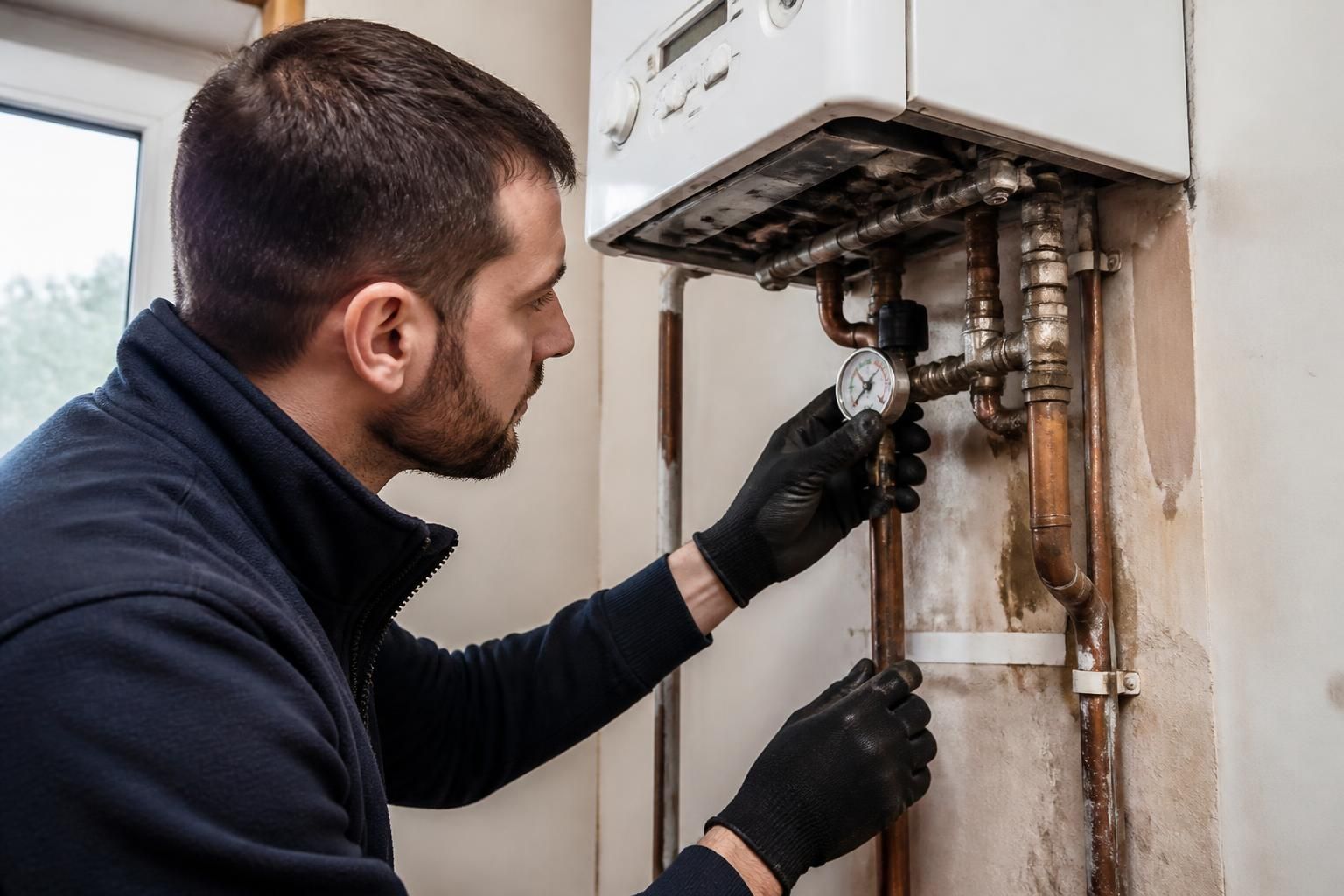
Professional boiler leak detection should be arranged when there is a credible possibility that water is escaping from the appliance, its safety components or the connected heating system, even if the source is not visible. This is particularly important when a fault is intermittent, returns after a temporary adjustment, or cannot be explained by normal boiler operation. A qualified engineer can distinguish a boiler leak from a problem elsewhere in the central-heating circuit and assess whether continued use is appropriate.
Arrange an investigation rather than repeatedly topping up the system if the pressure needs regular adjustment. Re-pressurising may restore operation temporarily, but it does not identify why pressure has changed. The underlying cause could be a leaking connection, pressure-relief component, expansion vessel issue or another fault within the heating system. Repeatedly adding water can also mask the progression of a problem and make it harder to establish when the fault began.
A leak investigation is also sensible in the following circumstances:
- There is evidence of a recurring fault after the boiler has been serviced or repaired.
- The heating system loses performance in a way that cannot be attributed to the thermostat or controls.
- Marks, corrosion or deterioration are developing around valves, joints, the casing area or nearby flooring and cupboards.
- A boiler fault code appears alongside a change in system behaviour.
- Water is suspected inside the appliance, behind an access panel or beneath connected components, rather than simply on an accessible external joint.
- A property has been vacant, altered or refurbished and the heating system has not been checked before regular use.
Do not wait for a large visible leak. Small losses can evaporate on warm components or collect in concealed areas, so the absence of a puddle does not prove that the boiler is dry. Persistent moisture can affect electrical parts, encourage corrosion and damage cabinets, flooring or walls. A concealed leak may also worsen when the boiler heats up because components expand and system pressure changes.
The appropriate timing depends on the risk. A suspected active leak, water near electrical equipment, or water escaping rapidly from the appliance should be treated as requiring prompt professional attention. If the boiler is making unsafe electrical contact, switch it off only if this can be done without touching water or exposed wiring. Do not remove the boiler casing or attempt to repair internal gas or combustion components. If you smell gas, leave the area and contact the relevant gas emergency service; gas safety is separate from water-leak diagnosis.
For a minor or uncertain issue, record what happens before arranging the visit. Useful information includes when the problem appears, whether it occurs during heating or hot-water use, any pressure readings shown on the gauge, whether the boiler has stopped or displayed a code, and whether the issue changes after the system cools. Photographs of accessible areas can also help, provided they are taken without removing covers or disturbing pipework. These details help the engineer plan the investigation without replacing an on-site assessment.
Boiler leak detection is not limited to looking for water around the appliance. The engineer may inspect accessible joints, valves, discharge routes, heating controls and nearby pipework, then test the system to establish whether pressure is being lost and where. Some apparent boiler leaks originate in the wider heating installation, while some faults only become apparent under operating conditions. Identifying the source before replacing parts helps prevent an unsuitable repair and separates a leaking component from a wider system fault.
Homeowners should arrange detection when they first have a reasonable concern, while landlords and tenants should report suspected leaks through the agreed property-maintenance process without attempting to open the appliance. Keeping a written record is useful where the issue is intermittent or where responsibility for repairs needs to be established.
Ideal Plumbing Services provides professional boiler leak detection for residential customers in Birmingham and across the West Midlands. The investigation can establish whether the problem is within the boiler or connected heating system and indicate what further repair or maintenance may be required.