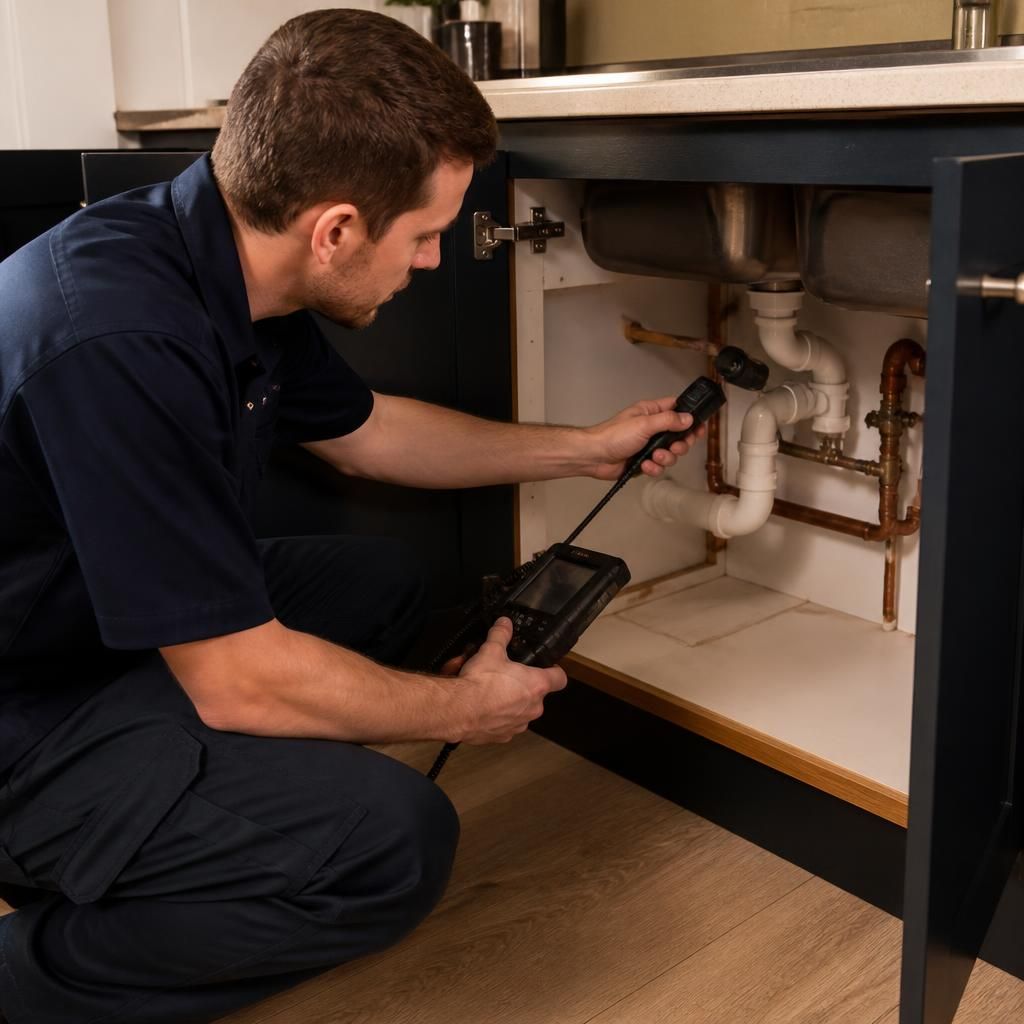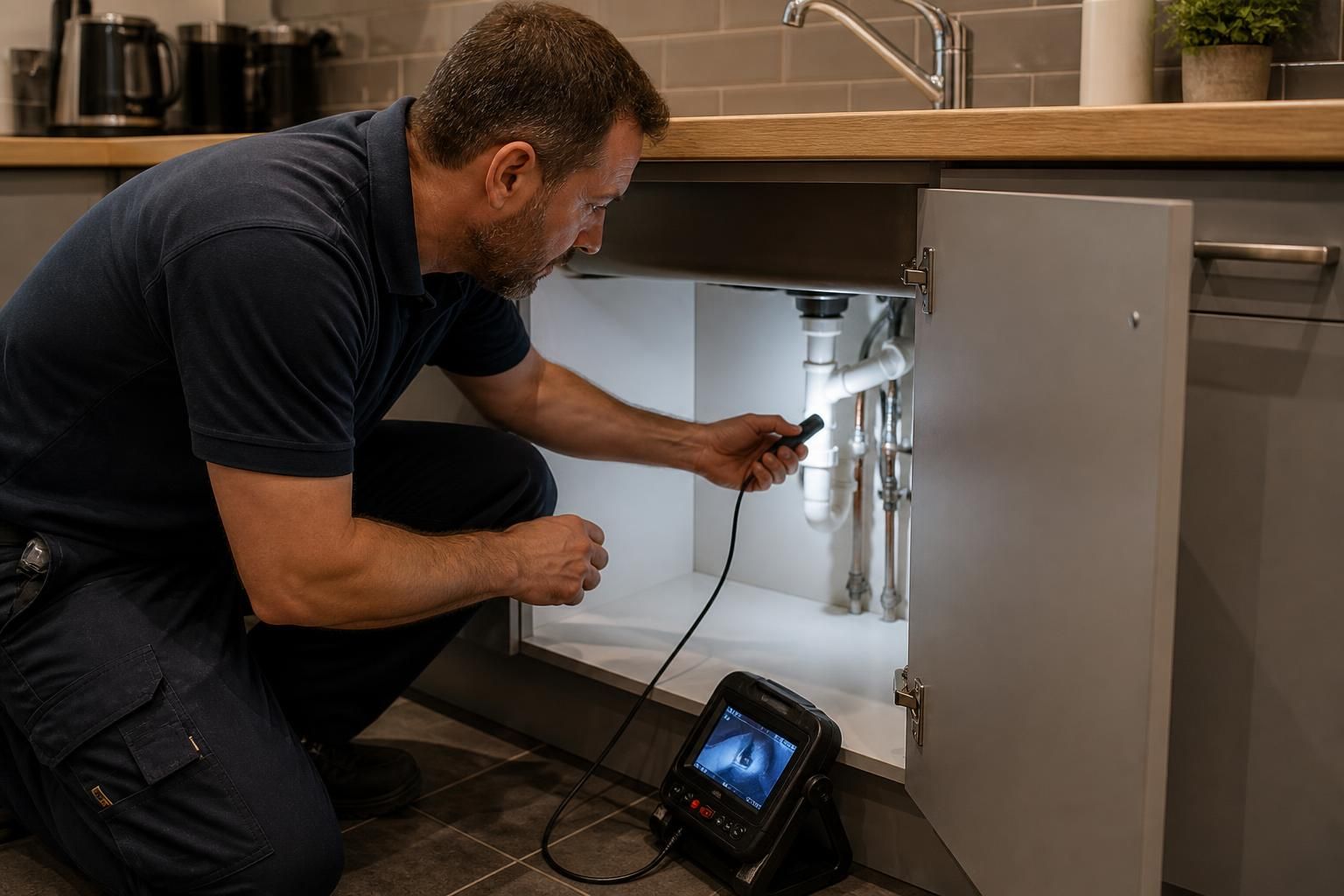
Professional leak detection is suitable for most residential and commercial buildings, but the investigation must be tailored to the property’s construction, plumbing system and suspected source of the water. A detached house, terraced property, flat, maisonette, rental home, shop or office may each require a different combination of checks and testing.
Houses and extensions: In houses, an investigation may cover the incoming mains supply, internal water pipes, central heating circuits, bathrooms, kitchens, loft spaces and external pipework. Extensions and converted rooms can make tracing more complex where older and newer plumbing systems have been joined together. Areas with previous alterations may need particular attention because pipe routes are not always shown accurately on plans.
Flats and maisonettes: Apartments can involve both private and communal plumbing. A leak may originate within the individual property, from a flat above, or from a shared riser, service duct or communal heating system. Identifying which system is affected is important before repair work begins. Access to neighbouring flats or shared areas may also be needed, particularly where the visible damage is below the actual source.
Rented properties: Leak detection can be carried out in homes occupied by tenants, subject to the appropriate access arrangements. The investigation can help distinguish a damaged supply pipe from a faulty appliance connection, heating leak, bathroom seal or drainage issue. Landlords and managing agents may also use the findings to establish whether the problem is within the building, a fixture or an external service.
Older and altered buildings: Period properties, converted buildings and homes that have undergone several refurbishments may contain a mixture of pipe materials, redundant pipework and unusual layouts. Thick masonry, suspended floors, voids and later additions can affect how sound, heat and moisture travel through the structure. These factors do not prevent detection, but they can influence the order of checks and the level of access required.
Commercial and mixed-use premises: Shops, offices, workshops and mixed-use buildings can also be assessed, provided the relevant plumbing systems and access points can be identified. Larger premises may contain separate supply zones, plant rooms, toilets, kitchens and stored-water systems. Testing may therefore need to be divided into sections so that one part of the system can be compared with another without unnecessarily affecting the rest of the building.
Some water problems need to be separated from conventional plumbing leaks. Rainwater entering through a roof, failed external waterproofing, rising damp and condensation may create staining or moisture that resembles a pipe leak. Likewise, a blocked or damaged drain can cause water to appear away from the original fault. A proper assessment considers the pattern, location and timing of the moisture rather than assuming that every damp patch is caused by a pressurised water pipe.
Access is one of the main practical limitations. A technician may need to inspect service cupboards, meters, lofts, basements, plant areas or neighbouring parts of a building. Furniture, fixed units and floor coverings can restrict the investigation, while a shared building may require permission from a landlord, managing agent, freeholder or adjoining occupier. Where access cannot be provided, the source may be narrowed down but not conclusively confirmed.
Leak detection is also different from leak repair. Detection identifies the likely source and extent of the problem; repair may involve opening a surface, replacing a section of pipe, renewing a fitting or arranging separate work for a roof or drainage defect. Confirming the type of fault first helps avoid unnecessary damage and makes it clearer which trade or building professional should deal with the underlying cause.
In practice, the important question is not simply what type of property it is, but how its water, heating and drainage systems are arranged. Relevant information includes when the problem was first noticed, whether water pressure changes, which fixtures are affected and whether nearby rooms or properties show similar symptoms. These details help determine the most suitable investigation approach for the building.