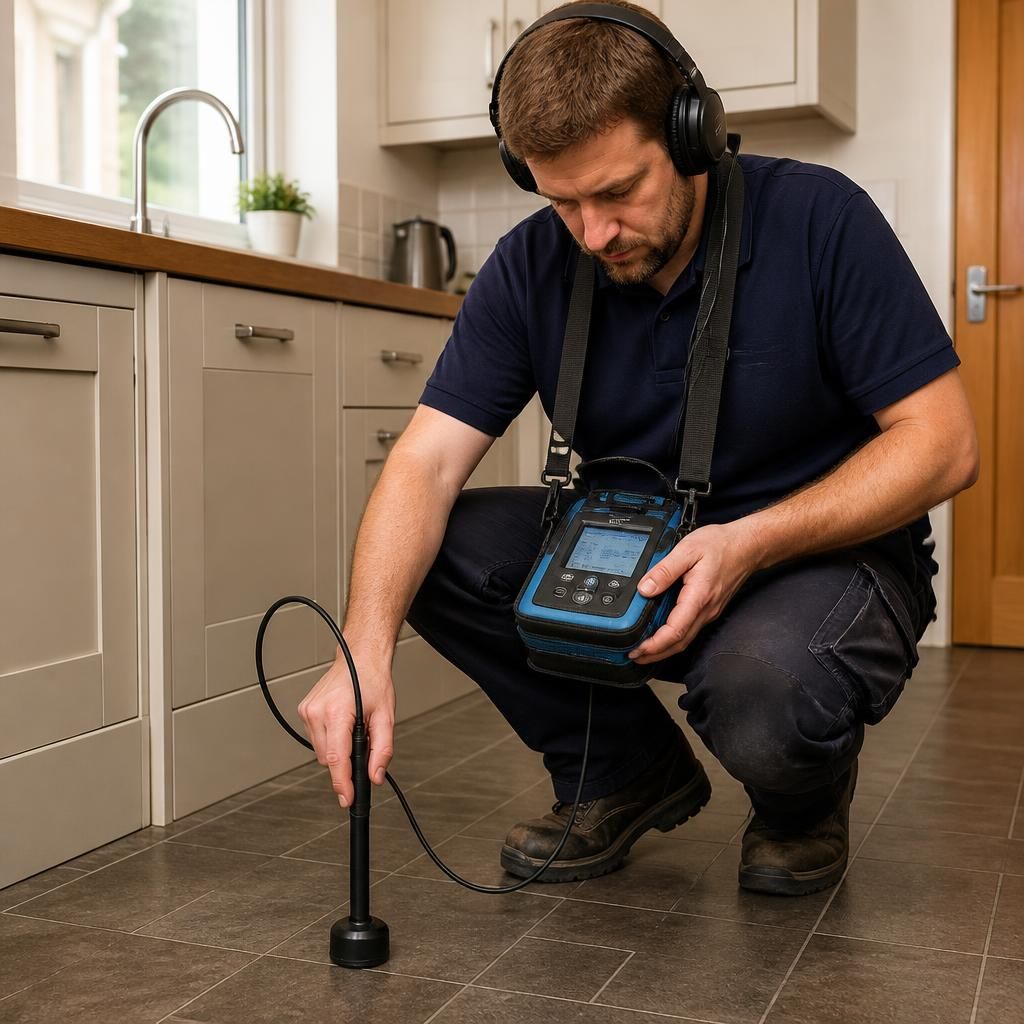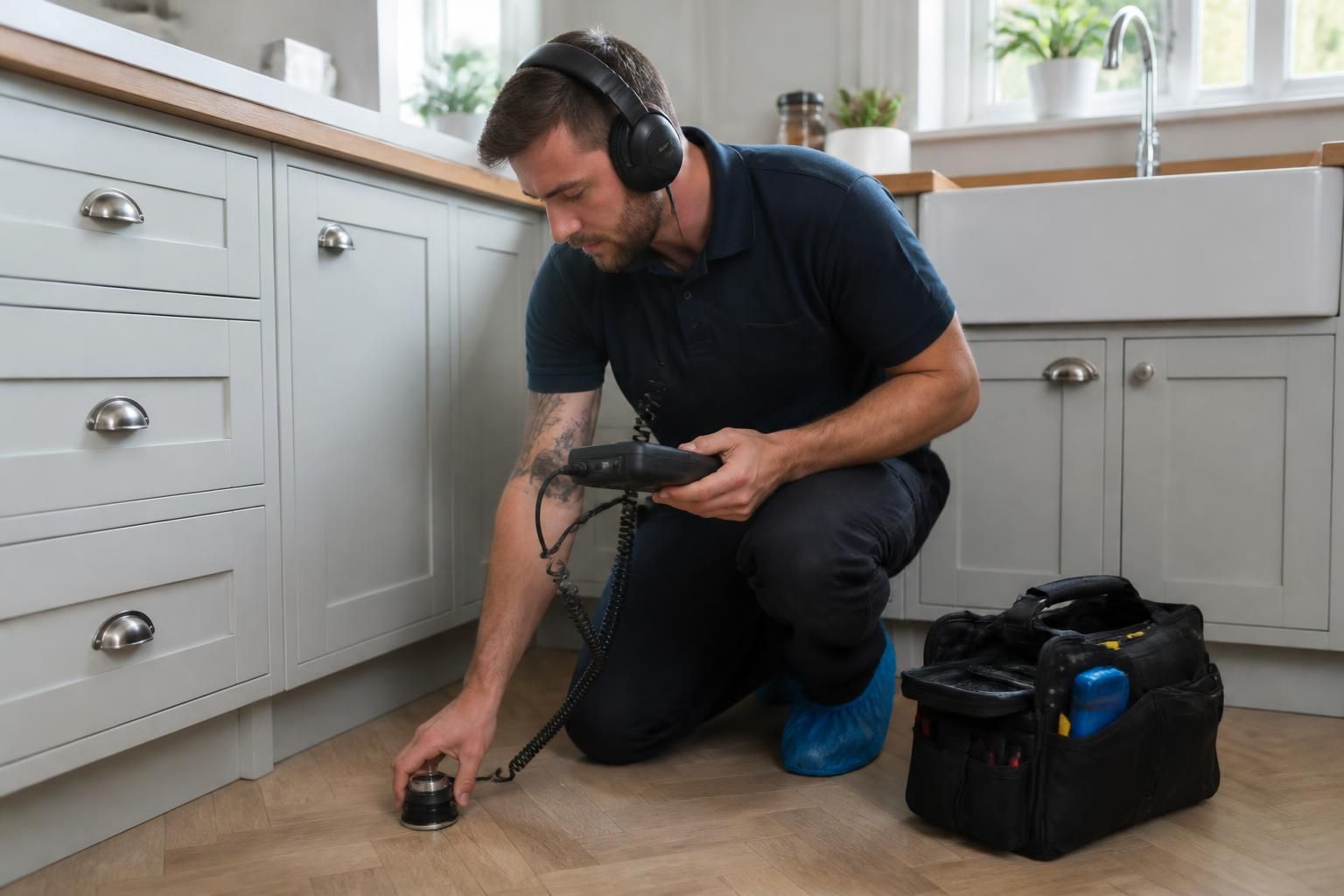
Professional leak detection is usually priced as a diagnostic service rather than as a standard repair. The final charge reflects the time and specialist equipment needed to identify the source, confirm the extent of the problem and provide a suitable repair recommendation. A reputable quotation should make clear whether it covers detection only or includes any subsequent plumbing work.
The main elements that can affect the cost include:
- Inspection and attendance: Some quotations include an initial visit or call-out charge, while others price the investigation as a single service.
- Complexity of the investigation: A visible leak beneath a sink is generally simpler to trace than water escaping within a wall, floor, ceiling or concealed pipework.
- Access to the suspected area: Restricted access, multiple rooms or extensive building finishes can increase the time required to establish the leak’s route.
- Detection methods: The plumber may need to combine visual checks with pressure testing, acoustic equipment, thermal imaging, moisture measurement or other non-invasive techniques.
- Documentation: If the findings need to be recorded for a landlord, property manager or insurance claim, ask whether a written report, photographs or moisture readings are included.
Leak detection and leak repair are commonly treated as separate stages. Detection identifies where the water is coming from; repair involves replacing, sealing or altering the faulty component and may require additional materials, labour or access work. The quotation should therefore distinguish between the diagnostic charge and any estimated repair cost. If the source cannot be confirmed without opening a surface, that possibility should also be explained before disruptive work begins.
When comparing quotations, check what is included rather than choosing solely on the lowest figure. Useful questions include:
- Is the price for locating one suspected leak or investigating several symptoms?
- Are specialist testing equipment and follow-up checks included?
- Will the plumber explain the findings and provide photographs or a written report?
- Are minor access measures included, or would lifting flooring and opening walls be charged separately?
- Is repair work included, optional or quoted after the source has been identified?
- Are materials, disposal and any additional attendance clearly itemised?
Low water pressure, unexplained dampness, staining, mould, a rising water bill or a sound from concealed pipework can all justify an investigation, but the visible symptom is not always located at the actual source. A precise diagnosis can prevent unnecessary replacement of sound pipework and helps ensure that repair work addresses the underlying fault rather than only its visible effects. This is particularly relevant in occupied homes, rental properties and buildings with concealed plumbing.
For customers in Birmingham and across the West Midlands, the most useful way to establish the likely cost is to provide as much information as possible before an assessment: where the problem was first noticed, whether the area is still getting wetter, which fixtures are affected and whether previous repairs have been attempted. Clear information helps the plumber identify the appropriate level of investigation and produce a more transparent quotation.
Before approving the work, ask for the scope of the investigation and the charging basis in writing. A professional quotation should state what happens if the leak is found quickly, what happens if further testing is needed and how repair work will be priced. This gives you a meaningful basis for comparing services and avoids confusing the cost of finding a leak with the cost of putting it right.