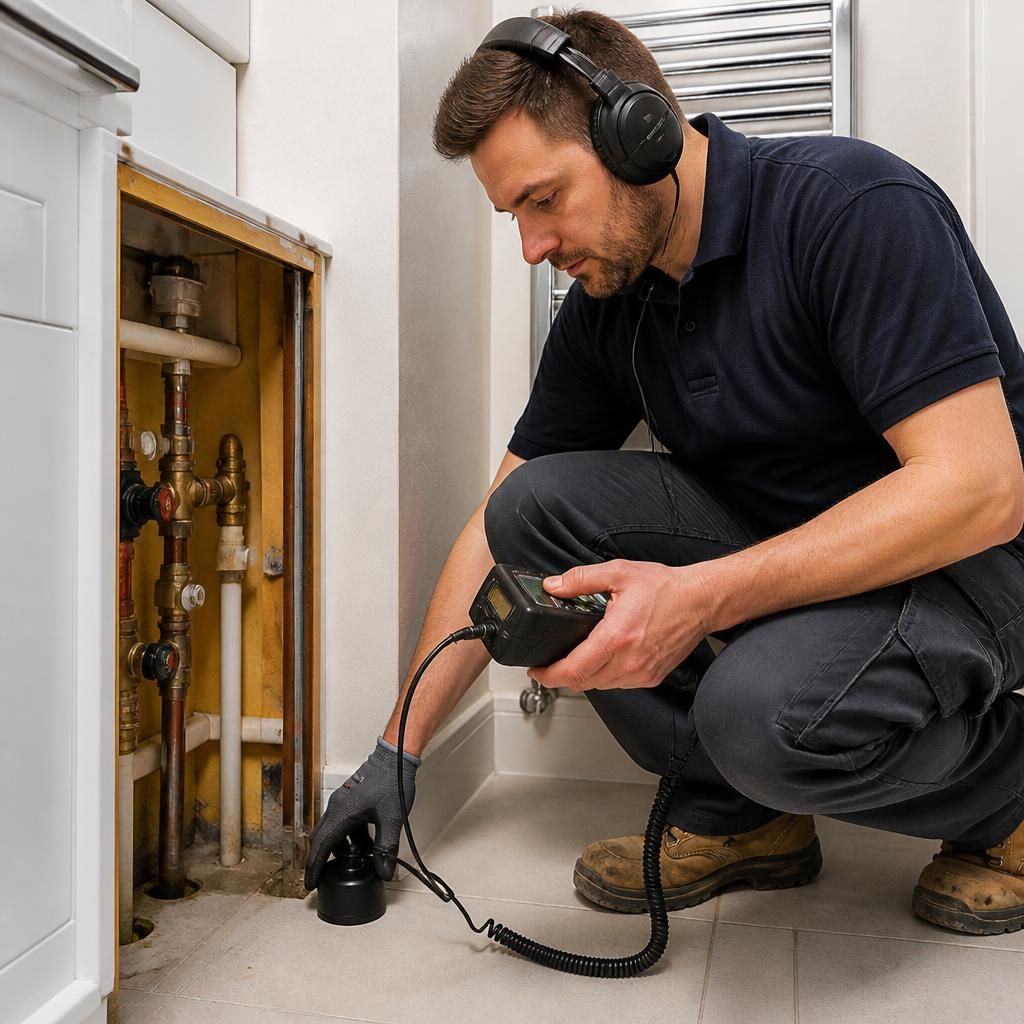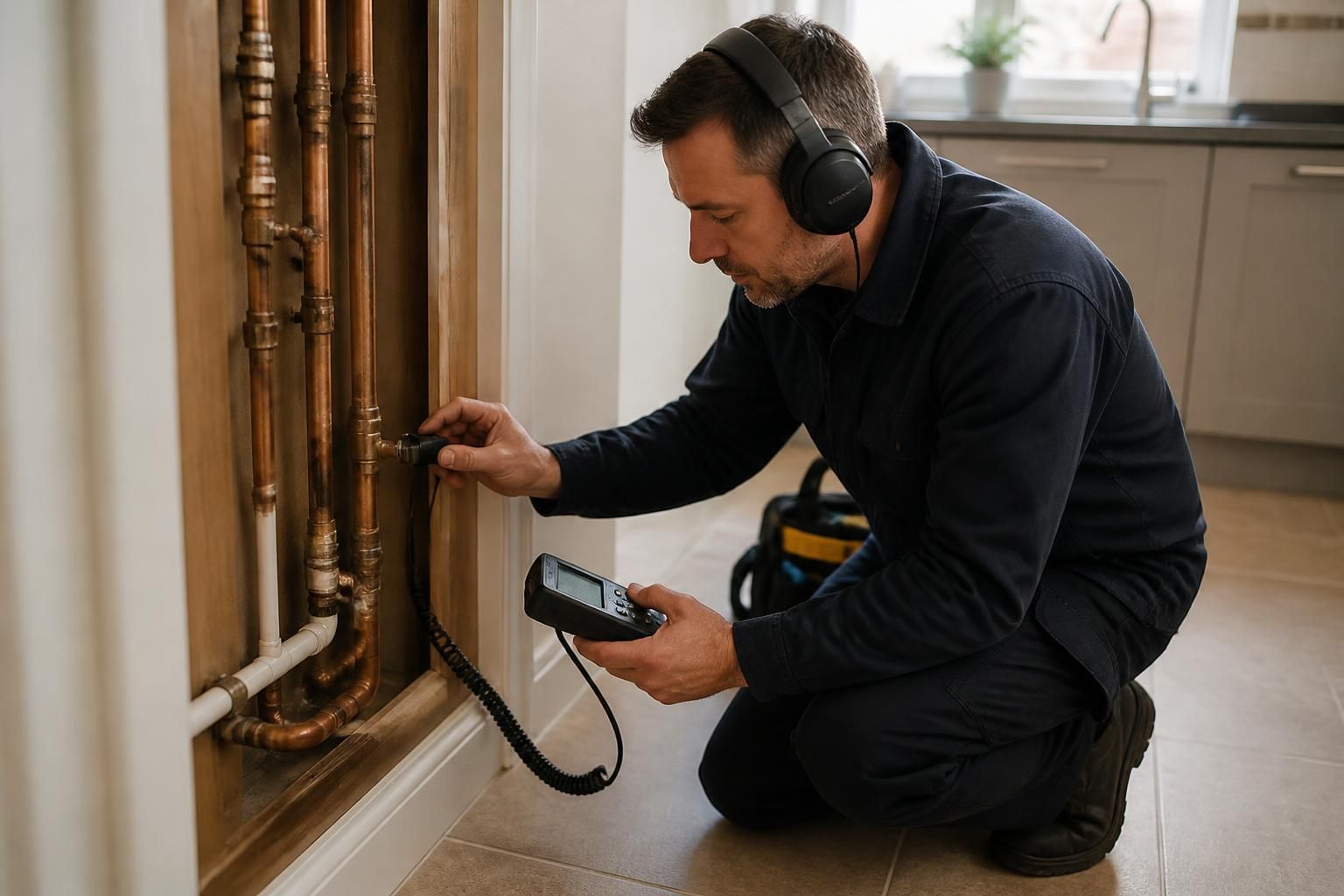
Professional leak detection relies on a combination of diagnostic instruments rather than one universal device. The equipment chosen depends on the pipe material, the location of the suspected leak, whether the system is carrying clean or contaminated water, and how accessible the pipework is.
Additional equipment may include the following:
- Electronic pipe locators: These help trace the route of buried or concealed pipework before investigation begins. Knowing where a pipe runs reduces unnecessary opening of floors, walls or paving.
- Tracer dye and ultraviolet lights: A non-staining dye can be introduced into a suitable water system to establish whether water from one point is reaching another. An ultraviolet light may then make the dye easier to identify. This method can be useful for distinguishing between separate bathroom, heating or drainage sources, although it is not appropriate for every system.
- Flow-monitoring equipment: Digital flow monitors can show whether water is continuing to pass through a system when outlets and appliances are closed. This can support an investigation into a concealed supply-pipe leak, particularly where visible signs are limited.
- Data loggers: These devices record changes in conditions over a period of time. Recorded information can help identify intermittent leaks that do not occur while an inspection is taking place, such as leaks linked to appliance use, heating cycles or changing water demand.
- Hygrometers: A hygrometer measures humidity in the air. Used alongside other readings, it can help assess whether damp conditions are connected with an active leak, condensation or a separate ventilation problem.
- Inspection and access tools: Plumbers may use borescopes, small access probes and specialist hand tools where a restricted visual check is needed. These tools can help inspect voids or fittings through a carefully positioned opening rather than removing a larger section of material.
Equipment is normally used in stages. The plumber first gathers information about the symptoms, checks accessible fittings and considers the building layout. The suspected pipe route can then be traced, followed by targeted measurements or dye testing where appropriate. Readings are compared with surrounding areas and with the normal behaviour of the plumbing system, rather than being interpreted in isolation.
Instrument choice also depends on the type of pipework. Plastic pipes, copper pipes, metal fittings, underfloor systems and buried external supplies transmit and retain evidence of leaks differently. A tool that is useful on an exposed water supply may be less suitable for a concealed heating circuit or a drain. The presence of insulation, tiled surfaces, concrete, floor coverings and other building materials can also affect what an instrument detects.
Professional equipment does not remove the need for technical judgement. A damp patch may be some distance from the actual source because water can travel along joists, pipe insulation, plaster or flooring. Similarly, condensation, a failed seal, rising damp or a drainage problem can create symptoms that resemble a supply-pipe leak. Measurements therefore need to be interpreted alongside the plumbing layout and the pattern of moisture or water movement.
After testing, the findings should identify the likely source, the confidence level of the diagnosis and any limitations caused by restricted access or building materials. A clear explanation can help determine whether the next step is a local repair, removal of a small section for access, further investigation or work on a different part of the plumbing system.