Professional leak detection is generally a controlled investigation rather than a major building job. The disruption usually comes from allowing the specialist to inspect relevant areas, isolate sections of the plumbing system and carry out diagnostic tests. The extent of any disturbance depends on the location of the suspected leak, whether the pipework is concealed and whether the source is under pressure, behind a finished surface or connected to a drainage system.
What the visit usually involves
The assessment normally begins with questions about the symptoms, such as a falling boiler pressure, unexplained dampness, staining, a sound of running water or an unusually high water bill. The plumber may then inspect visible pipework, sanitaryware, heating components, ceilings, floors, walls, cupboards and service voids. This is usually possible while the home remains occupied, although items stored around the suspected area may need to be moved.
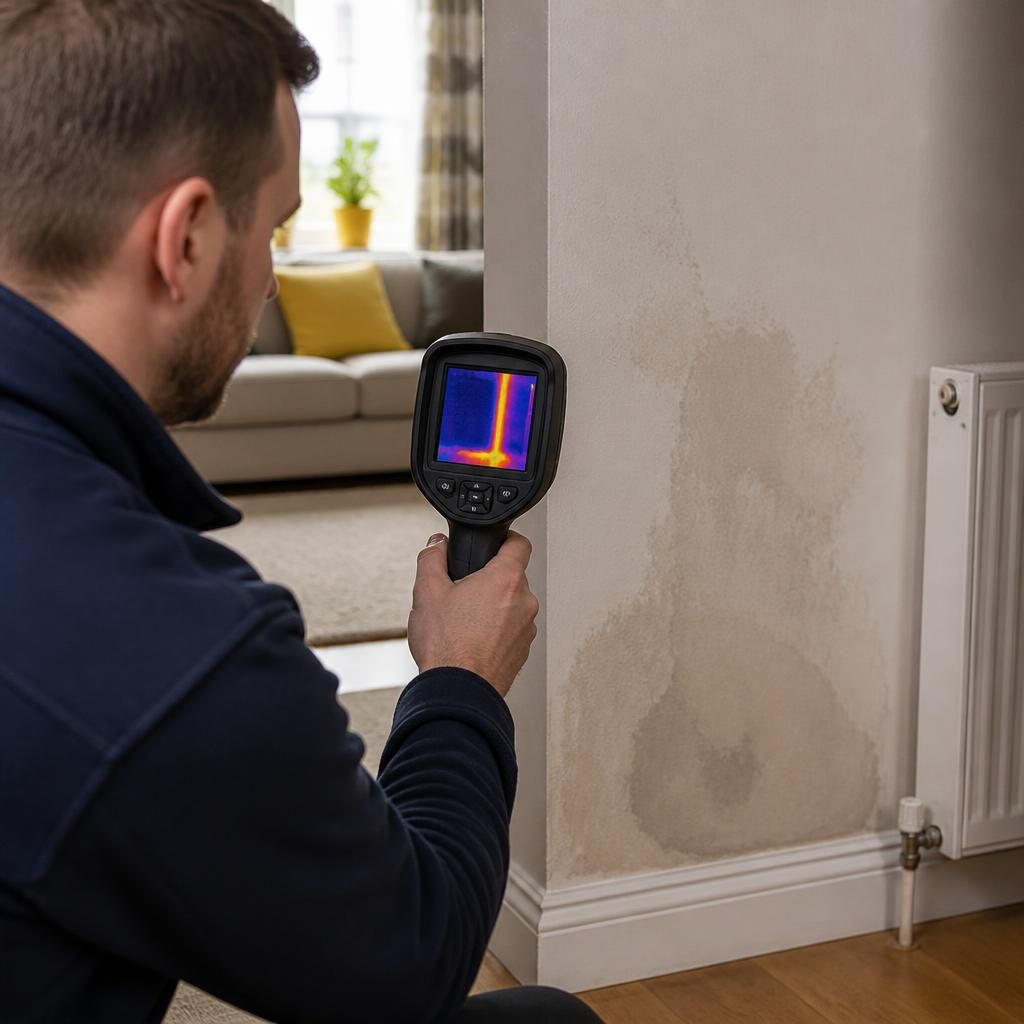
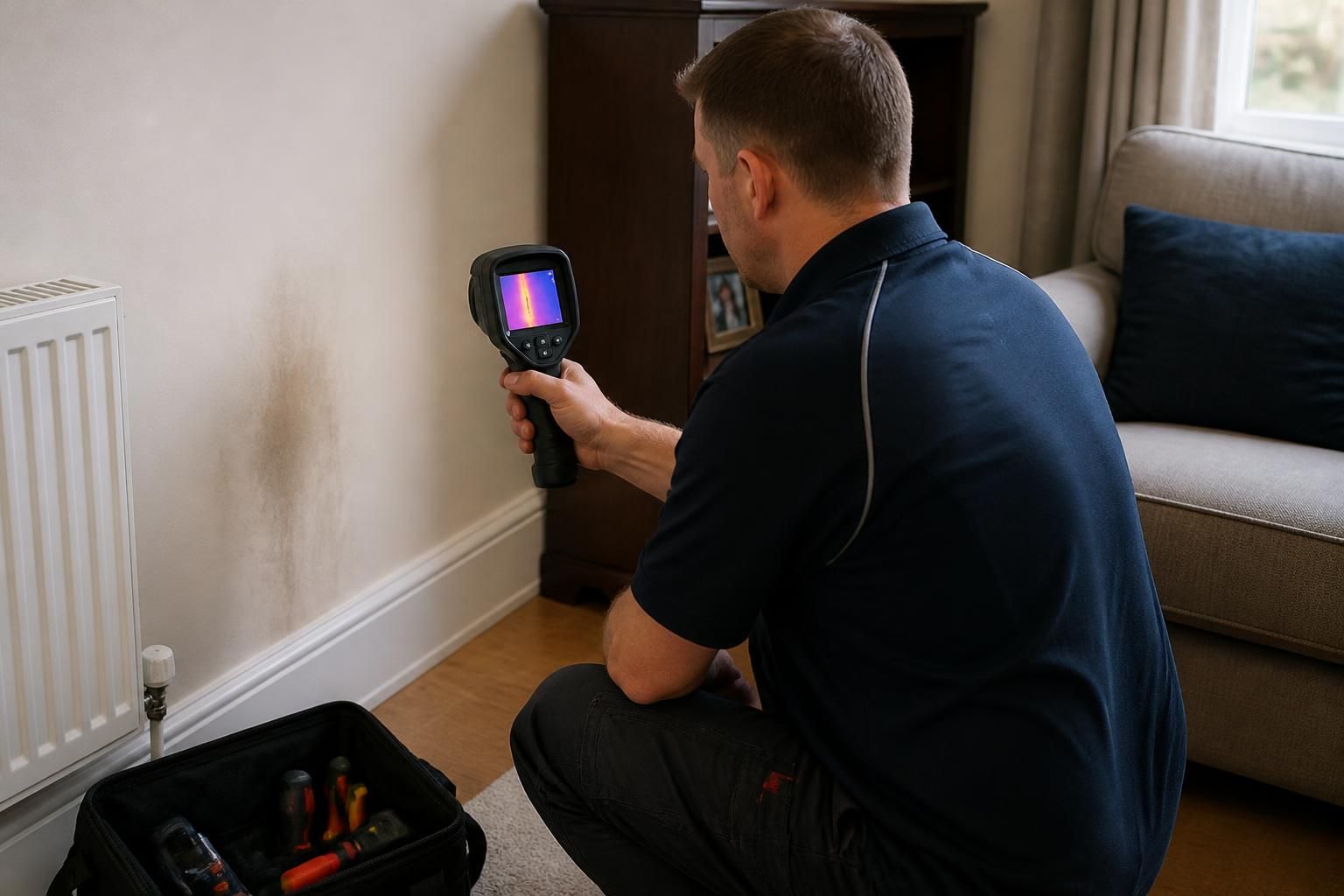
Diagnostic equipment can help narrow down the source before any fabric of the property is disturbed. Depending on the situation, this may include acoustic listening equipment, moisture meters, thermal imaging, pressure testing or tracer-gas testing. These methods provide different types of information: moisture readings can show where water has spread, thermal imaging can reveal temperature changes associated with escaping water, and pressure tests can indicate whether a sealed circuit is losing water.
Where disruption is most likely
- Kitchen and bathroom cupboards: Cleaning products, stored items and removable panels may need to be taken out so that valves, traps and pipe connections can be examined.
- Floors and carpets: Access may be needed around radiators, toilets, baths, washing machines or visible pipe routes. Protective coverings can help reduce the risk of dirt or moisture transfer.
- Ceilings and walls: Water staining may appear some distance from the actual leak. A small inspection opening may be considered only when testing cannot identify the source with sufficient confidence.
- Heating systems: The heating or hot-water system may need to be switched off temporarily while pressure or circulation checks are carried out.
- Outdoor areas: Leaks on external supply pipes, garden plumbing or drainage runs can involve access to paving, soil, inspection chambers or other outside surfaces.
Opening-up work is not the same as repairing the leak. If it becomes necessary, the plumber should explain why the access point is needed and what it may reveal. The resulting hole, lifted flooring or removed finish may require separate reinstatement, particularly where plaster, tiling, flooring or fitted joinery is affected. A detection visit should therefore establish the source as accurately as possible before repair work is agreed.
How to keep disruption manageable
- Clear loose belongings from the suspected area, including cupboards beneath sinks and spaces around appliances.
- Identify accessible stop taps, heating controls and water-using appliances if you know where they are.
- Keep pets and children away from equipment, damp areas and any temporarily exposed pipework.
- Tell the plumber about recent decorating, vulnerable flooring, concealed services or areas that must not be disturbed without permission.
- Take photographs of staining, damaged finishes or changes in pressure before work begins.
- Ask which tests are proposed, whether water or heating may be isolated, and whether any opening-up or making-good is included separately.
Leak detection can involve short periods when a tap, toilet, appliance or heating circuit cannot be used. The plumber may also need to monitor pressure, run water through selected outlets or leave an area undisturbed while readings are taken. These activities are usually more inconvenient than destructive, but the practical effect depends on the property and the suspected pipe route.
In a lived-in home, the main benefit of accurate detection is that it can reduce unnecessary removal of walls, floors and fittings. It also helps distinguish between a supply-pipe leak, a heating leak, a faulty appliance connection, condensation and water entering from another part of the building. That distinction matters because each cause calls for a different repair and may involve different parts of the property.
After the source has been identified, the findings should be explained clearly, including the recommended repair, any temporary precautions and which finishes may need attention afterwards. Drying damaged materials, treating mould, replacing plaster or redecorating are generally follow-on tasks rather than part of the detection itself. Keeping detection and reinstatement separate makes it easier to understand what work is essential and what can be planned later.