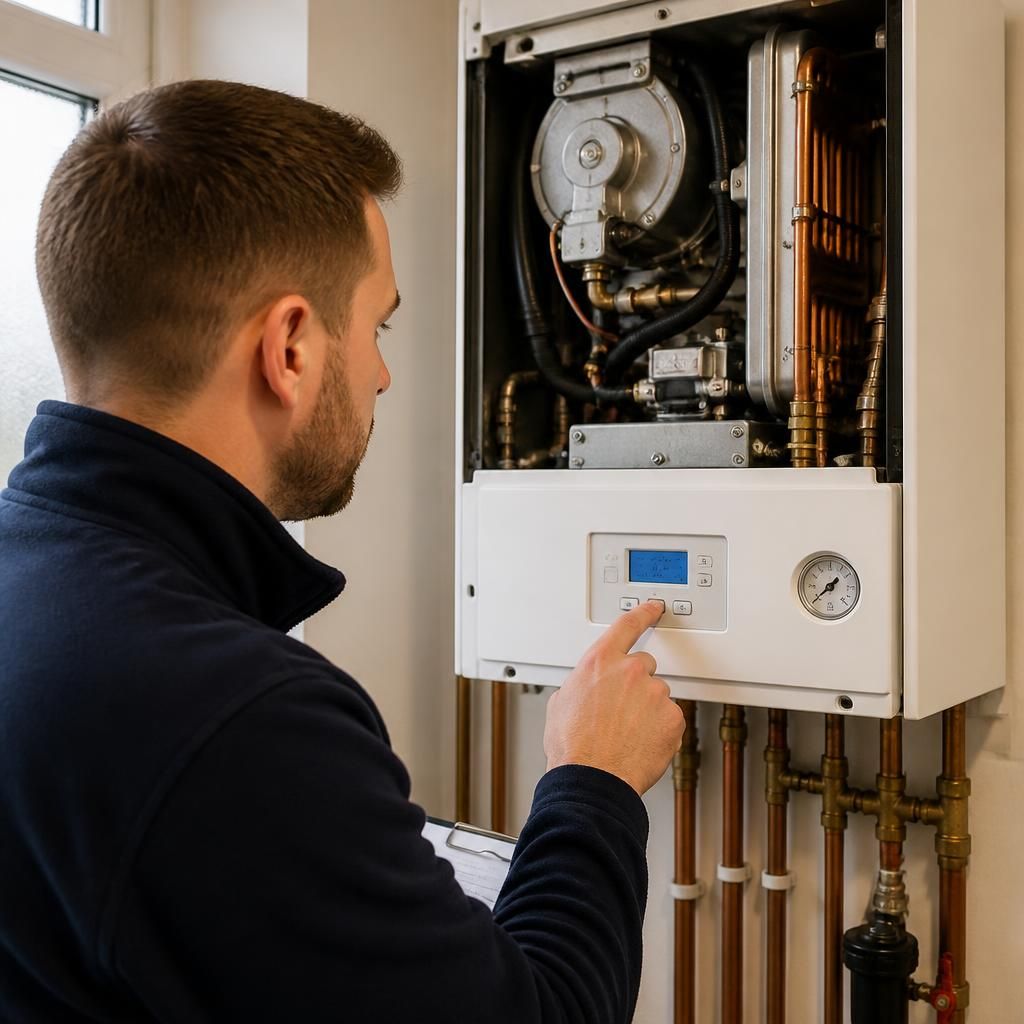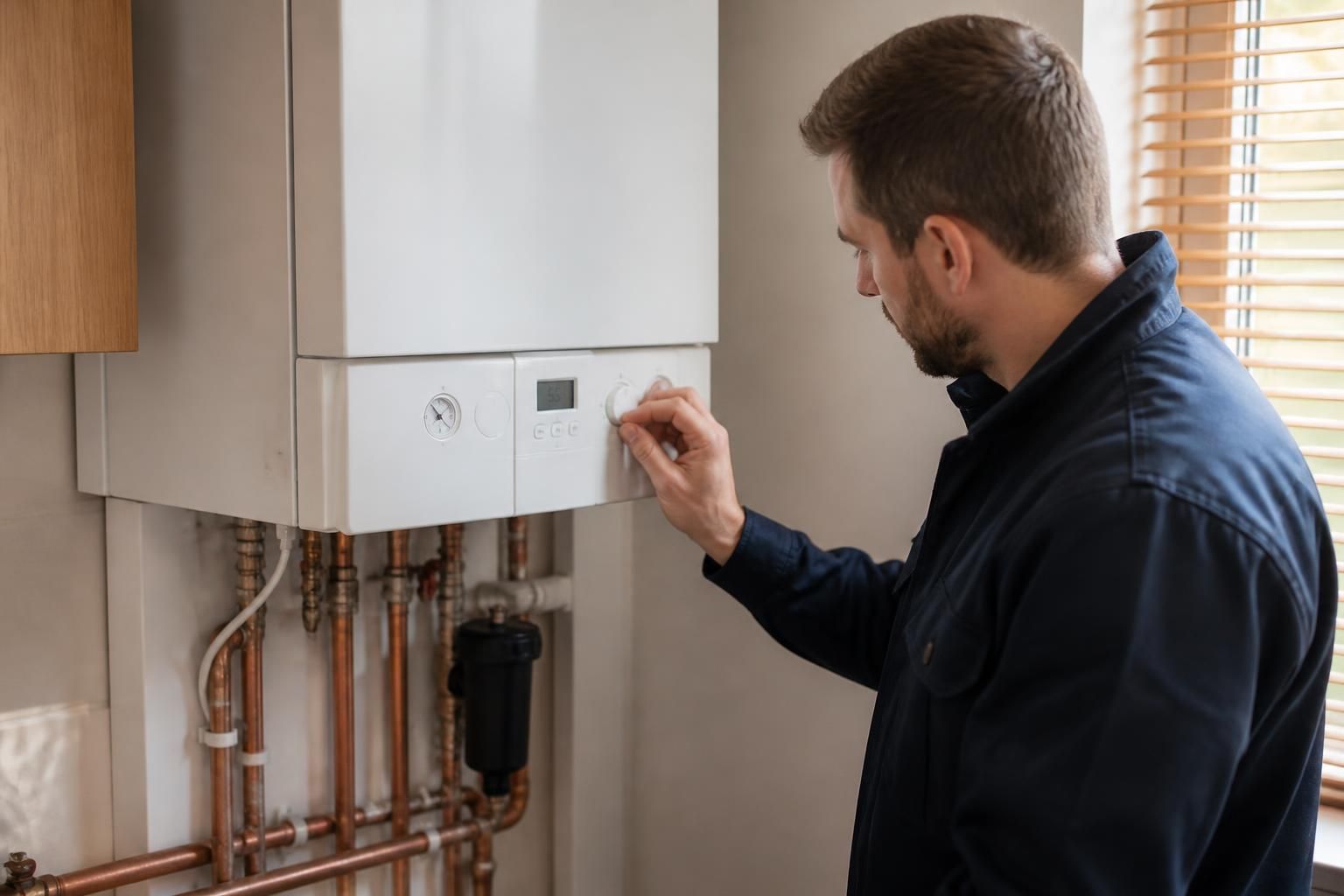
Central heating efficiency can often be improved without replacing the system by reducing heat loss, optimising boiler and pump settings, improving heat distribution and correcting faults that make the system work harder than necessary. The most effective approach is to assess the whole installation rather than focusing on the boiler alone.
Check the boiler flow temperature
A boiler’s flow temperature determines how hot the water sent to the radiators becomes. If it is set higher than the property requires, the boiler may use more energy than necessary. A suitably qualified heating professional can check the setting and adjust it while ensuring the rooms still reach the required temperature. This is different from changing the thermostat, which controls the target room temperature rather than the temperature of the water circulating through the heating system.
Modern condensing boilers work most efficiently when the return water temperature is sufficiently low for condensation to take place. Poor circulation, incorrect settings or oversized heating output can prevent this. Checking the flow and return temperatures, pump operation and system configuration can identify adjustments that may improve performance without replacing the boiler.
Reduce heat loss from the property
A heating system cannot compensate efficiently for avoidable heat loss. Practical improvements include:
- Insulating exposed heating pipes in unheated areas such as loft spaces, garages and cupboards.
- Closing gaps around external doors and windows where draughts are present.
- Keeping internal doors closed where rooms are heated to different temperatures.
- Avoiding large items of furniture or heavy curtains blocking radiators.
- Using radiator reflector panels on suitable external walls where heat would otherwise be absorbed by the wall.
- Checking loft and other relevant insulation where the property loses heat rapidly.
These measures allow the existing system to maintain comfortable room temperatures with less wasted heat. They are particularly useful in older properties where the heating installation may be sound but the building fabric is inefficient.
Review circulation and heat distribution
Radiators that heat unevenly, remain cool at the bottom or take an unusually long time to warm may indicate circulation problems, restricted flow or a component that needs attention. A heating engineer can examine the pump, valves and bypass arrangement, then confirm that water is circulating correctly through the system.
Thermostatic radiator valves also need to move freely and be set appropriately for each room. A room that is rarely used may require less heat than a living area, while a thermostat should not be placed where it is affected by direct sunlight, a draught or another heat source. Correct room-by-room adjustment helps prevent the boiler from heating spaces unnecessarily.
Inspect the system for small faults
Minor faults can reduce efficiency even when the heating still operates. Dripping radiator valves, a seeping joint, repeated pressure loss, unusual pump noise or a boiler that frequently cycles on and off should be investigated. A leak may waste water and indicate a developing problem, while incorrect pressure can affect circulation and system performance.
Do not remove the boiler casing or alter gas-related components yourself. Gas, combustion and electrical checks should be completed by an appropriately qualified professional. Homeowners, landlords and tenants should also report signs such as water around the boiler, persistent loss of pressure or unusual smells rather than treating them as routine efficiency issues.
Use the heating system consistently
Heating is generally more controllable when the system is programmed around how the property is occupied, rather than being left to heat every room continuously. Avoid setting the thermostat substantially higher than the desired temperature; this does not make the house reach the target temperature faster and can lead to unnecessary heat output.
Make sure heating schedules, room settings and hot-water settings do not conflict. In properties with separate zones, zoning can help direct heat to the areas that need it, provided the controls and valves have been installed and configured correctly. Changes should be tested over several heating cycles so that comfort and boiler operation can be assessed together.
When professional advice is worthwhile
An inspection is advisable when efficiency has declined despite normal settings, when some radiators perform differently from others, or when the boiler runs for long periods without maintaining room temperature. The engineer may assess the boiler’s operation, circulation, controls, radiators, pipework and insulation-related heat loss before recommending proportionate work.
Improving central heating efficiency does not always require a new system. In many cases, careful adjustment, repair and maintenance address the underlying cause. Replacement becomes more relevant where the existing boiler or major components are unsafe, unreliable, uneconomical to repair or unable to meet the property’s heating requirements. A condition assessment can distinguish between an inefficient setting, a repairable fault and equipment that has reached the end of its practical service life.
Ideal Plumbing Services provides central heating assessments, repairs and maintenance for residential properties in Birmingham and the wider West Midlands, helping customers understand which improvements are appropriate before considering major replacement work.