Power flushing is suitable for many wet central heating systems, particularly where sludge, rust and magnetite are restricting circulation, but it is not a universal remedy. Its suitability depends on the system’s construction, the condition of its pipework and radiators, the type of boiler and controls, and the cause of the heating problem.
A power flush uses a pump and cleaning chemicals to circulate water through the heating circuit at a higher flow rate than the system normally produces. This can dislodge contaminated water and deposits from radiators, pipes and other parts of the circuit. The system is then rinsed until the discharge water is acceptably clean, with an inhibitor normally added afterwards to help protect against further corrosion.
Systems that may benefit
- Older heating systems with repeated sludge or dirty-water problems.
- Radiators that are cold at the bottom, slow to warm up or require frequent bleeding.
- Systems with poor circulation, noisy operation or uneven heat distribution.
- Installations where a replacement boiler is being considered and the existing circuit needs to be assessed and cleaned first.
- Heating circuits affected by corrosion caused by insufficient system protection or a previous lack of maintenance.
These symptoms do not prove that a power flush is required. Airlocks, pump faults, incorrect balancing, faulty valves, trapped debris, control problems and low system pressure can produce similar results. Cleaning the system will not correct a mechanical or electrical fault that is unrelated to contamination.
When power flushing may be unsuitable
Care is needed where radiators, valves, pipework or other components are badly corroded. Deposits can sometimes be masking weak areas, and the pressure and flow involved in cleaning may expose an existing defect. A power flush may therefore be inappropriate if the system has widespread corrosion, persistent leaks, severely damaged radiators or components that are already at the end of their serviceable life.
It may also be unsuitable for systems whose design or condition cannot safely accommodate the cleaning process. For example, a heating professional may need to consider the age and material of the pipework, the arrangement of the circuit, the condition of the boiler heat exchanger and whether the system contains components that require isolation or replacement. Some faults are better addressed through targeted cleaning, component repair or partial replacement rather than flushing the whole installation.
How suitability is assessed
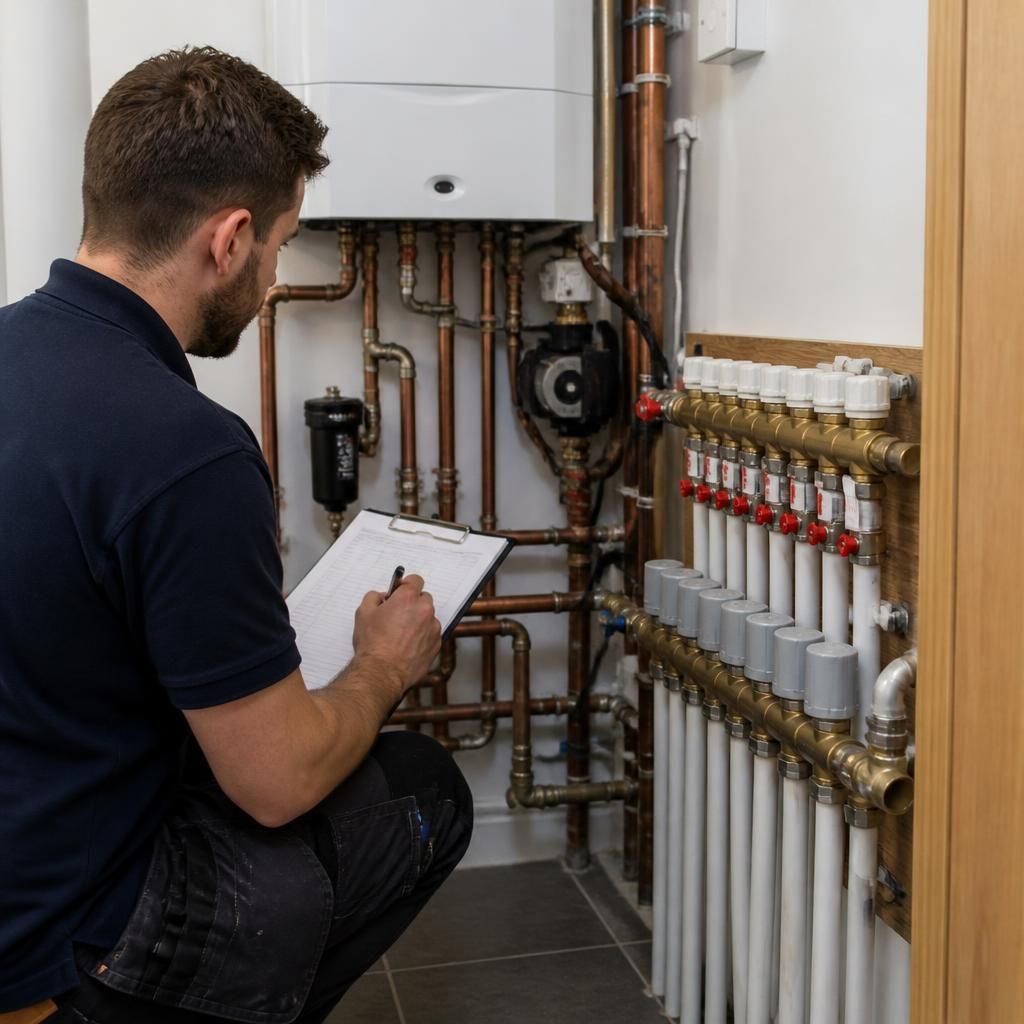
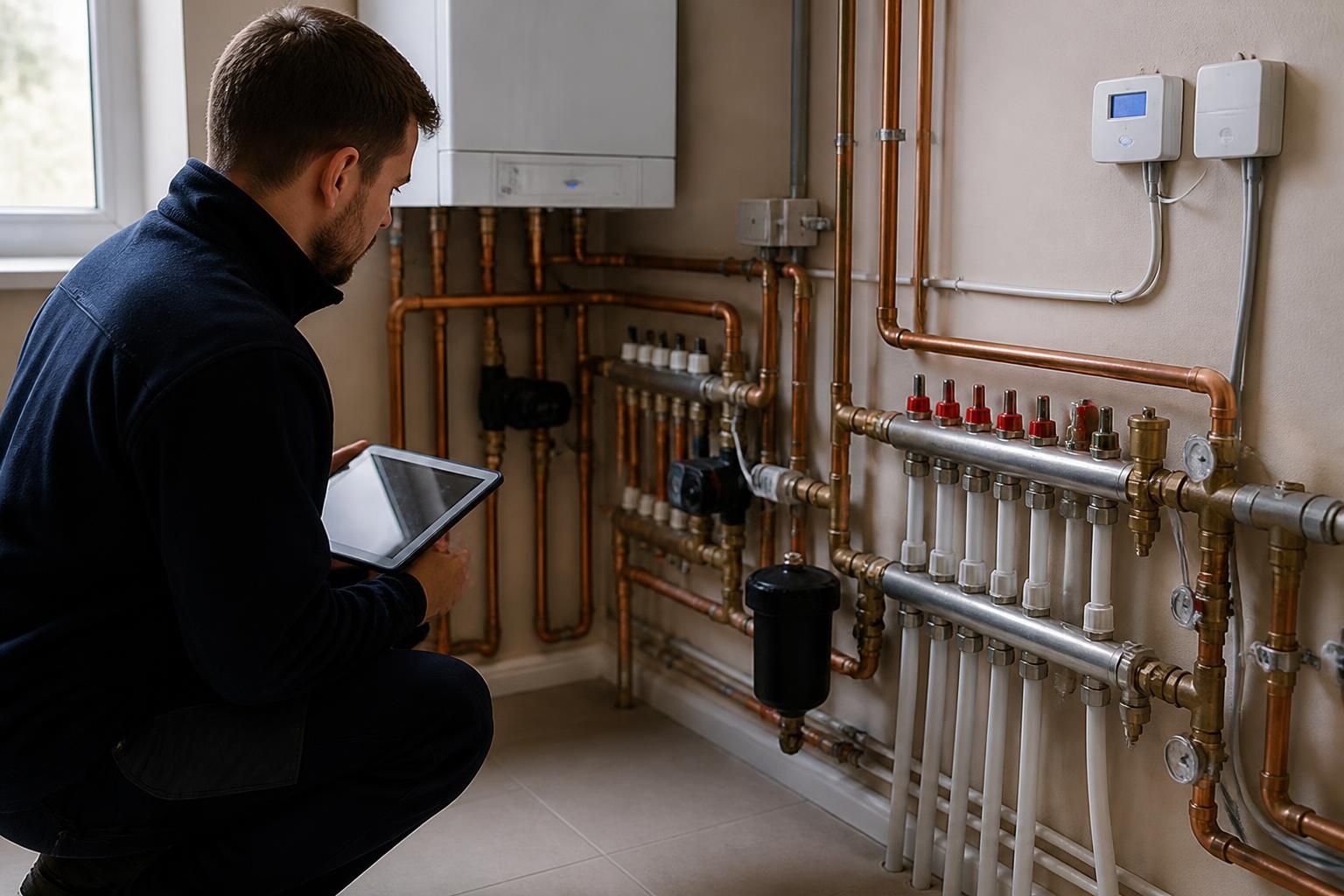
- The heating system and its history are inspected, including previous repairs, recurring pressure loss and the age of major components.
- Radiators, valves, pumps, expansion equipment, filters and visible pipework are checked for signs of leakage, corrosion or restricted circulation.
- The water in the system may be examined for discolouration and debris, while radiator temperatures and circulation are assessed.
- The underlying fault is identified before a cleaning method is recommended.
- The likely risks, required preparation and any components that should be repaired or replaced are explained before work begins.
Where a power flush is appropriate, individual radiators may be cleaned in turn while the rest of the circuit is isolated or adjusted to direct flow where it is needed. The process should include suitable protection for the boiler and controls, thorough rinsing, checks for leaks and the correct chemical treatment for the system. The heating performance should then be checked rather than assuming that cleaning alone has resolved every fault.
Alternatives to a full power flush
A full flush is not always the first or most proportionate option. Depending on the findings, suitable alternatives may include cleaning or replacing a magnetic filter, removing and cleaning an individual radiator, replacing a blocked valve, correcting system pressure, balancing radiators, repairing a pump or using a less intensive chemical clean. If the problem is caused by a leaking or corroded component, replacement may be more appropriate than attempting to clean it.
In some cases, a heating system may need staged work: a repair first, followed by cleaning once the circuit is sound. If a boiler replacement is planned, the condition of the existing system should be considered before installation, because fitting new equipment to a contaminated or poorly functioning circuit can leave the original circulation problem unresolved.
Power flushing should therefore be based on a condition assessment, not simply on the age of the boiler or the presence of a cold radiator. A qualified heating professional can distinguish contamination from other faults and advise whether a full flush, targeted cleaning, repair or replacement is the most suitable approach.