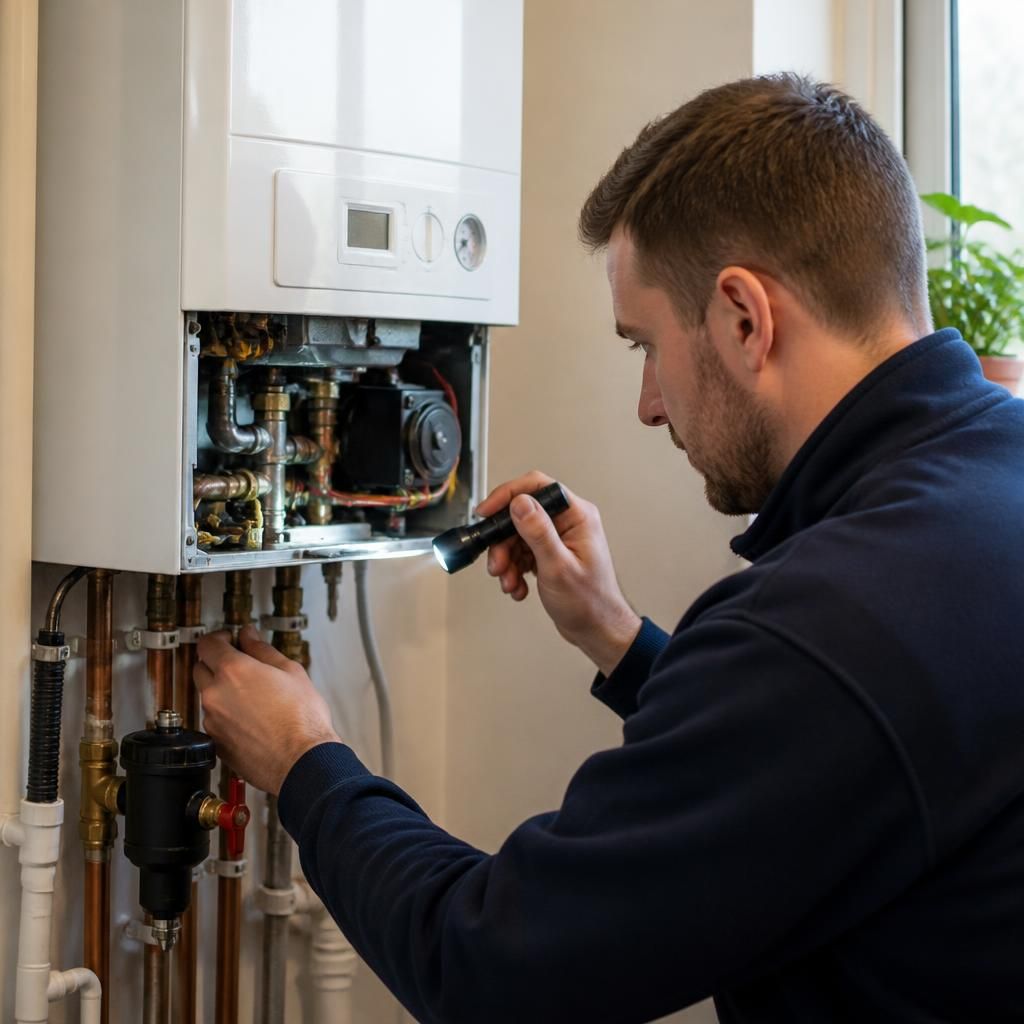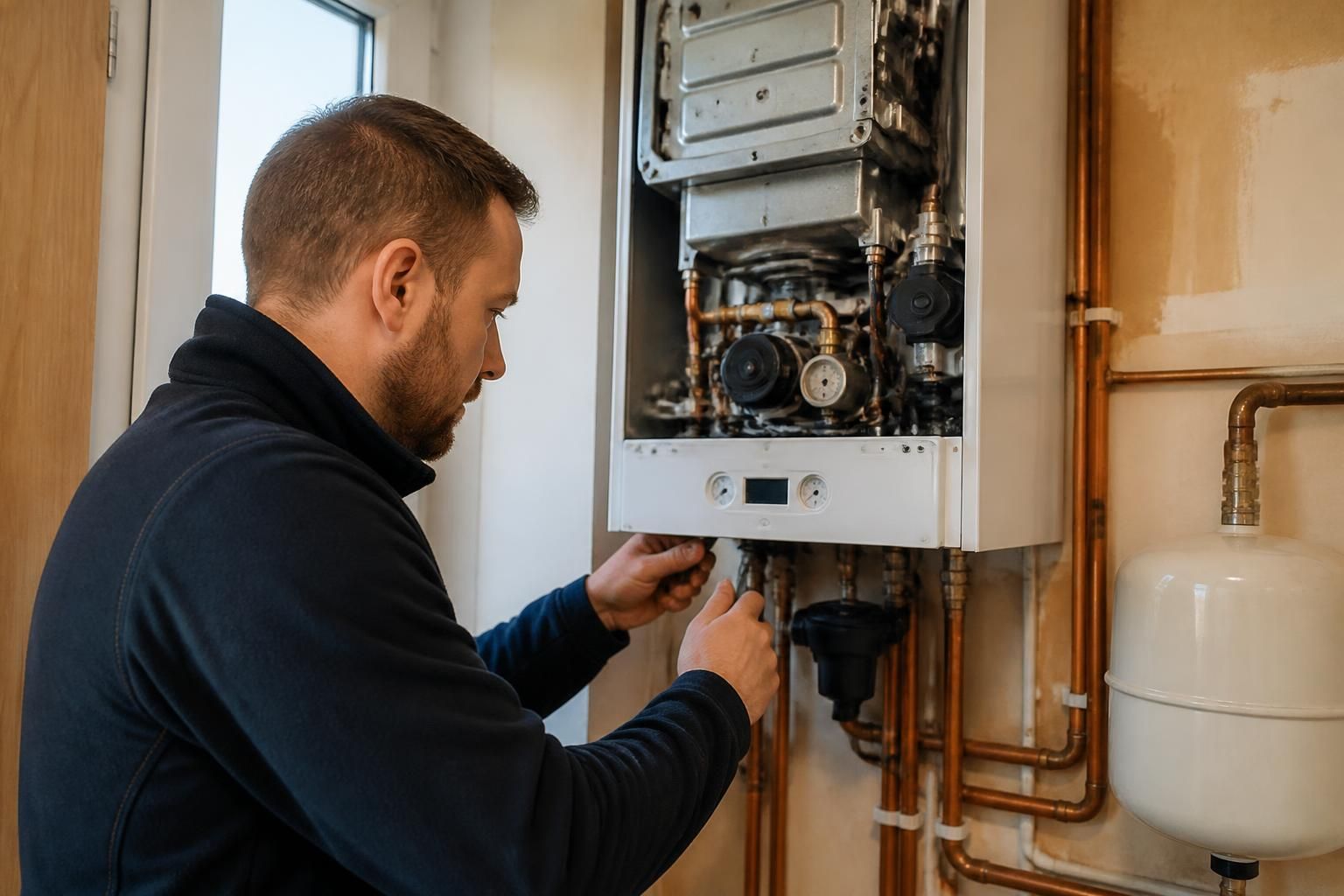
Central-heating maintenance should follow a documented service schedule based on the appliance manufacturer’s instructions, the system’s age and condition, and how heavily it is used. For a typical domestic installation, the established yearly service interval remains the normal benchmark; systems with a history of faults, older components or more demanding usage may need additional checks between routine services.
A boiler service and wider central-heating maintenance are related but are not always the same thing. A boiler service focuses on the appliance itself, including safe combustion, the flue, seals, safety controls, condensate arrangements and operating performance. Whole-system maintenance also considers radiators, valves, pipework, the expansion vessel, system pressure, circulating pump, controls and the quality of the heating water.
During a professional inspection, the engineer may check for signs of corrosion, restricted circulation, trapped air, unsuitable pressure, sludge or debris in the system. They can also assess whether thermostats and heating controls are operating correctly and whether safety devices respond as intended. These checks help identify developing defects before they cause a breakdown or damage to surrounding components.
The most suitable timing depends on the property and installation:
- Newer systems: Follow the commissioning and servicing instructions supplied with the appliance. Keeping the service history up to date can also support warranty or guarantee conditions where applicable.
- Older systems: An engineer may recommend closer monitoring if parts are deteriorating, the system has been modified, or previous repairs have been recurring.
- Frequently used systems: Heating that serves a larger property or operates for long periods may require more attention than a lightly used installation.
- Systems with water-quality problems: Sludge, corrosion or repeated loss of inhibitor can justify further investigation rather than simply waiting for the next routine service.
- Rented properties: Landlords have separate legal duties for gas appliances and must arrange the required gas safety checks through a suitably qualified engineer. This is distinct from general maintenance of radiators, controls and the wider heating system.
Routine maintenance should not be treated as a substitute for investigating a developing fault. A boiler that repeatedly shuts down, a radiator that remains cold after normal checks, an unexplained change in pressure, or any suspected water or gas leak requires assessment rather than being left until the next scheduled visit.
Homeowners can support professional maintenance by keeping the boiler area accessible, retaining service records and noting any changes in operation. Basic checks such as confirming that controls are set correctly and that visible pipework has no obvious damage can provide useful information, but internal boiler work, combustion checks and safety testing should be left to a qualified heating engineer.
After maintenance, ask what was inspected, whether any components show wear, and whether the engineer recommends cleaning, balancing, inhibitor treatment, component replacement or a follow-up visit. This creates a practical maintenance plan instead of relying solely on a calendar date. Ideal Plumbing Services provides central-heating maintenance and repair support for homeowners, landlords and tenants across Birmingham and the wider West Midlands.