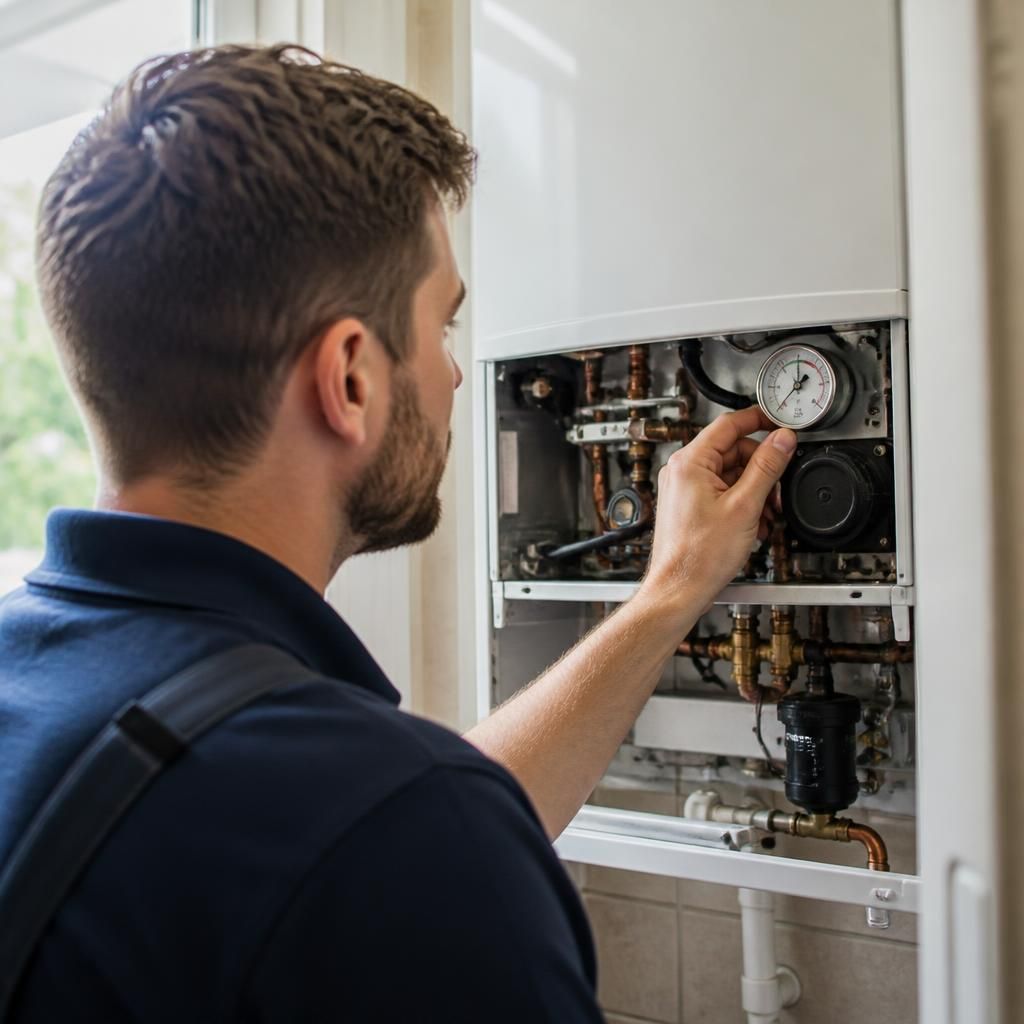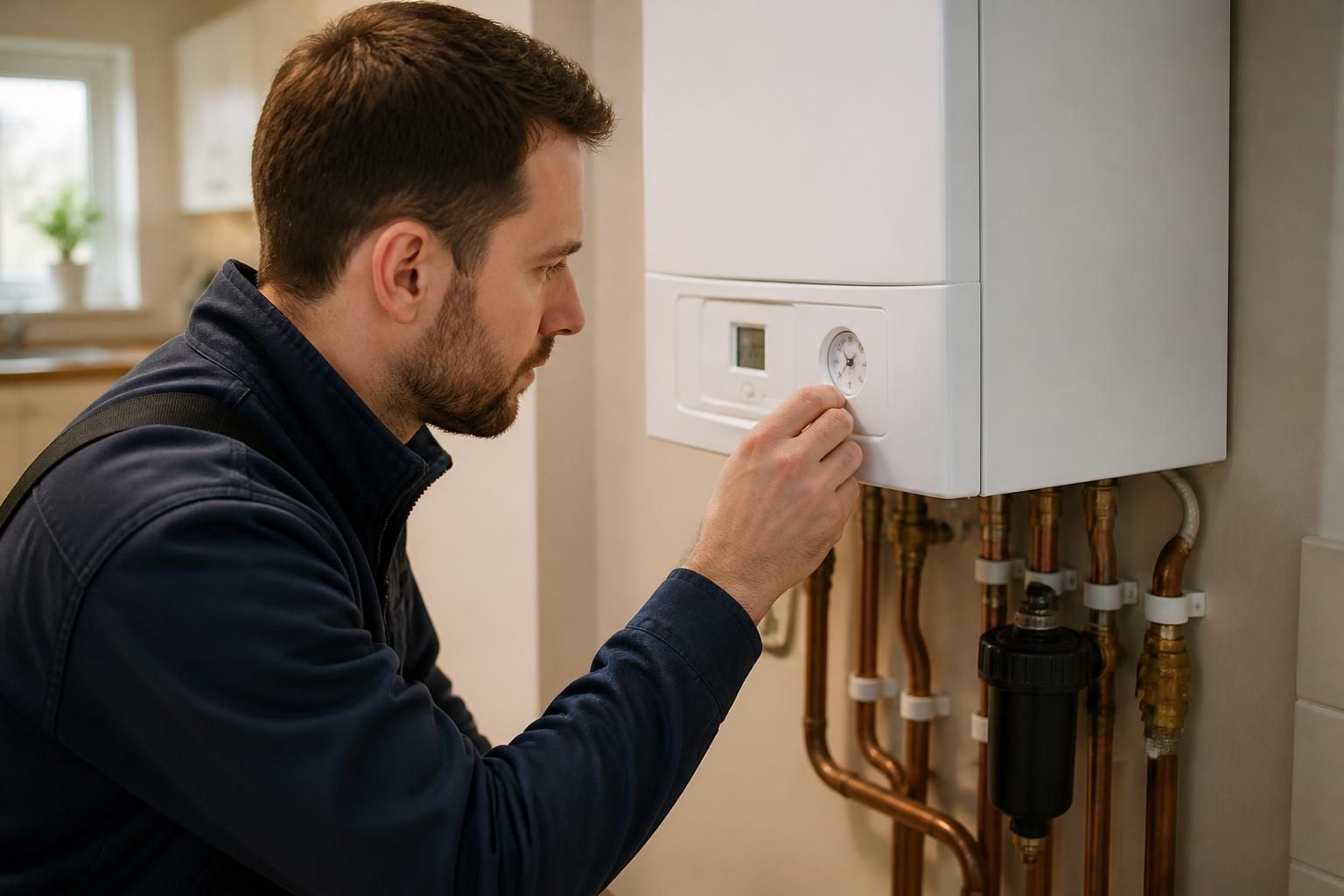
Call a central heating plumber when you have reasonable evidence that water is escaping from the heating system, particularly if the cause is not obvious, the problem keeps returning or the system is no longer operating normally. A professional can distinguish a leaking radiator connection from a boiler component fault, a pressure relief problem or concealed pipework, then recommend a repair before further damage occurs.
Not every visible drop of water has the same significance. A small amount around a radiator valve may come from a loose connection or deteriorated seal, while water beneath a boiler can indicate an internal component, discharge pipe or condensate-related fault. Water appearing on a ceiling, inside a cupboard or near skirting boards may suggest pipework hidden within floors, walls or boxing. In these situations, calling a plumber for diagnosis is preferable to repeatedly drying the area or adding more water to the system.
Arrange an inspection promptly if you notice any of the following:
- the boiler pressure falls again after the system has been repressurised;
- a radiator valve, towel rail connection or visible heating pipe remains wet;
- rust, limescale, flaking paint or staining is developing around a joint;
- the boiler displays a fault connected with pressure or circulation;
- you hear persistent gurgling, hissing or banging that accompanies poor heating performance;
- a damp smell or unexplained moisture appears near floors, walls or ceilings;
- you need to keep topping up the heating system to maintain operation.
Repeated pressure loss is especially important because it can mean the system is losing water somewhere that cannot be seen. The source may be a radiator, valve, pump, expansion vessel, pressure relief valve or internal boiler component. Continuing to run the system without identifying the cause can allow corrosion and water damage to develop, and frequent refilling introduces fresh water that may contribute to deposits and corrosion within the system.
Before the plumber arrives, switch the heating controls off and allow hot components to cool if it is safe to do so. Place a container or absorbent material beneath a small accessible drip, move belongings away from the affected area and note where the water first appeared. Do not remove the boiler casing, interfere with sealed components or attempt to repair a gas appliance yourself. If the leak cannot be isolated safely, leave the relevant controls alone and describe the location and severity to the plumber.
A central heating plumber will normally inspect the visible system, check connections and valves, assess boiler pressure and look for signs of discharge or concealed leakage. Depending on the findings, diagnosis may involve pressure testing, checking the pressure relief route, examining radiators and pipework, or investigating whether the boiler itself requires attention. The repair could be as simple as replacing a seal or valve, but a hidden leak or failed boiler component requires a more targeted approach.
Call for urgent plumbing assistance where water is spreading quickly, cannot be contained, is entering building fabric or is affecting electrical equipment. If you smell gas, do not treat it as an ordinary water leak: avoid operating electrical switches, leave the area if necessary and follow the appropriate gas emergency guidance. For less severe but recurring symptoms, book a central heating inspection rather than waiting for the system to stop working completely. Ideal Plumbing Services provides leak diagnosis and central heating repairs for homeowners, landlords and tenants across Birmingham and the wider West Midlands, including investigation of faults affecting domestic heating systems.