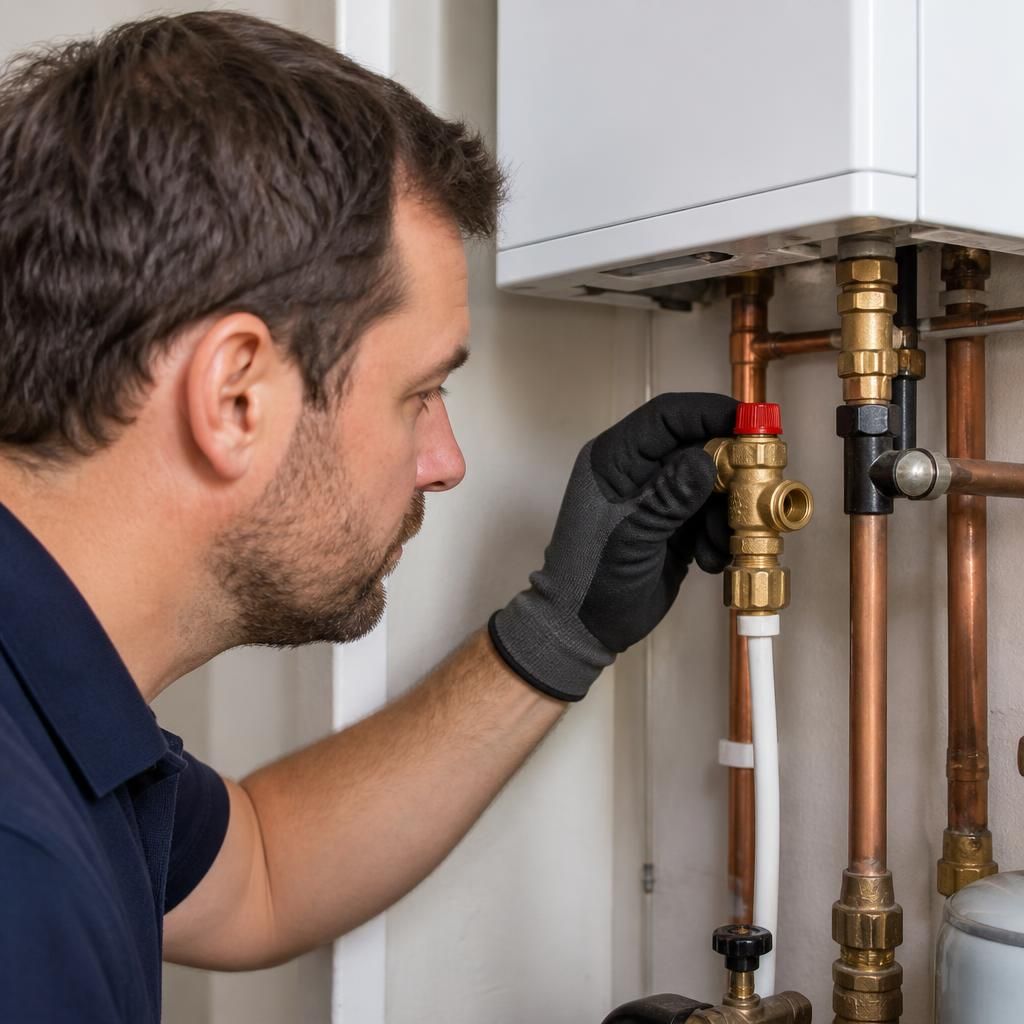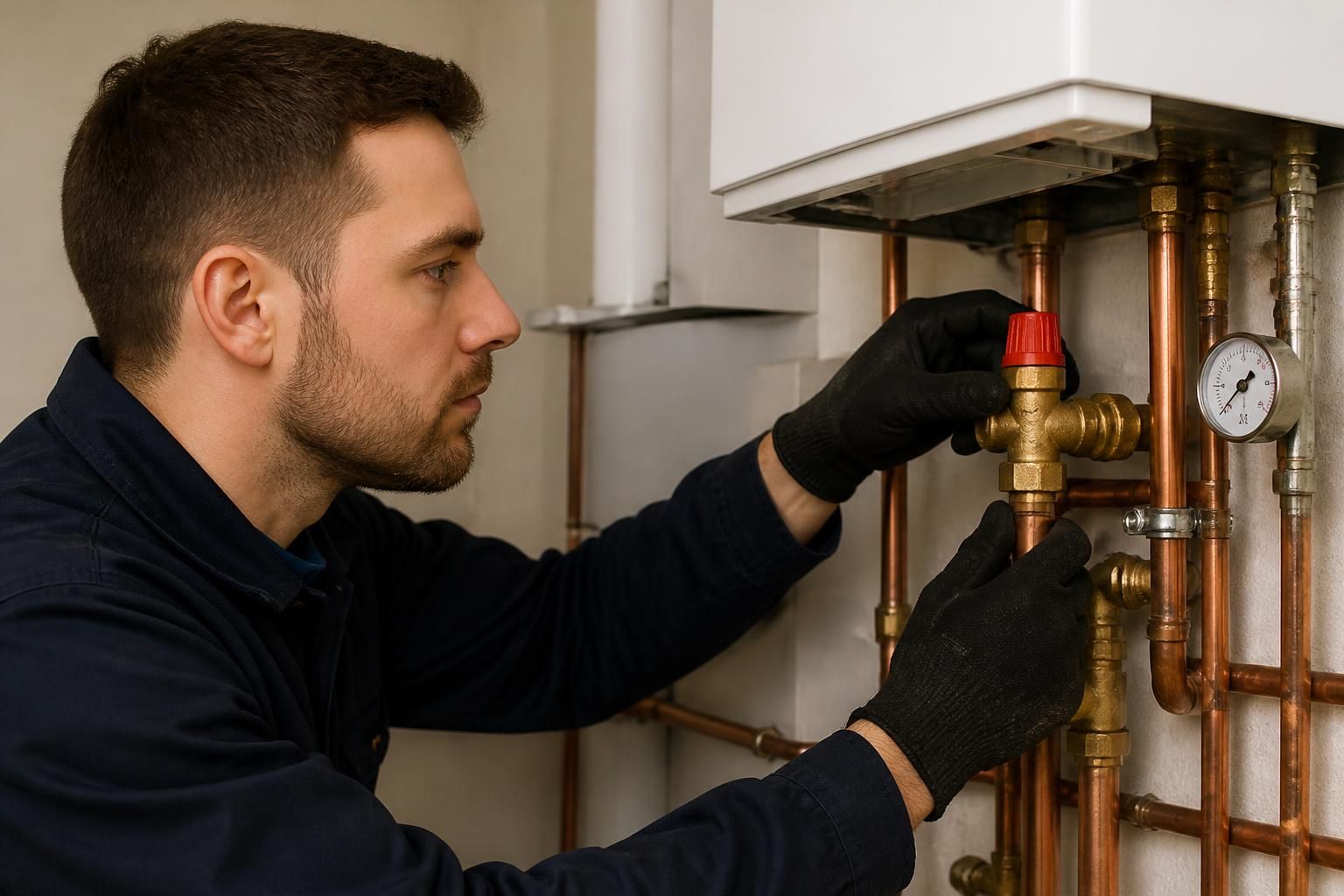
A central heating pressure relief valve should be replaced when it no longer closes and seals correctly after the cause of excessive system pressure has been addressed. The valve is a safety component on a sealed heating system: it opens to release water when pressure becomes too high, then should reseat without allowing continued discharge. If it has been damaged by repeated discharge, corrosion, debris or age, fitting a new valve is usually more reliable than attempting to restore the old one.
Replacement is not always the first repair
A pressure relief valve can open because another part of the system is malfunctioning. Common related faults include an expansion vessel that has lost its charge, a filling loop that has been left open, an inaccurate pressure gauge, a boiler control fault or excessive water being added during topping up. If the valve is replaced without investigating these conditions, the new component may discharge again.
A heating engineer will therefore establish whether the system pressure is genuinely rising, whether the valve is passing water continuously and whether the discharge stops once the pressure has been corrected. If the pressure remains stable but water continues to pass through the valve, the valve itself is more likely to require replacement.
Signs that the valve may need changing
- Water continues to emerge from the pressure relief discharge pipe after the system has returned to its correct operating condition.
- The valve has been operated repeatedly and no longer reseats properly.
- There is visible corrosion, scaling, staining or physical damage around the valve.
- The boiler pressure repeatedly falls because water is being lost through the discharge pipe.
- The valve makes intermittent discharge noises or leaves fresh water marks below the external termination point.
- A previous overpressure event has left the valve contaminated with debris, preventing a dependable seal.
Water coming from the discharge pipe should not be ignored, even if the boiler continues to provide heating. Continued discharge can reduce system pressure, introduce fresh oxygenated water into the system and contribute to corrosion. It can also conceal a separate fault that may place further strain on the boiler and heating circuit.
When cleaning or resetting is insufficient
Some valves have a manual test or lift mechanism, but operating it is not a permanent repair. Moving the mechanism can sometimes dislodge debris, while repeated testing may make an already worn valve leak more noticeably. A valve that does not close cleanly, has a damaged seat or has deteriorated seals should be replaced rather than repeatedly reset.
The replacement component must be suitable for the heating appliance and system installation. The engineer will check the valve specification, connection, discharge arrangement and operating pressure before fitting it. An unsuitable valve, an incorrectly positioned discharge pipe or a blocked outlet can compromise the safety function and should not be treated as an equivalent substitute.
What replacement involves
- The heating system is assessed to identify why the original valve opened and to check for related pressure faults.
- The appliance and system are made safe, with the relevant water pressure reduced before the valve is removed.
- The old valve is taken out and the replacement is fitted with appropriate seals and connections.
- The system is refilled and checked for leaks, correct pressure behaviour and proper discharge-pipe routing.
- The boiler and heating circuit are operated so the engineer can confirm that the new valve remains closed under normal conditions.
Replacing the valve may involve releasing some system water, so the engineer should also check for air in radiators, pressure loss and signs of contamination afterwards. If the underlying cause was an expansion vessel or filling-loop fault, that repair must be completed at the same time or the replacement valve may be exposed to the same problem.
Can a homeowner replace it?
Pressure relief valve replacement is not a routine DIY task. It involves working on a pressurised heating system and, depending on the installation, close access to boiler components and discharge pipework. Turning the valve, capping the discharge pipe or fitting a generic component can remove an important safety safeguard. A qualified heating engineer should carry out the diagnosis and replacement, particularly where the boiler pressure is unstable, water is escaping near electrical equipment or the appliance is repeatedly locking out.
If water is actively discharging, switch off the heating controls if it is safe to do so, avoid touching hot pipework and arrange a professional inspection. Do not block or seal the external discharge outlet. Ideal Plumbing Services provides central heating repairs and pressure-related heating assistance for homeowners, landlords and tenants in Birmingham and across the West Midlands.